

The Region of Trás-os-Montes and Alto Douro is located in the North of Portugal, corresponding to the districts of Vila Real and Bragança, and some municipalities north of the district of Viseu and Guarda, Portugal
The region's relief is formed by high mountains cut by deep valleys and the climate is temperate continental, being colder in mountainous areas and milder along the Douro River.
Trás-os-Montes and Alto Douro is one of the historic provinces of Portugal with the largest number of emigrants. However, its centuries-old isolation has allowed the survival of cultural traditions that mark Portuguese identity.
Currently, the territory of the former province is divided into the statistical sub-regions of Alto Trás-os-Montes (totality), Douro (most of it, except for the municipalities of Moimenta da Beira, Penedono, Sernancelhe and Tarouca) and also part of Tâmega (counties of Mondim de Basto and Ribeira de Pena).
The Alto Douro, one of the two natural regions that make up the Trás-os-Montes province, is considered a World Heritage Site, as is the Serra do Marão, the division between Trás-os-Montes and the coast.
The best way to get to know the area is through a boat trip along the Douro River providing fantastic views of the mountains, along the way the visitor sees birds of prey such as the golden eagle, peregrine falcon, the Miradouro de São João das Arribas in Aldeia Nova from where you have one of the most beautiful views over the municipality.
The city of Miranda do Douro is a beautiful city in the north of Portugal, belonging to the district of Bragança, it has a beautiful historic center, a magnificent castle and stunning landscapes. In addition to Portuguese, Mirandês is spoken, a local variant of the language of the ancient Kingdom of Leão. In terms of gastronomy, the best-known dish is posta mirandesa.
Miranda do Douro has a well-preserved historic center, Praça D. João III where there are two statues representing a Mirandese couple, the most popular traditions are: the careto, a donkey ride, learn to speak Mirandese, the pauliteiros, the harvest and the works of Miguel Torga, Guerra Junqueiro, Trindade Coelho and Camilo Castelo Branco characterize the land of Trás-os-Montes.
The Trás-os-Montes region stands out for having an area of vineyards, chestnut trees, almond trees, nuts, dried fruits, potatoes, mushrooms, apple trees and a larger area of olive and cherry trees.
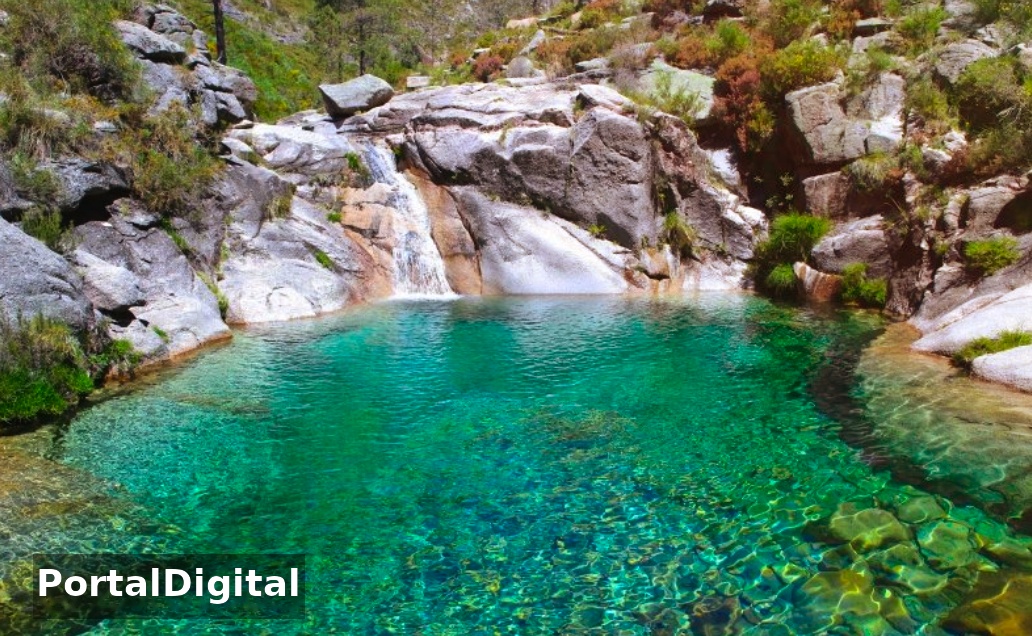
The main tourist attractions are: Montesinho Natural Park, Lagos do Sabor, born with the construction of the Sabor River Dam, Santo Antão da Barca and the Chapel of Santo Antão, Protected Landscape of Albufeira do Azibo, Miradouro de São João das Arribas, Trilho de Vale do Lobo in Mirandela, Pedestrian Route and Waterfall of Faia d’Água Alta, Regional Natural Park of Vale do Tua, Sé Catedral de Miranda do Douro, Miranda do Douro Castle, Iberian Mask and Costume Museum and Terra de Miranda Museum.
Trás-os-Montes and Alto Douro is one of the historic provinces of Portugal with the largest number of emigrants. However, its centuries-old isolation has allowed the survival of cultural traditions that mark Portuguese identity.
Currently, the territory of the former province is divided into the statistical sub-regions of Alto Trás-os-Montes (totality), Douro (most of it, except for the municipalities of Moimenta da Beira, Penedono, Sernancelhe and Tarouca) and also part of Tâmega (counties of Mondim de Basto and Ribeira de Pena).
The Alto Douro, one of the two natural regions that make up the Trás-os-Montes province, is considered a World Heritage Site, as is the Serra do Marão, the division between Trás-os-Montes and the coast.
The best way to get to know the area is through a boat trip along the Douro River providing fantastic views of the mountains, along the way the visitor sees birds of prey such as the golden eagle, peregrine falcon, the Miradouro de São João das Arribas in Aldeia Nova from where you have one of the most beautiful views over the municipality.
The city of Miranda do Douro is a beautiful city in the north of Portugal, belonging to the district of Bragança, it has a beautiful historic center, a magnificent castle and stunning landscapes. In addition to Portuguese, Mirandês is spoken, a local variant of the language of the ancient Kingdom of Leão. In terms of gastronomy, the best-known dish is posta mirandesa.
Miranda do Douro has a well-preserved historic center, Praça D. João III where there are two statues representing a Mirandese couple, the most popular traditions are: the careto, a donkey ride, learn to speak Mirandese, the pauliteiros, the harvest and the works of Miguel Torga, Guerra Junqueiro, Trindade Coelho and Camilo Castelo Branco characterize the land of Trás-os-Montes.
The Trás-os-Montes region stands out for having an area of vineyards, chestnut trees, almond trees, nuts, dried fruits, potatoes, mushrooms, apple trees and a larger area of olive and cherry trees.
The main tourist attractions are: Montesinho Natural Park, Lagos do Sabor, born with the construction of the Sabor River Dam, Santo Antão da Barca and the Chapel of Santo Antão, Protected Landscape of Albufeira do Azibo, Miradouro de São João das Arribas, Trilho de Vale do Lobo in Mirandela, Pedestrian Route and Waterfall of Faia d’Água Alta, Regional Natural Park of Vale do Tua, Sé Catedral de Miranda do Douro, Miranda do Douro Castle, Iberian Mask and Costume Museum and Terra de Miranda Museum.