
It is located on Avenida Brasília, city, municipality and district of Lisbon, central Portugal.
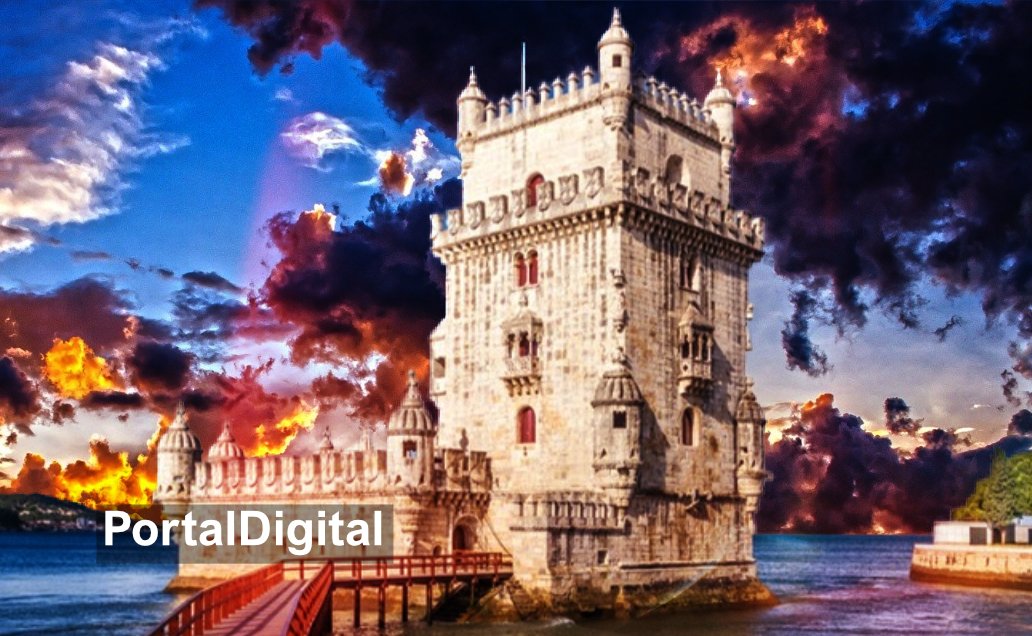
Torre de Belém officially (the Torre de São Vicente Torre) is a 16th-century fortification located in Lisbon that served as an embarkation and disembarkation point for Portuguese explorers and as a ceremonial gateway to Lisbon.
The Belém Tower is located on the north bank of the Tagus River, in the parish of Santa Maria de Belém, municipality of Lisbon, and accessible at the western end of Avenida de Brasília by a small bridge.
Nearby are the Jerónimos Monastery to the east and the Bom Sucesso Fort to the west, while to the north are the tower of the Governor's residence, the former Governor's residence for the Bom Sucesso fort and the São Jerónimo Chapel.
The Belém Tower is located on the north bank of the Tagus River, in the parish of Santa Maria de Belém, municipality of Lisbon, and accessible at the western end of Avenida de Brasília by a small bridge.
Nearby are the Jerónimos Monastery to the east and the Bom Sucesso Fort to the west, while to the north are the tower of the Governor's residence, the former Governor's residence for the Bom Sucesso fort and the São Jerónimo Chapel.
The Construction of the Belém Tower in Lisbon
The Belém Tower was built during the height of the Portuguese Renaissance, and is a prominent example of the Portuguese Manueline style, but it also incorporates suggestions from other architectural styles, and the tower was built on a small island in the Tagus River near the coast of Lisbon.
The structure was built from a limestone called lioz and consists of a bastion and a 30-meter, four-story tower, presented as a symbol of Europe's Age of Discovery and as a metonym for Portugal or Lisbon, it is a national historic landmark.
The building is divided into two parts: the bastion and the four-story tower located on the north side of the bastion.
The 16th century tower is considered one of the main works of the late Gothic Manueline style, and this can be seen in its elaborate rib vault, crosses of the Order of Christ, armillary spheres and twisted rope common to the nautical-inspired organic Manueline style.
The structure was built from a limestone called lioz and consists of a bastion and a 30-meter, four-story tower, presented as a symbol of Europe's Age of Discovery and as a metonym for Portugal or Lisbon, it is a national historic landmark.
The building is divided into two parts: the bastion and the four-story tower located on the north side of the bastion.
The 16th century tower is considered one of the main works of the late Gothic Manueline style, and this can be seen in its elaborate rib vault, crosses of the Order of Christ, armillary spheres and twisted rope common to the nautical-inspired organic Manueline style.
The exterior of the Belém Tower in Lisbon
The plan of the building consists of a rectangular tower, an irregular hexagonal bastion with elongated flanks that projects south into the river, and has a large vertical space supported by a horizontal stone slab covered by masonry enclosures.
In the northeast corner of the structure protected by a defense wall with bartizans (a small tower with slits or arrow slits) there is a drawbridge providing access to the bastion decorated with plant motifs, topped by the royal shield and flanked by small columns complemented by armillary spheres.
The Manueline armillary spheres appear at the entrance to the tower, symbolizing Portugal's nautical explorations, and were used on D. Manuel I's personal standard to represent Portuguese discoveries during his government.
The decorative carving and the twisted rope mark the nautical history of Portugal and are elements that are part of the Manueline style of architecture.
Outside the lower bastion, the walls house 17 cannons with embrasures overlooking the river, the upper layer of the bastion is crowned by a small wall with guardhouses in strategic locations decorated by rounded shields with the cross of the Order of Christ surrounding the platform.
King D. Manuel I was a member of the Order of Christ, the cross of the Order of Christ is used numerous times on the parapets (a symbol of military power), cylindrical towers (guerites) in the corners that served as watchtowers have corbels with zoomorphic ornaments and domes covered by ridges unusual in European architecture topped by ornate finishes.
The bases of the towers have images of beasts including a rhinoceros representing the one Manuel I sent to Pope Leo X in 1515.
The tower is predominantly Manueline in style, it also incorporates features from other architectural styles, and was built by military architect Francisco de Arruda (supervising the construction of several fortresses in Portuguese territories in Morocco).
The influence of Moorish architecture is manifested in the delicate decorations, arched windows, balconies and ribbed domes of watchtowers.
The tower has four floors with fenestrations and battlements, with the ground floor occupied by a vaulted cistern, on the first floor, there is a rectangular door facing south with arched windows in the east and north corners, and bartizans in the northeast and northwest corners.
The southern part of the second floor is dominated by a loggia-covered porch consisting of an arcade of seven arches resting on large corbels with balusters, and covered by masonry tied together to form a porch, and its sloping roof ends in a carved twisted rope.
The east, north and west walls are occupied by double-arched enclosures, with the north-east and north-west corners occupied by statues of Saint Vincent of Zaragoza and the archangel Michael in niches.
The third floor has twin windows on the north, east and west facades, with balusters interspersed by two armillary spheres and a large relief with the royal shield, and the top floor is surrounded by a terrace with shields of the Order of Christ, and a north arched door and east arched window.
In the northeast corner of the structure protected by a defense wall with bartizans (a small tower with slits or arrow slits) there is a drawbridge providing access to the bastion decorated with plant motifs, topped by the royal shield and flanked by small columns complemented by armillary spheres.
The Manueline armillary spheres appear at the entrance to the tower, symbolizing Portugal's nautical explorations, and were used on D. Manuel I's personal standard to represent Portuguese discoveries during his government.
The decorative carving and the twisted rope mark the nautical history of Portugal and are elements that are part of the Manueline style of architecture.
Outside the lower bastion, the walls house 17 cannons with embrasures overlooking the river, the upper layer of the bastion is crowned by a small wall with guardhouses in strategic locations decorated by rounded shields with the cross of the Order of Christ surrounding the platform.
King D. Manuel I was a member of the Order of Christ, the cross of the Order of Christ is used numerous times on the parapets (a symbol of military power), cylindrical towers (guerites) in the corners that served as watchtowers have corbels with zoomorphic ornaments and domes covered by ridges unusual in European architecture topped by ornate finishes.
The bases of the towers have images of beasts including a rhinoceros representing the one Manuel I sent to Pope Leo X in 1515.
The tower is predominantly Manueline in style, it also incorporates features from other architectural styles, and was built by military architect Francisco de Arruda (supervising the construction of several fortresses in Portuguese territories in Morocco).
The influence of Moorish architecture is manifested in the delicate decorations, arched windows, balconies and ribbed domes of watchtowers.
The tower has four floors with fenestrations and battlements, with the ground floor occupied by a vaulted cistern, on the first floor, there is a rectangular door facing south with arched windows in the east and north corners, and bartizans in the northeast and northwest corners.
The southern part of the second floor is dominated by a loggia-covered porch consisting of an arcade of seven arches resting on large corbels with balusters, and covered by masonry tied together to form a porch, and its sloping roof ends in a carved twisted rope.
The east, north and west walls are occupied by double-arched enclosures, with the north-east and north-west corners occupied by statues of Saint Vincent of Zaragoza and the archangel Michael in niches.
The third floor has twin windows on the north, east and west facades, with balusters interspersed by two armillary spheres and a large relief with the royal shield, and the top floor is surrounded by a terrace with shields of the Order of Christ, and a north arched door and east arched window.
The Interior of the Belém Tower in Lisbon
The interior of the bastion with a circular staircase at the north end features two adjoining halls with vaulted ceilings supported by masonry arches, four storage rooms and sanitary facilities.
In the ground floor bunker, the floor is inclined towards the outside, while the ceilings are supported by masonry pilasters and vaulted spines.
Gothic rib vaulting is evident in this casemate, in the tower rooms and in the domes of the watchtowers on the bastion's terrace.
Peripheral compartments at the edges of the bunker allow individual cannons to occupy their own space, with the ceiling designed with several asymmetrical domes of various heights.
From two arcades you can reach the main cloister to the north and south, while six broken arches extend along the eastern and western parts of the cloister interspersed by square pillars inside the bastion with gargoyle facets.
The open cloister above the casemate although decorative was designed to dispel smoke from the cannons.
The upper level is connected by a railing decorated with crosses of the Order of Christ, while on the terrace the space has ascending columns topped by armillary spheres.
This was the first Portuguese fortification with a two-tier cannon emplacement and marks a new development in military architecture.
In the southern part of the cloister terrace there is an image of a statue of the Virgin of Bethlehem with a boy holding a child in his right hand and a bunch of grapes in his left.
The interior of the first floor contains the Governor's Room, an octagonal space that opens onto the cistern, while in the northeast and northwest corners are corridors that connect to the bartizans (a small wall-mounted tower that projects into the fortification walls), and a spiral staircase gives access to the upper floors.
On the second floor, the Kings Room opens onto the loggia overlooking the river, a small corner fireplace extends from this floor to the third floor fireplace in the Audience Room, the ceilings of all three floors are covered in hollow concrete slabs, and
The chapel on the fourth floor has a ribbed vaulted ceiling with niches emblematic of the Manueline style supported by carved corbels.
In the ground floor bunker, the floor is inclined towards the outside, while the ceilings are supported by masonry pilasters and vaulted spines.
Gothic rib vaulting is evident in this casemate, in the tower rooms and in the domes of the watchtowers on the bastion's terrace.
Peripheral compartments at the edges of the bunker allow individual cannons to occupy their own space, with the ceiling designed with several asymmetrical domes of various heights.
From two arcades you can reach the main cloister to the north and south, while six broken arches extend along the eastern and western parts of the cloister interspersed by square pillars inside the bastion with gargoyle facets.
The open cloister above the casemate although decorative was designed to dispel smoke from the cannons.
The upper level is connected by a railing decorated with crosses of the Order of Christ, while on the terrace the space has ascending columns topped by armillary spheres.
This was the first Portuguese fortification with a two-tier cannon emplacement and marks a new development in military architecture.
In the southern part of the cloister terrace there is an image of a statue of the Virgin of Bethlehem with a boy holding a child in his right hand and a bunch of grapes in his left.
The interior of the first floor contains the Governor's Room, an octagonal space that opens onto the cistern, while in the northeast and northwest corners are corridors that connect to the bartizans (a small wall-mounted tower that projects into the fortification walls), and a spiral staircase gives access to the upper floors.
On the second floor, the Kings Room opens onto the loggia overlooking the river, a small corner fireplace extends from this floor to the third floor fireplace in the Audience Room, the ceilings of all three floors are covered in hollow concrete slabs, and
The chapel on the fourth floor has a ribbed vaulted ceiling with niches emblematic of the Manueline style supported by carved corbels.
The Classification of the Belém Tower in Lisbon
Since 1983, the tower has been considered a UNESCO World Heritage Site along with the Jerónimos Monastery.