
Setúbal is a Portuguese city, capital of the district of Setúbal since 1926 and seat of a diocese since 1975, with 91,000 inhabitants in its urban perimeter, it is the seat of the municipality of Setúbal, Portugal
Setúbal is a Portuguese city, capital of the Setúbal district (since 1926) and seat of the diocese (since 1975), with 91,000 inhabitants in its urban perimeter.
The City of Setúbal is the seat of the municipality of Setúbal with an area of 230.33 km 2 and 116,330 inhabitants (2017), subdivided into 5 parishes.
The municipality is limited to the west by the municipality of Sesimbra, to the northwest by Barreiro, to the north and east by Palmela, to the south the Sado estuary separates it from the municipalities of Alcácer do Sal and Grândola.
The Tróia peninsula belonging to the municipality of Grândola is located in front of the city of Setúbal between the Sado estuary and the coast of the Atlantic Ocean.
In 1249, Setúbal received a charter granted by the Order of Santiago, and subscribed by D. Paio Peres Correia, Master of the Order of Santiago, and by Gonçalo Peres, commander of Mértola.
In the 17th century, Setúbal reached its peak of prosperity when salt assumed a preponderant role as a currency of exchange and in return for military aid for the support provided by European states to Portugal during and after the wars of Restoration of Independence.
The city of Setúbal has numerous neighborhoods, among the most traditional of which stand out the Troino neighborhood, Fontainhas and Bairro Santos Nicolau, where a large part of the fishing community lived.
Fontainhas began to be populated around the 17th century by people from the Aveiro area, the construction of Avenida Luísa Todi was necessary to create a new dock.
The Salgado neighborhood was the area where the bourgeois class traditionally lived at the beginning of the 20th century, close to the city center where much of the commerce takes place.
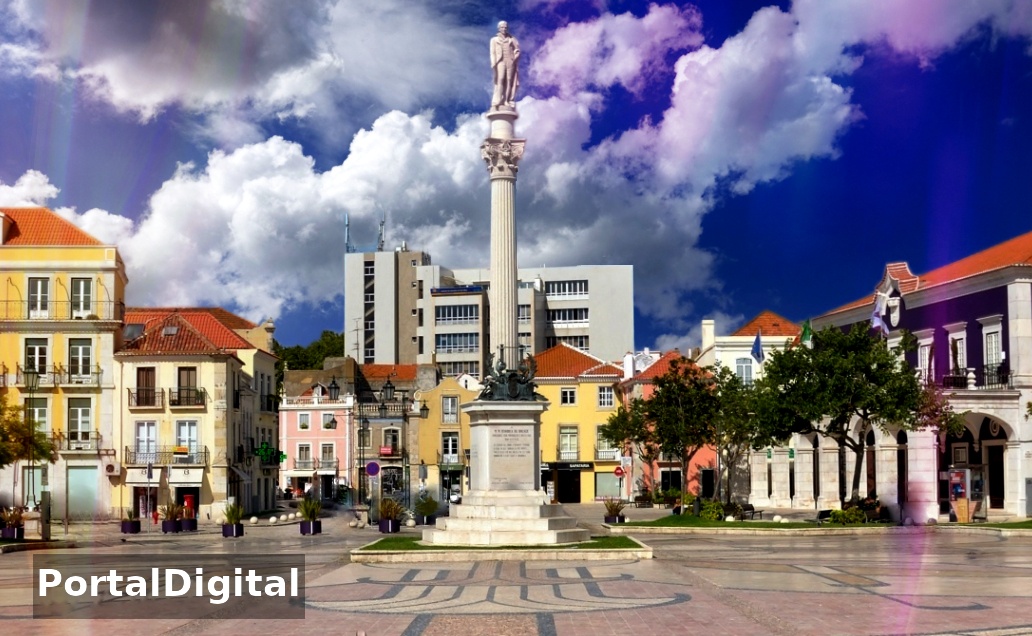
The main tourist attractions are: Sé de Setúbal, Avenida Luísa Todi (Setúbal), Praça de Bocage (Setúbal), Praça Teófilo Braga ((Setúbal), Mercado do Livramento in Setúbal, Sado Estuary Natural Reserve, Tróia Peninsula, Forte de S. Filipe, Forte de Santa Maria da Arrábida, Forte de Santiago do Outão, Troino (Neighborhood of Setúbal), Monastery of Jesus of Setúbal, Setúbal Bay House, Palace and Quinta da Bacalhôa, Setúbal Bay, Quinta do Farejal, Casa de Bocage, Roman Ruins of Tróia, Museum of Archeology and Ethnography of the Setúbal District, Convent of Jesus / Museum of Setúbal, Museum of Work Michel Giacometti, Casa do Corpo Santo/Baroque Museum (Setúbal), 11th Gallery Municipal (Setúbal), Oceanographic Museum (Santa Maria da Arrábida Fort), São Sebastião Viewpoint (Setúbal), Pedra Furada, Quinta das Machadas, Pelourinho de Setúbal, Moinho de Maré da Mourisca (Setúbal), The Bay of Setúbal,
The city of Setúbal, covered by the green Serra da Arrábida, is made up of beautiful beaches: Portinho da Arrábida, Praia da Figueirinha, Praia de Tróia, Praia do Meco, Praia do Pego, Praia de Galapinhos, Praia de Galapos, Praia de Albarquel, Praia dos Coelhos, Praia do Creiro, Praia de Melides, Praia da Comporta and Praia da Saúde.
The City of Setúbal is the seat of the municipality of Setúbal with an area of 230.33 km 2 and 116,330 inhabitants (2017), subdivided into 5 parishes.
The municipality is limited to the west by the municipality of Sesimbra, to the northwest by Barreiro, to the north and east by Palmela, to the south the Sado estuary separates it from the municipalities of Alcácer do Sal and Grândola.
The Tróia peninsula belonging to the municipality of Grândola is located in front of the city of Setúbal between the Sado estuary and the coast of the Atlantic Ocean.
In 1249, Setúbal received a charter granted by the Order of Santiago, and subscribed by D. Paio Peres Correia, Master of the Order of Santiago, and by Gonçalo Peres, commander of Mértola.
In the 17th century, Setúbal reached its peak of prosperity when salt assumed a preponderant role as a currency of exchange and in return for military aid for the support provided by European states to Portugal during and after the wars of Restoration of Independence.
The city of Setúbal has numerous neighborhoods, among the most traditional of which stand out the Troino neighborhood, Fontainhas and Bairro Santos Nicolau, where a large part of the fishing community lived.
Fontainhas began to be populated around the 17th century by people from the Aveiro area, the construction of Avenida Luísa Todi was necessary to create a new dock.
The Salgado neighborhood was the area where the bourgeois class traditionally lived at the beginning of the 20th century, close to the city center where much of the commerce takes place.
The main tourist attractions are: Sé de Setúbal, Avenida Luísa Todi (Setúbal), Praça de Bocage (Setúbal), Praça Teófilo Braga ((Setúbal), Mercado do Livramento in Setúbal, Sado Estuary Natural Reserve, Tróia Peninsula, Forte de S. Filipe, Forte de Santa Maria da Arrábida, Forte de Santiago do Outão, Troino (Neighborhood of Setúbal), Monastery of Jesus of Setúbal, Setúbal Bay House, Palace and Quinta da Bacalhôa, Setúbal Bay, Quinta do Farejal, Casa de Bocage, Roman Ruins of Tróia, Museum of Archeology and Ethnography of the Setúbal District, Convent of Jesus / Museum of Setúbal, Museum of Work Michel Giacometti, Casa do Corpo Santo/Baroque Museum (Setúbal), 11th Gallery Municipal (Setúbal), Oceanographic Museum (Santa Maria da Arrábida Fort), São Sebastião Viewpoint (Setúbal), Pedra Furada, Quinta das Machadas, Pelourinho de Setúbal, Moinho de Maré da Mourisca (Setúbal), The Bay of Setúbal,
The city of Setúbal, covered by the green Serra da Arrábida, is made up of beautiful beaches: Portinho da Arrábida, Praia da Figueirinha, Praia de Tróia, Praia do Meco, Praia do Pego, Praia de Galapinhos, Praia de Galapos, Praia de Albarquel, Praia dos Coelhos, Praia do Creiro, Praia de Melides, Praia da Comporta and Praia da Saúde.