It is located in the parish of Almedina, in the city and municipality of Coimbra, central Portugal
The Old Cathedral of Coimbra is one of the most important Romanesque-style buildings in the country. Its construction began after the Battle of Ourique (1139) when Afonso Henriques declared himself king of Portugal and chose Coimbra as the capital of the kingdom.
The Old Cathedral of Coimbra is the only one of the Portuguese Romanesque cathedrals from the Reconquista era to have survived relatively intact to the present day.
The building consists of three naves, a slightly projecting transept, and a lantern tower over the cross and a tripartite sanctuary.
In the 16th century, some innovations were introduced into the building, namely Renaissance portals such as a door called “Porta Especiosa'''''''', which is a masterpiece by the architect João de Ruão and the sculptor Nicolau de Chanterenne inspired by the Italian Renaissance.
The Sé Velha, the Churches of Santiago and São Salvador (to a lesser extent) are exponents of the Alfonsine phase of the Coimbrão Romanesque style.
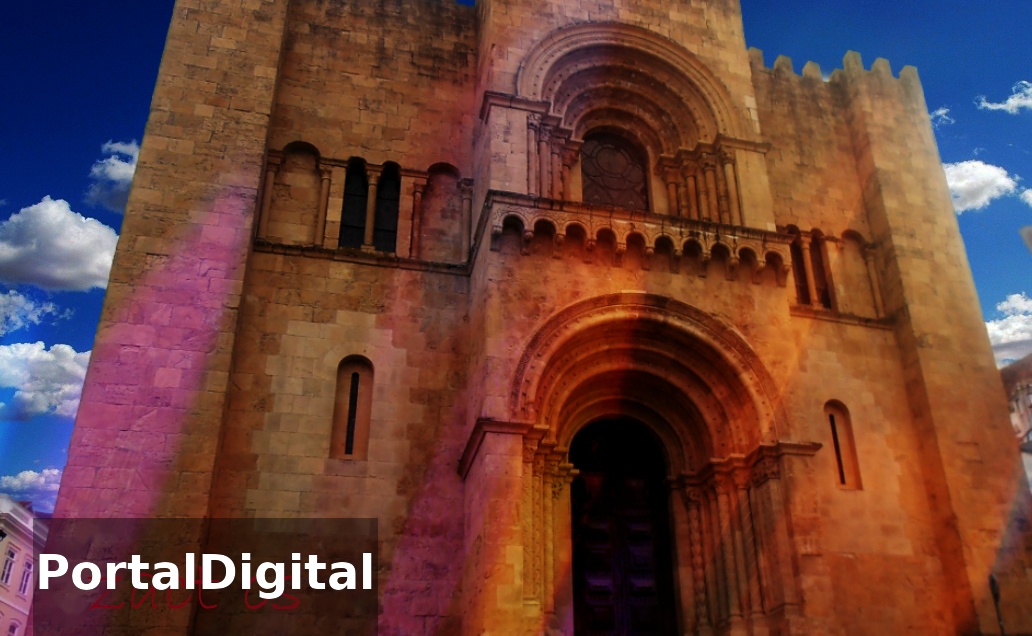
The west (main) facade has a kind of advanced central tower with a portal with multiple archivolts and a large window similar to the portal.
The capitals, archivolts and jambs of the portal and large window are abundantly decorated with Romanesque motifs with Arabic and pre-Romanesque influences.
The facade is reinforced at the corners by buttresses that help compensate for the steep slope of the terrain.
The north façade has two Renaissance-style portals, notably the Porta Especiosa, which is a three-story portico, an altarpiece built in the 1530s by João de Ruão.
The portal is one of the main works of the first Renaissance in Portugal, on the east side you can see the main Romanesque apse and the two apses, with the one on the south side being modified in the Renaissance style, over the transept there is a Romanesque quadrangular lantern tower with some changes in the 18th century.
The interior has three naves and five bays with a poorly developed transept, with the chevet formed by an apse and two apses.
The roof is covered by a barrel vault in the central nave and transept, and by a groin vault in the side naves. The main nave has an elegant triforium (gallery with arcades) on the second floor.
The interior columns have capitals decorated with geometric vegetal and animalistic themes, the windows of the lantern tower of the cruise, and the large window on the main façade are the Cathedral's main sources of natural light.
The cloister built during the reign of Afonso II is located in the transition to Gothic, found on the south side of the temple, each side of the cloister has five broken arches, each involving a pair of twin arches with a perfect round, and on each flag there is a small rose window decorated with very simple tracery.
The sections are square, with vaulted naves, and only very pointed toral arches and full-length transepts.
The capitals of the arches are made of slender baskets, mostly with vegetal decoration, and the most interesting feature of the entire work are the corners of the court where two Gothic arcades meet, which mutually interrupt each other at mid-height, creating an original effect.
The most notable aspect of the Romanesque decoration of the Old Cathedral is the large number of carved capitals (around 380) which makes it one of the main centers of Portuguese Romanesque sculpture.
The motifs are geometric and vegetal interlaces of Arabic or pre-Romanesque influence, as well as quadrupeds and facing birds, there are practically no human representations, and biblical passages are non-existent.
The absence of human figures is perhaps a consequence of the artists being Mozarabic (Arabicized Christians) who had settled in Coimbra in the 12th century.
Inside, it is worth mentioning the Chapel of the Blessed Sacrament, also by João de Rouen, and the Chapel of Saint Peter attributed to Nicolas de Chanterenne.
In the main chapel, the gilded altarpiece in a flaming Gothic style was designed by Flemings Olivier de Gand and Jean d''''Ypres, and these chapels decorated with floral and animalistic themes are the richest iconographic example of the Romanesque style in Portugal.
In the side corridors there are several tombs from the Gothic period (13th-14th centuries), one of the most notable being that of D. Vataça (or Betaça) Lascaris, a Byzantine lady who arrived in Portugal at the beginning of the 14th century accompanying D. Isabel de Aragão, who had married D. Dinis.
The Old Cathedral of Coimbra is the only one of the Portuguese Romanesque cathedrals from the Reconquista era to have survived relatively intact to the present day.
The building consists of three naves, a slightly projecting transept, and a lantern tower over the cross and a tripartite sanctuary.
In the 16th century, some innovations were introduced into the building, namely Renaissance portals such as a door called “Porta Especiosa'''''''', which is a masterpiece by the architect João de Ruão and the sculptor Nicolau de Chanterenne inspired by the Italian Renaissance.
The Sé Velha, the Churches of Santiago and São Salvador (to a lesser extent) are exponents of the Alfonsine phase of the Coimbrão Romanesque style.
The west (main) facade has a kind of advanced central tower with a portal with multiple archivolts and a large window similar to the portal.
The capitals, archivolts and jambs of the portal and large window are abundantly decorated with Romanesque motifs with Arabic and pre-Romanesque influences.
The facade is reinforced at the corners by buttresses that help compensate for the steep slope of the terrain.
The north façade has two Renaissance-style portals, notably the Porta Especiosa, which is a three-story portico, an altarpiece built in the 1530s by João de Ruão.
The portal is one of the main works of the first Renaissance in Portugal, on the east side you can see the main Romanesque apse and the two apses, with the one on the south side being modified in the Renaissance style, over the transept there is a Romanesque quadrangular lantern tower with some changes in the 18th century.
The interior has three naves and five bays with a poorly developed transept, with the chevet formed by an apse and two apses.
The roof is covered by a barrel vault in the central nave and transept, and by a groin vault in the side naves. The main nave has an elegant triforium (gallery with arcades) on the second floor.
The interior columns have capitals decorated with geometric vegetal and animalistic themes, the windows of the lantern tower of the cruise, and the large window on the main façade are the Cathedral's main sources of natural light.
The cloister built during the reign of Afonso II is located in the transition to Gothic, found on the south side of the temple, each side of the cloister has five broken arches, each involving a pair of twin arches with a perfect round, and on each flag there is a small rose window decorated with very simple tracery.
The sections are square, with vaulted naves, and only very pointed toral arches and full-length transepts.
The capitals of the arches are made of slender baskets, mostly with vegetal decoration, and the most interesting feature of the entire work are the corners of the court where two Gothic arcades meet, which mutually interrupt each other at mid-height, creating an original effect.
The most notable aspect of the Romanesque decoration of the Old Cathedral is the large number of carved capitals (around 380) which makes it one of the main centers of Portuguese Romanesque sculpture.
The motifs are geometric and vegetal interlaces of Arabic or pre-Romanesque influence, as well as quadrupeds and facing birds, there are practically no human representations, and biblical passages are non-existent.
The absence of human figures is perhaps a consequence of the artists being Mozarabic (Arabicized Christians) who had settled in Coimbra in the 12th century.
Inside, it is worth mentioning the Chapel of the Blessed Sacrament, also by João de Rouen, and the Chapel of Saint Peter attributed to Nicolas de Chanterenne.
In the main chapel, the gilded altarpiece in a flaming Gothic style was designed by Flemings Olivier de Gand and Jean d''''Ypres, and these chapels decorated with floral and animalistic themes are the richest iconographic example of the Romanesque style in Portugal.
In the side corridors there are several tombs from the Gothic period (13th-14th centuries), one of the most notable being that of D. Vataça (or Betaça) Lascaris, a Byzantine lady who arrived in Portugal at the beginning of the 14th century accompanying D. Isabel de Aragão, who had married D. Dinis.