
It is located on Rua da Sé or Largo da Sé, Silves, district of Faro, Algarve, Southern Portugal
The building may have been built on the site of an old mosque, and was mainly erected in the 15th century, the old Silves Cathedral today has a mainly Gothic character, but also elements from other periods as it has undergone changes over the centuries.
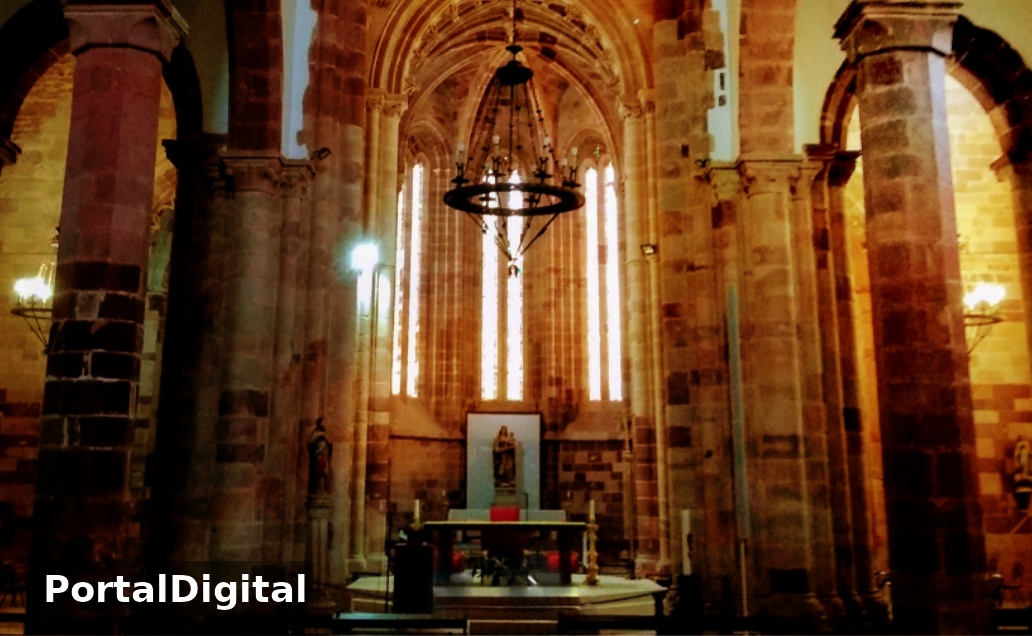
The Sé de Silves is the most important Gothic building in the Algarve, and one of the main monuments in the south of the country, and is a temple with a Latin cross plan with three naves and a projecting transept, the chevet is tripartite with a polygonal apse flanked by two rectangular apses.
In the year 1189 Silves was named seat of bishopric following the first conquest of the city from the Arabs, but the Cathedral would only be built after its definitive conquest during the reign of D. Afonso III. (1268)
Silves Cathedral retained the title of cathedral until the 16th century when the seat of the diocese was transferred to Faro, at a time when the city fell into decline due to the silting of the Arade River and the growing importance of the Algarve coastline. During that period 26 bishops occupied the episcopal chair.
The temple is in Gothic style, greatly influenced by the aesthetics of the Batalha Monastery, with changes and restorations carried out later, notably the apse made up of three chapels, and the portico of the main façade inserted in an alfiz (a frame that frames the sculptural ensemble).
Entry to the church is through a lateral portal on the south side in rococo style and is known as Porta do Sol. (18th century)
Inside, the various architectural styles intersect: the apse and transept have pointed Gothic vaults, and the side altars feature baroque-style carved decoration, and the tombs of Gastão da Ilha and João do Rego and some bishops of Silves.
In the center of the altar is the tombstone of King D. João II, buried here in 1495 and whose remains were later transferred to the Monastery of Batalha in 1499.
From the beginning, the church was dedicated to Saint Mary, and later Our Lady of Conception, which is represented in the main chapel by a Gothic image.
The Cathedral is built in red sandstone, the Silves sandstone that characterizes the city with its tone and predominance.
The triumphal arch that separates the chancel from the transept has a tracery soffit, and the transept and the transept are illuminated by Gothic windows. The original bell tower was located on the north side of the building, next to the transept.
The main facade of the Cathedral has an alfiz with a portal with a broken arch (no sources).
The Gothic portal is made up of four archivolts with capitals decorated with vegetal and anthropomorphic motifs stylistically related to the Batalhino shipyard.
The outermost archivolt has a frieze decorated with foliage, berries and animal and human figures.
The characteristics of the portal and frieze are repeated in the main portal of the Main Church of Portimão, where artists who had previously participated in the construction of the Cathedral of Silves in the last half of the 15th century probably worked.
The main materials used in the construction of the building were red sandstone and dolomitic limestone from Silves, the latter being used in the main portal.
The monument was considered by the Regional Directorate of Culture as one of the main monuments in the Algarve not only due to its religious and tourist functions, but also because it still maintains a mainly Gothic style despite several changes throughout its history.
The Sé de Silves is the most important Gothic building in the Algarve, and one of the main monuments in the south of the country, and is a temple with a Latin cross plan with three naves and a projecting transept, the chevet is tripartite with a polygonal apse flanked by two rectangular apses.
In the year 1189 Silves was named seat of bishopric following the first conquest of the city from the Arabs, but the Cathedral would only be built after its definitive conquest during the reign of D. Afonso III. (1268)
Silves Cathedral retained the title of cathedral until the 16th century when the seat of the diocese was transferred to Faro, at a time when the city fell into decline due to the silting of the Arade River and the growing importance of the Algarve coastline. During that period 26 bishops occupied the episcopal chair.
The temple is in Gothic style, greatly influenced by the aesthetics of the Batalha Monastery, with changes and restorations carried out later, notably the apse made up of three chapels, and the portico of the main façade inserted in an alfiz (a frame that frames the sculptural ensemble).
Entry to the church is through a lateral portal on the south side in rococo style and is known as Porta do Sol. (18th century)
Inside, the various architectural styles intersect: the apse and transept have pointed Gothic vaults, and the side altars feature baroque-style carved decoration, and the tombs of Gastão da Ilha and João do Rego and some bishops of Silves.
In the center of the altar is the tombstone of King D. João II, buried here in 1495 and whose remains were later transferred to the Monastery of Batalha in 1499.
From the beginning, the church was dedicated to Saint Mary, and later Our Lady of Conception, which is represented in the main chapel by a Gothic image.
The Cathedral is built in red sandstone, the Silves sandstone that characterizes the city with its tone and predominance.
The triumphal arch that separates the chancel from the transept has a tracery soffit, and the transept and the transept are illuminated by Gothic windows. The original bell tower was located on the north side of the building, next to the transept.
The main facade of the Cathedral has an alfiz with a portal with a broken arch (no sources).
The Gothic portal is made up of four archivolts with capitals decorated with vegetal and anthropomorphic motifs stylistically related to the Batalhino shipyard.
The outermost archivolt has a frieze decorated with foliage, berries and animal and human figures.
The characteristics of the portal and frieze are repeated in the main portal of the Main Church of Portimão, where artists who had previously participated in the construction of the Cathedral of Silves in the last half of the 15th century probably worked.
The main materials used in the construction of the building were red sandstone and dolomitic limestone from Silves, the latter being used in the main portal.
The monument was considered by the Regional Directorate of Culture as one of the main monuments in the Algarve not only due to its religious and tourist functions, but also because it still maintains a mainly Gothic style despite several changes throughout its history.
The Classification of the Cathedral of Silves
The Silves Cathedral was classified as a national monument on June 29, 1922.