
It is located in Largo da Sé, City of Miranda do Douro, Braganca District, Northwest of Portugal
The Co-Cathedral of Miranda do Douro (Old Cathedral) was built by D. João III in the context of a political-religious reorganization of the kingdom that also included the cathedrals of Portalegre and Leiria, the Cathedral of Miranda do Douro began on May 24, 1552 and the altar was ordered in 1586.
The work involved the destruction of the old Church of Santa Maria, a Gothic temple erected during the reign of D. Dinis, in the 14th century.
The project by Gonçalo Torralva and Miguel de Arruda with subsequent execution by Francisco Velasquez, and the construction was completed at the beginning of the 17th century, maintaining the status of episcopal see until 1780, the year in which the seat of the diocese was transferred to Bragança (with the designation of Diocese of Bragança and Miranda).
The building thus came to be known as the Concatedral or simply the Igreja Matriz de Miranda do Douro.
The transfer of the headquarters of the diocese may be linked to the history of Miranda do Douro which, due to its border status, fell twice to Spanish power in the 18th century, and Bragança was a city less exposed to external threats.
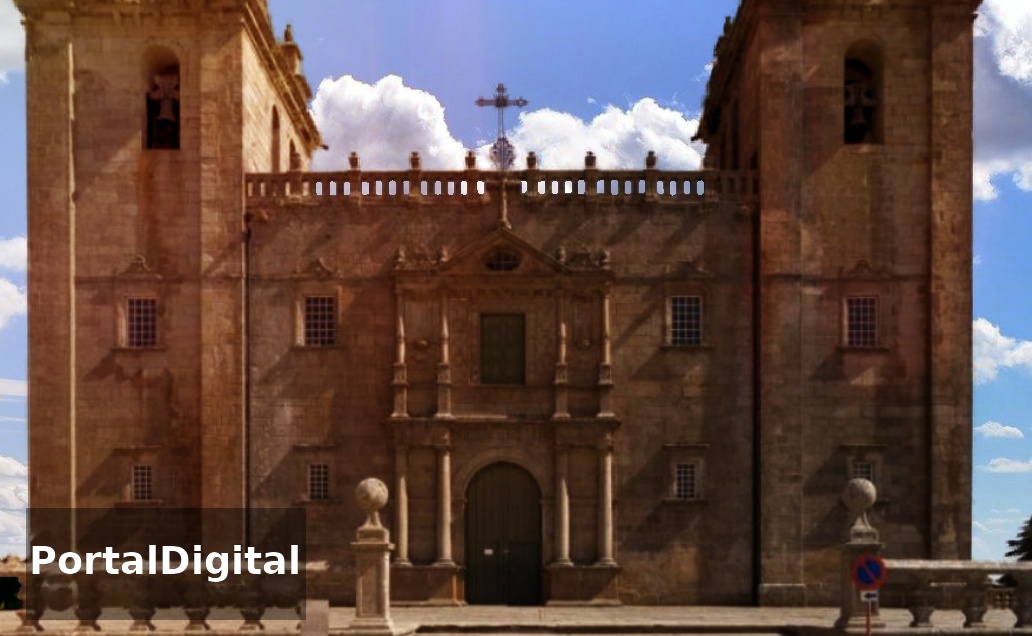
The Miranda do Douro Co-Cathedral (Old Cathedral), of Mannerist design, has a harmonious façade in which a central body is flanked by two powerful towers, and with an interior made up of three naves vaulted in the Gothic style and with warheads with visible ribs.
The main altarpiece, a sculptural ensemble dedicated to Saint Mary Major, is already a 17th century work and is due to the work of Gregório Fernández, a Galician master based in Valladolid and responsible for a very active workshop during the Mannerist period.
In the Cathedral there are other altarpieces that deserve the visitor's attention, such as that of São Bento, that of Nossa Senhora dos Remédios, that of the Relics, that of Santo Amaro or the altarpiece of Nossa Senhora do Rosário (currently the Sacred Heart of Jesus).
The Baroque style altarpieces dating from the 18th century can also be seen in the altarpieces of Saint Peter, Saint Jerome and Nossa Senhora da Piedade.
The Cabido choir chair, a work of great refinement and rarity, dates from the 17th century and is in the Mannerist style.
The Miranda do Douro Cathedral is also known for housing an icon of popular religiosity “the Baby Jesus of Cartolinha”, and this small 18th century image can be seen in a baroque gilded oratory where devotees place their offerings.
The work involved the destruction of the old Church of Santa Maria, a Gothic temple erected during the reign of D. Dinis, in the 14th century.
The project by Gonçalo Torralva and Miguel de Arruda with subsequent execution by Francisco Velasquez, and the construction was completed at the beginning of the 17th century, maintaining the status of episcopal see until 1780, the year in which the seat of the diocese was transferred to Bragança (with the designation of Diocese of Bragança and Miranda).
The building thus came to be known as the Concatedral or simply the Igreja Matriz de Miranda do Douro.
The transfer of the headquarters of the diocese may be linked to the history of Miranda do Douro which, due to its border status, fell twice to Spanish power in the 18th century, and Bragança was a city less exposed to external threats.
The Miranda do Douro Co-Cathedral (Old Cathedral), of Mannerist design, has a harmonious façade in which a central body is flanked by two powerful towers, and with an interior made up of three naves vaulted in the Gothic style and with warheads with visible ribs.
The main altarpiece, a sculptural ensemble dedicated to Saint Mary Major, is already a 17th century work and is due to the work of Gregório Fernández, a Galician master based in Valladolid and responsible for a very active workshop during the Mannerist period.
In the Cathedral there are other altarpieces that deserve the visitor's attention, such as that of São Bento, that of Nossa Senhora dos Remédios, that of the Relics, that of Santo Amaro or the altarpiece of Nossa Senhora do Rosário (currently the Sacred Heart of Jesus).
The Baroque style altarpieces dating from the 18th century can also be seen in the altarpieces of Saint Peter, Saint Jerome and Nossa Senhora da Piedade.
The Cabido choir chair, a work of great refinement and rarity, dates from the 17th century and is in the Mannerist style.
The Miranda do Douro Cathedral is also known for housing an icon of popular religiosity “the Baby Jesus of Cartolinha”, and this small 18th century image can be seen in a baroque gilded oratory where devotees place their offerings.