

It is located in Monte da Penha, city and municipality of Guimarães, District of Braga, Northern Portugal
The Penha Sanctuary in Guimarães or “Sanctuary of Nossa Senhora do Carmo da Penha” is a unique example of the religious architecture of Marques da Silva
In the 1930s, the renowned architect Marques da Silva was in charge of the project and work on regularizing the land began on August 6, 1930.
The Penha Sanctuary is a work built almost entirely in granite from the region, its modern lines do not follow traditional forms, being always straight lines and integrated into the "Art Deco" style of the 1930s.
The works began on August 6, 1930 according to the project of architect Marques da Silva, and the inauguration was on September 14, 1947 without the presence of architect Marques da Silva, who had died 3 months earlier.
The monument was inaugurated in 1947, and is characterized by having a religious architecture, impressive granite construction with unusual characteristics of huge rocks, the Sanctuary of Nossa Senhora da Penha is a symbol of the faith of Guimarães, and the annual pilgrimage takes place on the 2nd Sunday of September
Penha Mountain, with an area of 1140 hectares, is defined as a place of extreme relevance both in terms of landscape, but also for the most varied aspects such as religious, cultural, sporting, tourism and leisure.
The Sanctuary is located at the top of Monte da Penha, also known as “Monte de Santa Catarina” at around 617 meters above sea level, making it an unmissable point in the landscape of the Ave valley, and has a garden with ponds and flowerbeds with several cross-shaped annual plants punctuated by yews, cedars and tulips.
The area has road access, a cable car that came into operation in 1995 and crosses the Costa area reaching the top of the mountain where huge granite outcrops known as cliffs predominate.
Nearby is the “Archaeological Station of Penha” whose remains date back to Prehistory, the first hermitage known at the site dedicated to “São Mamede” dates back to the Middle Ages, and changing the patron saint to São Jerónimo in 1528 due to the presence of the friars of that order at the site.
In the year 1702, Guilherme Marino, coming from Italy and belonging to the Order of Santo Antão, retired to a natural shelter known as the “Gruta do Ermitão” and placed there the image of “Our Lady of Mount Carmel” carved in Braga to be venerated.
In the 1930s, the hermit was succeeded by a community of barefoot Carmelites presided over by Friar Joaquim de Santo Elias, and this community allegedly enthroned the Virgin and built a hospice on the site of the Casa da Senhora.
In 1719, the Irmandade de Santa Catarina was founded with its chapel in the southern part of the Penha ridge, and with a fountain blessed in 1887.
The Brotherhood of Nossa Senhora do Carmo even before its constitution and approval of statutes in 1872 began to form, and five years earlier meetings were already being held on matters of the future brotherhood.
The benefactor Fernando de Castro Abreu Magalhães de Fafe offered an image of Our Lady of Lourdes that was placed in a cave that today bears his name (1892). In 1893, the space was planted with trees, the road was opened and a hotel was built.
The laying of the first stone for the construction of the church, initially dedicated to Nossa Senhora da Conceição, took place on September 8, 1895, according to the plan drawn up by Father Domingos Ferreira, in 1897 the first mass was celebrated in the sacristy, as the church was still under construction.
In 1898 José Monteiro da Costa from Real Companhia Hortícola Agrícola Portuense drew up a plan to improve the site, that is, he set up a system that allowed the distribution of water for the planting of trees in the park (1908) and later Jacintho de Mattos worked in the sanctuary's gardens (1907/1910).
In 1931, major remodeling and construction work began on the new Sanctuary according to a project by José Marques da Silva (1869-1947), whose main chapel suffered a violent fire in 1939, and these works began to be directed by his daughter and her husband David Moreira da Silva (1909-2002).
The access road to the sanctuary is characterized by the presence of large rocks and species such as oaks, plane trees, cork oaks, ash trees and false plane trees. Between the rocks there are stairs that connect paths that go up the hill where you can occasionally find picnic areas with stone tables and benches.
In this area there is also a mini golf area, a campsite and a scout center, restaurants, bars and a hotel and close to Casa da Penha a large private park.
Access to the site beyond the road is also via a cable car where you can see broad views over the Ave valley and the city of Guimarães.
Next to Gruta do Ermitão is the Adega do Ermitão, the Gruta de Nossa Senhora do Carmo, the Gruta do Padre Caldas, the Chapel of São Cristóvão with a crenellated tower, the Hanging Garden, the Suspended Penedo and the Casa do Despacho (all already mentioned as existing in 1712 by Frei Agostinho de Santa Maria),
At the top there is the statue of Pope Pius IX who allowed the site to be organized in 1854 and whose statue began to be built in 1882.
On Monte da Penha there is the “Penedo de São Cristóvão” with a high relief of the Saint next to the hotel offered by Guimarães drivers in 1930.
In the sanctuary there are festivities dedicated to “Our Lady of Penha” (Great Pilgrimage of the Archiprestado) on the 2nd Sunday of September, that of “Our Lady of Carmo da Penha” (Patron Saint of the Brotherhood) on the 16th of July or the following Sunday, that of “Santa Catarina” (Patron Saint of Hunters) on the 3rd Sunday of June, and that of “S. Cristóvão (Patron Saint of Motorists) on the July 25th or subsequent Sunday.
The Mountain is the highest point in the surrounding area (approximately 617 meters above sea level) and is located 7 km from the historic center of Guimarães, in the North of Portugal.
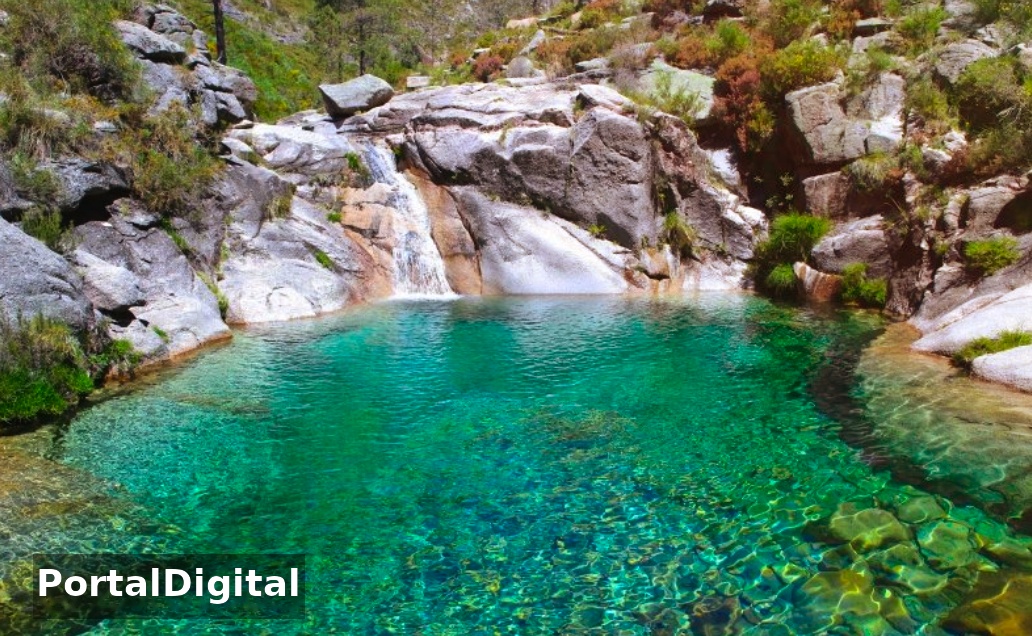
The space is wooded, the landscape features huge boulders covered in flowers, with natural resources, a large vertical lake watching the sunset and Morro da Penha with the aim of bringing the Penha Mountain closer to the population of Guimarães and to those who visit Guimarães.
The Church is located at the top of the mountain, in the Penha National Park and was built in 1947, a more modern temple accessible by car, but also by cable car where you can enjoy the spectacular views of the park around the church.
In the 1930s, the renowned architect Marques da Silva was in charge of the project and work on regularizing the land began on August 6, 1930.
The Penha Sanctuary is a work built almost entirely in granite from the region, its modern lines do not follow traditional forms, being always straight lines and integrated into the "Art Deco" style of the 1930s.
The works began on August 6, 1930 according to the project of architect Marques da Silva, and the inauguration was on September 14, 1947 without the presence of architect Marques da Silva, who had died 3 months earlier.
The monument was inaugurated in 1947, and is characterized by having a religious architecture, impressive granite construction with unusual characteristics of huge rocks, the Sanctuary of Nossa Senhora da Penha is a symbol of the faith of Guimarães, and the annual pilgrimage takes place on the 2nd Sunday of September
Penha Mountain, with an area of 1140 hectares, is defined as a place of extreme relevance both in terms of landscape, but also for the most varied aspects such as religious, cultural, sporting, tourism and leisure.
The Sanctuary is located at the top of Monte da Penha, also known as “Monte de Santa Catarina” at around 617 meters above sea level, making it an unmissable point in the landscape of the Ave valley, and has a garden with ponds and flowerbeds with several cross-shaped annual plants punctuated by yews, cedars and tulips.
The area has road access, a cable car that came into operation in 1995 and crosses the Costa area reaching the top of the mountain where huge granite outcrops known as cliffs predominate.
Nearby is the “Archaeological Station of Penha” whose remains date back to Prehistory, the first hermitage known at the site dedicated to “São Mamede” dates back to the Middle Ages, and changing the patron saint to São Jerónimo in 1528 due to the presence of the friars of that order at the site.
In the year 1702, Guilherme Marino, coming from Italy and belonging to the Order of Santo Antão, retired to a natural shelter known as the “Gruta do Ermitão” and placed there the image of “Our Lady of Mount Carmel” carved in Braga to be venerated.
In the 1930s, the hermit was succeeded by a community of barefoot Carmelites presided over by Friar Joaquim de Santo Elias, and this community allegedly enthroned the Virgin and built a hospice on the site of the Casa da Senhora.
In 1719, the Irmandade de Santa Catarina was founded with its chapel in the southern part of the Penha ridge, and with a fountain blessed in 1887.
The Brotherhood of Nossa Senhora do Carmo even before its constitution and approval of statutes in 1872 began to form, and five years earlier meetings were already being held on matters of the future brotherhood.
The benefactor Fernando de Castro Abreu Magalhães de Fafe offered an image of Our Lady of Lourdes that was placed in a cave that today bears his name (1892). In 1893, the space was planted with trees, the road was opened and a hotel was built.
The laying of the first stone for the construction of the church, initially dedicated to Nossa Senhora da Conceição, took place on September 8, 1895, according to the plan drawn up by Father Domingos Ferreira, in 1897 the first mass was celebrated in the sacristy, as the church was still under construction.
In 1898 José Monteiro da Costa from Real Companhia Hortícola Agrícola Portuense drew up a plan to improve the site, that is, he set up a system that allowed the distribution of water for the planting of trees in the park (1908) and later Jacintho de Mattos worked in the sanctuary's gardens (1907/1910).
In 1931, major remodeling and construction work began on the new Sanctuary according to a project by José Marques da Silva (1869-1947), whose main chapel suffered a violent fire in 1939, and these works began to be directed by his daughter and her husband David Moreira da Silva (1909-2002).
The access road to the sanctuary is characterized by the presence of large rocks and species such as oaks, plane trees, cork oaks, ash trees and false plane trees. Between the rocks there are stairs that connect paths that go up the hill where you can occasionally find picnic areas with stone tables and benches.
In this area there is also a mini golf area, a campsite and a scout center, restaurants, bars and a hotel and close to Casa da Penha a large private park.
Access to the site beyond the road is also via a cable car where you can see broad views over the Ave valley and the city of Guimarães.
Next to Gruta do Ermitão is the Adega do Ermitão, the Gruta de Nossa Senhora do Carmo, the Gruta do Padre Caldas, the Chapel of São Cristóvão with a crenellated tower, the Hanging Garden, the Suspended Penedo and the Casa do Despacho (all already mentioned as existing in 1712 by Frei Agostinho de Santa Maria),
At the top there is the statue of Pope Pius IX who allowed the site to be organized in 1854 and whose statue began to be built in 1882.
On Monte da Penha there is the “Penedo de São Cristóvão” with a high relief of the Saint next to the hotel offered by Guimarães drivers in 1930.
In the sanctuary there are festivities dedicated to “Our Lady of Penha” (Great Pilgrimage of the Archiprestado) on the 2nd Sunday of September, that of “Our Lady of Carmo da Penha” (Patron Saint of the Brotherhood) on the 16th of July or the following Sunday, that of “Santa Catarina” (Patron Saint of Hunters) on the 3rd Sunday of June, and that of “S. Cristóvão (Patron Saint of Motorists) on the July 25th or subsequent Sunday.
The Mountain is the highest point in the surrounding area (approximately 617 meters above sea level) and is located 7 km from the historic center of Guimarães, in the North of Portugal.
The space is wooded, the landscape features huge boulders covered in flowers, with natural resources, a large vertical lake watching the sunset and Morro da Penha with the aim of bringing the Penha Mountain closer to the population of Guimarães and to those who visit Guimarães.
The Church is located at the top of the mountain, in the Penha National Park and was built in 1947, a more modern temple accessible by car, but also by cable car where you can enjoy the spectacular views of the park around the church.
The Classification of the Sanctuary of Penha in Guimarães
The Penha Sanctuary in Guimarães was included in the Special Protection Zone of the Penha Archaeological Station.