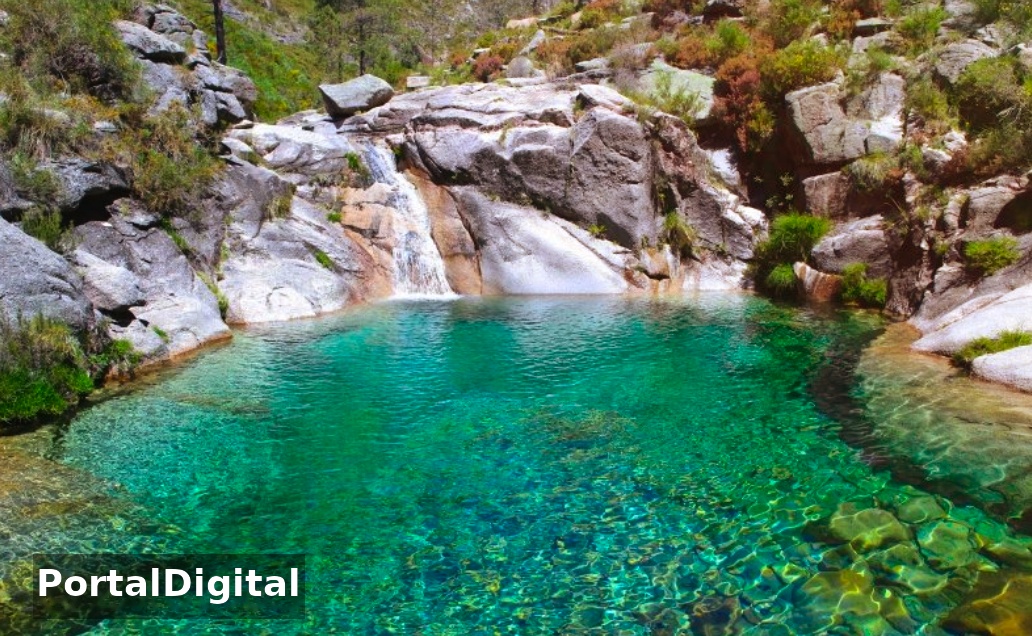


The two routes are some of the most emblematic trails in Serra da Estrela and as such deserve to be in our top trails and walking routes in Portugal
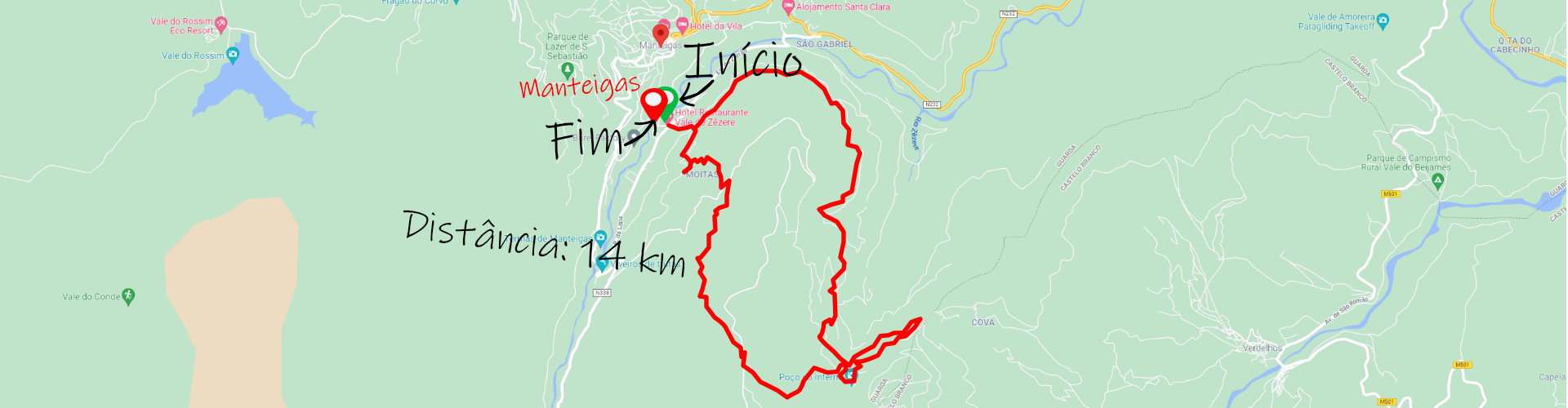
MTG PR1: Poço do Inferno Route and PR2 Javali Routes (Manteigas);
Distance: 14 km;
Circular: yes;
Technical Difficulty: Moderate;
Departure/Arrival Location: Manteigas.
Distance: 14 km;
Circular: yes;
Technical Difficulty: Moderate;
Departure/Arrival Location: Manteigas.
The Poço do Inferno Route is only 2.5 km long and can be easily combined with the Javali Route (11.5 km), making the total circular route around 14 km.
Along these routes we pass through magnificent forests with autumn colors as there are many chestnut, ash and oak trees in this area.
On this walking trail we also highlight the waterfalls of the Leandres river, the imposing waterfalls of Poço do Inferno and the superb panoramic view over Manteigas.
The beginning of the route next to the Capela de Santo António in Manteigas is circular in a clockwise direction, signposted which groups PR2 - Rota do Javali and PR1 - Rota do Poço Negro.
The Javali Route allows you to glimpse the humanized landscape with a panoramic view over the village of Manteigas, cross the interior of magnificent forests, climb to the top of the Leandres stream and feel the “Poço do Inferno” waterfall.
The path taken by Horácio in search of a better life is a character in Ferreira de Castro's neo-realist novel “A Lã e a Neve” where he traveled hard walks between Manteigas and Covilhã in search of a job in the weaving industry that would allow him to buy a house and be able to marry Idalina to his beloved.
In this work, the author describes the places Horácio passes through in a way that is very faithful to the reality of Manteigas' natural heritage, portraying the character's strength in the midst of the Second World War in a contrast between the rural world and the proletariat.
Along the route, interesting structures appear, such as the Casa do Guarda-florestal dos Carvalhais or the Viveiro Florestal das Moitas.
The Serra da Estrela Forestry Administration (Manteigas Perimeter) created in 1888 constitutes one of the first mountain forest perimeters, with the Forestry Services playing a central role in its afforestation and management.
In terms of watercourses, Ribeira de Leandres stands out, which runs quickly between cliffs and embedded valleys and Poço do Inferno is a natural waterfall 10 meters high.
These natural spaces contribute to the development of local vegetation and allow you to contemplate a beautiful forest area that fills the horizons with color with soft shades of brown in winter/spring, green with white flowers in summer, yellow and orange that merge into the autumn foliage.
Several native species are present on this route, such as chestnut, ash, black oak, willow and black alder, gilt, birch and frail tree.
The balance between hardwood and resinous species combined with the presence of watercourses and woodland areas make this area one of the preferred habitats for several animal species.
The trail route features habitats frequented by wild rabbits, foxes, wild boars and hedgehogs.
Among the birds of prey, the harrier and the kestrel stand out, and as for reptiles, you can find the collared water snake and the water lizard.
The route of the Boar Route presents habitats frequented by wild rabbits, foxes, wild boars and hedgehogs, hen harriers and kestrels (the last 2 birds of prey).
In this area you can find the collared water snake, the water lizard, the otter is one of the animals that inhabit this area and its presence is detected by the star-shaped footprints.
Along the route, the landscape is caused by the phenomenon of gravel pits, which are deposits of coarse rock fragments normally located on slopes of moderate to strong inclination generated by cryoclasm (cracking of rocks with the transition of water from the liquid to the solid state).
Along these routes we pass through magnificent forests with autumn colors as there are many chestnut, ash and oak trees in this area.
On this walking trail we also highlight the waterfalls of the Leandres river, the imposing waterfalls of Poço do Inferno and the superb panoramic view over Manteigas.
The beginning of the route next to the Capela de Santo António in Manteigas is circular in a clockwise direction, signposted which groups PR2 - Rota do Javali and PR1 - Rota do Poço Negro.
The Javali Route allows you to glimpse the humanized landscape with a panoramic view over the village of Manteigas, cross the interior of magnificent forests, climb to the top of the Leandres stream and feel the “Poço do Inferno” waterfall.
The path taken by Horácio in search of a better life is a character in Ferreira de Castro's neo-realist novel “A Lã e a Neve” where he traveled hard walks between Manteigas and Covilhã in search of a job in the weaving industry that would allow him to buy a house and be able to marry Idalina to his beloved.
In this work, the author describes the places Horácio passes through in a way that is very faithful to the reality of Manteigas' natural heritage, portraying the character's strength in the midst of the Second World War in a contrast between the rural world and the proletariat.
Along the route, interesting structures appear, such as the Casa do Guarda-florestal dos Carvalhais or the Viveiro Florestal das Moitas.
The Serra da Estrela Forestry Administration (Manteigas Perimeter) created in 1888 constitutes one of the first mountain forest perimeters, with the Forestry Services playing a central role in its afforestation and management.
In terms of watercourses, Ribeira de Leandres stands out, which runs quickly between cliffs and embedded valleys and Poço do Inferno is a natural waterfall 10 meters high.
These natural spaces contribute to the development of local vegetation and allow you to contemplate a beautiful forest area that fills the horizons with color with soft shades of brown in winter/spring, green with white flowers in summer, yellow and orange that merge into the autumn foliage.
Several native species are present on this route, such as chestnut, ash, black oak, willow and black alder, gilt, birch and frail tree.
The balance between hardwood and resinous species combined with the presence of watercourses and woodland areas make this area one of the preferred habitats for several animal species.
The trail route features habitats frequented by wild rabbits, foxes, wild boars and hedgehogs.
Among the birds of prey, the harrier and the kestrel stand out, and as for reptiles, you can find the collared water snake and the water lizard.
The route of the Boar Route presents habitats frequented by wild rabbits, foxes, wild boars and hedgehogs, hen harriers and kestrels (the last 2 birds of prey).
In this area you can find the collared water snake, the water lizard, the otter is one of the animals that inhabit this area and its presence is detected by the star-shaped footprints.
Along the route, the landscape is caused by the phenomenon of gravel pits, which are deposits of coarse rock fragments normally located on slopes of moderate to strong inclination generated by cryoclasm (cracking of rocks with the transition of water from the liquid to the solid state).