
It is located in the Tua river valley, District of Bragança, Northwest of Portugal
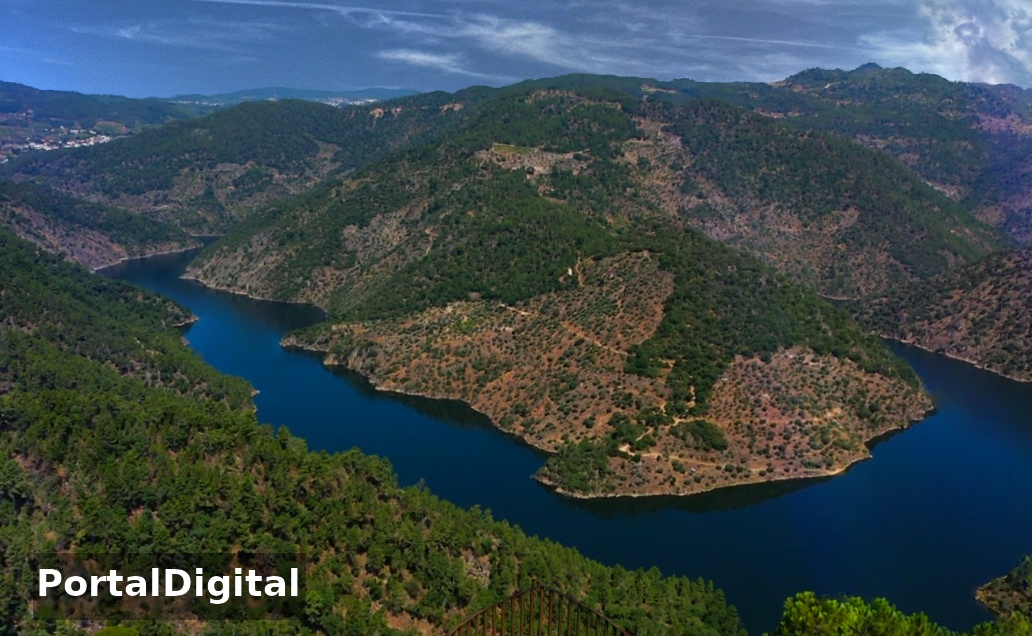
The Vale do Tua Natural Park is one of the greatest pearls in the North of Portugal. It is not as well-known as the neighboring Douro International Natural Park, but when it comes to the beauty of the landscape, it is second to none.
The region's greatest attraction was the Tua Line, that is, the historic railway link that connected Foz Tua to Bragança, following the winding Tua river valley from its mouth to Mirandela, was one of the most scenic and important railway links in Portugal.
The construction of the Tua Dam led to the submersion of several kilometers of the line, which forced its closure.
Currently, it is no longer possible to travel the Tua Line either by train or on foot (yes, it was once one of the most brutal walking routes in Portugal), but the region has managed to reinvent itself and make the best use of the enormous landscape changes created by the Tua Dam reservoir.
The creation of superb viewpoints from which you can safely enjoy and enjoy the landscapes over the Tua Valley: Miradouro de S. Lourenço, Miradouro da Barragem de Foz-Tua, and Miradouro da Senhora da Saúde.
The São Lourenço Viewpoint near the municipal road that connects Pombal de Ansiães to the place of São Lourenço offers a privileged view over the Tua valley, inviting the observer to enter the silhouette of São Lourenço, designed by the sculptor Paulo Moura, to enjoy the magnificent surrounding landscape.
The Foz-Tua Dam Viewpoint allows us to appreciate the ingenuity and beauty of the various road (Edgar Cardoso bridge), railway (Presas bridge and tunnel) and hydroelectric infrastructure (dam and Eduardo Souto Moura substation building) that, at different times, have enabled the exploration of the richness and diversity of natural resources that characterize the Tua Valley.
The Miradouro da Senhora da Saúde is located in the Sanctuary of Our Lady of Health in Mogo de Malta, this religious space was built in the 50s of the 20th century, and is a Marian sanctuary built by the hands of the population of Mogos.
In this place you can glimpse the landscape of Vale da Cabreira and view the Sanctuary of N. Sra. da Graça in Samorinha.
The Fraga da Ola Viewpoint located in Pinhal do Douro is made up of a metal structure, and from here you can observe the famous Fraga da Ola waterfall as well as an extraordinary panoramic landscape, which highlights a wide section of the Douro river valley and the Ribeiro da Vila valley.
The Miradouro da Senhora da Graça located in a religious space about 2 km from the town of Carrazeda de Ansiães on a granite elevation of around 900 m in altitude, and from this location it is possible to view a vast area of the Carrazedente plateau and part of the Tua river valley.
The Olhos do Tua Viewpoint, on the northeastern edge of the village of Castanheiro do Norte, provides an excellent panoramic view over a wide section of the Tua river valley.
The structure of the viewpoint designed by sculptor Paulo Moura represents the keel of a boat in an allusion to the recent navigability of this river course.
The Rota do Douro Viewpoint located halfway up the hillside has its own leisure space and is perfectly integrated into the landscape, and from this location it is possible to observe the entire surrounding Douro landscape, and the vineyards on the terraces of the farms, the riverside villages and the Douro River.
The Ansiães Castle Viewpoint corresponds to the space with the castle walls and the multicolored designs of the landscape that cascades down to the Douro valley.
The Miradouro da Senhora da Boa Morte is part of a religious space from which you can have a panoramic view of the wild slopes of the Tua River and where traditional botanical species of a Mediterranean nature can be seen in a landscape that descends abruptly to the riverside valley.
The Tua Valley is far from just landscapes, but there is also a rich historical heritage to explore, ranging from centuries-old walled villages to ancient hillforts, centuries-old traditions that its people heroically keep alive, to a unique gastronomy in Portugal, and wines capable of delighting the most demanding of winemakers.
To discover the many charms of the Tua Valley you need 3 days, and you have to visit the historic city of Mirandela, which is one of the most emblematic cities in the Trás-os-Montes Hot Lands.
In Mirandela, cross the iconic pedestrian bridge over the Tua River, also known by the name “Ponte Velha”, Parque do Império, Parque da Ribeira de Carvalhais and Parque Dr. José Gama where you will find Praia Fluvial de Mirandela.
In the historic center of Mirandela, visit the Paço dos Távoras (which currently houses the City Hall), the Church of Nossa Senhora da Encarnação, the Igreja da Misericórdia, the Solar dos Condes de Vinhais, the Armindo Teixeira Lopes Museum and the Porta de Santo António (the only remnant of the Mirandela Castle wall).
From the village of Vilarinho das Azenhas you can follow the fantastic walking trail of Vilarinho das Azenhas, one of the highlights of the Vale do Tua Natural Park.
In the medieval town of Vila Flor, visit the Vila Flor Mother Church, the Misericórdia Church, the City Hall building, the Solar dos Aguilares, the Roman Fountain, the Pelourinho and the Arch of D. Dinis, and the only one of the five doors in the town walls that has survived the test of time.
The Sanctuary of Nossa Senhora da Lapa, and from its viewpoint you will have superb views over Vila Flor and its surroundings.
A well-kept secret is the unusual Forca de Freixiel, located on top of a hill on the outskirts of the village of Freixiel.
The ancient Ansiães Castle is characterized by being one of the most magical places in the entire Tua Valley region, whose continued occupation dates back to the distant third millennium BC and came to an end in 1734.
This year, Ansiães Castle was abandoned, and the county seat was transferred to Carrazeda de Ansiães, just over five kilometers away.
Today, impressive ruins remain of the fortified medieval town, consisting of two lines of walls, turrets, five access gates, countless dwellings and even two churches.
Inside the walls is the wonderful Romanesque church of São Salvador de Ansiães and outside the Church of São João Baptista.
The town of Foz Tua is located where the Tua River meets the Douro River and where the historic Tua station is located, where the Tua Line joined the Douro Line.
The Tua Valley Interpretive Center is an excellent museum space where you can acquire a lot of information about the Tua Valley, the Tua Line and the Tua Dam.
The village of São Mamede de Ribatua is one of the most beautiful villages in the Tua Valley, and you can wander through its narrow streets while admiring the region's typical architecture.
The main places of interest in the village are the beautiful Igreja Matriz de São Mamede, the Pelourinho, the Roman Bridge over the S. Mamede river, the Jardim das Laranjeiras and the São Mamede de Ribatua Philharmonic Band, the oldest in Portugal (founded in 1799).
At Miradouro do Ujo you can enjoy a view over the Tua river reservoir, and follow the Fragas Más Trail which begins and ends in the village of São Mamede de Ribatua.
In Vila de Alijó, the main points of interest are the historic building of the Town Hall, the Main Church, the Pelourinho and its century-old plane tree, which was even classified as a Tree of Public Interest.
Next door you will find Favaios for wine tourism lovers, a visit to the Adega Cooperativa de Favaios, the Bread and Wine Museum, the Igreja Matriz de São Domingos, the ruins of the Castle Walls and the towering Santa Bárbara Chapel are a must.
From Favaios, continue your journey to the Sanctuary of Senhor de Perafita, one of the most emblematic places of worship in the Tua Valley.
The Sanctuary is made up of a group of buildings connected to each other by a paved path, which include a beautiful rococo-style octagonal church, the Casa dos Milagres, the chapel of Senhor dos Milagres, the fountain and the calvary made up of five beautiful crosses.
The town of Murça is well known for its excellent curves for motor racing, olive oil, wine and its Pig whose statue is found in the town's central square.
The statue of Porca de Murça (Largo 31 de Janeiro), the highlights of the town include the beautiful Edifício dos Paços do Concelho which occupies an old manor house, the Igreja Matriz, the Capela da Misericórdia, the Pelourinho and the Caves de Murça which is the best place to discover the remarkable wines of Murça.
The region's greatest attraction was the Tua Line, that is, the historic railway link that connected Foz Tua to Bragança, following the winding Tua river valley from its mouth to Mirandela, was one of the most scenic and important railway links in Portugal.
The construction of the Tua Dam led to the submersion of several kilometers of the line, which forced its closure.
Currently, it is no longer possible to travel the Tua Line either by train or on foot (yes, it was once one of the most brutal walking routes in Portugal), but the region has managed to reinvent itself and make the best use of the enormous landscape changes created by the Tua Dam reservoir.
The creation of superb viewpoints from which you can safely enjoy and enjoy the landscapes over the Tua Valley: Miradouro de S. Lourenço, Miradouro da Barragem de Foz-Tua, and Miradouro da Senhora da Saúde.
The São Lourenço Viewpoint near the municipal road that connects Pombal de Ansiães to the place of São Lourenço offers a privileged view over the Tua valley, inviting the observer to enter the silhouette of São Lourenço, designed by the sculptor Paulo Moura, to enjoy the magnificent surrounding landscape.
The Foz-Tua Dam Viewpoint allows us to appreciate the ingenuity and beauty of the various road (Edgar Cardoso bridge), railway (Presas bridge and tunnel) and hydroelectric infrastructure (dam and Eduardo Souto Moura substation building) that, at different times, have enabled the exploration of the richness and diversity of natural resources that characterize the Tua Valley.
The Miradouro da Senhora da Saúde is located in the Sanctuary of Our Lady of Health in Mogo de Malta, this religious space was built in the 50s of the 20th century, and is a Marian sanctuary built by the hands of the population of Mogos.
In this place you can glimpse the landscape of Vale da Cabreira and view the Sanctuary of N. Sra. da Graça in Samorinha.
The Fraga da Ola Viewpoint located in Pinhal do Douro is made up of a metal structure, and from here you can observe the famous Fraga da Ola waterfall as well as an extraordinary panoramic landscape, which highlights a wide section of the Douro river valley and the Ribeiro da Vila valley.
The Miradouro da Senhora da Graça located in a religious space about 2 km from the town of Carrazeda de Ansiães on a granite elevation of around 900 m in altitude, and from this location it is possible to view a vast area of the Carrazedente plateau and part of the Tua river valley.
The Olhos do Tua Viewpoint, on the northeastern edge of the village of Castanheiro do Norte, provides an excellent panoramic view over a wide section of the Tua river valley.
The structure of the viewpoint designed by sculptor Paulo Moura represents the keel of a boat in an allusion to the recent navigability of this river course.
The Rota do Douro Viewpoint located halfway up the hillside has its own leisure space and is perfectly integrated into the landscape, and from this location it is possible to observe the entire surrounding Douro landscape, and the vineyards on the terraces of the farms, the riverside villages and the Douro River.
The Ansiães Castle Viewpoint corresponds to the space with the castle walls and the multicolored designs of the landscape that cascades down to the Douro valley.
The Miradouro da Senhora da Boa Morte is part of a religious space from which you can have a panoramic view of the wild slopes of the Tua River and where traditional botanical species of a Mediterranean nature can be seen in a landscape that descends abruptly to the riverside valley.
The Tua Valley is far from just landscapes, but there is also a rich historical heritage to explore, ranging from centuries-old walled villages to ancient hillforts, centuries-old traditions that its people heroically keep alive, to a unique gastronomy in Portugal, and wines capable of delighting the most demanding of winemakers.
To discover the many charms of the Tua Valley you need 3 days, and you have to visit the historic city of Mirandela, which is one of the most emblematic cities in the Trás-os-Montes Hot Lands.
In Mirandela, cross the iconic pedestrian bridge over the Tua River, also known by the name “Ponte Velha”, Parque do Império, Parque da Ribeira de Carvalhais and Parque Dr. José Gama where you will find Praia Fluvial de Mirandela.
In the historic center of Mirandela, visit the Paço dos Távoras (which currently houses the City Hall), the Church of Nossa Senhora da Encarnação, the Igreja da Misericórdia, the Solar dos Condes de Vinhais, the Armindo Teixeira Lopes Museum and the Porta de Santo António (the only remnant of the Mirandela Castle wall).
From the village of Vilarinho das Azenhas you can follow the fantastic walking trail of Vilarinho das Azenhas, one of the highlights of the Vale do Tua Natural Park.
In the medieval town of Vila Flor, visit the Vila Flor Mother Church, the Misericórdia Church, the City Hall building, the Solar dos Aguilares, the Roman Fountain, the Pelourinho and the Arch of D. Dinis, and the only one of the five doors in the town walls that has survived the test of time.
The Sanctuary of Nossa Senhora da Lapa, and from its viewpoint you will have superb views over Vila Flor and its surroundings.
A well-kept secret is the unusual Forca de Freixiel, located on top of a hill on the outskirts of the village of Freixiel.
The ancient Ansiães Castle is characterized by being one of the most magical places in the entire Tua Valley region, whose continued occupation dates back to the distant third millennium BC and came to an end in 1734.
This year, Ansiães Castle was abandoned, and the county seat was transferred to Carrazeda de Ansiães, just over five kilometers away.
Today, impressive ruins remain of the fortified medieval town, consisting of two lines of walls, turrets, five access gates, countless dwellings and even two churches.
Inside the walls is the wonderful Romanesque church of São Salvador de Ansiães and outside the Church of São João Baptista.
The town of Foz Tua is located where the Tua River meets the Douro River and where the historic Tua station is located, where the Tua Line joined the Douro Line.
The Tua Valley Interpretive Center is an excellent museum space where you can acquire a lot of information about the Tua Valley, the Tua Line and the Tua Dam.
The village of São Mamede de Ribatua is one of the most beautiful villages in the Tua Valley, and you can wander through its narrow streets while admiring the region's typical architecture.
The main places of interest in the village are the beautiful Igreja Matriz de São Mamede, the Pelourinho, the Roman Bridge over the S. Mamede river, the Jardim das Laranjeiras and the São Mamede de Ribatua Philharmonic Band, the oldest in Portugal (founded in 1799).
At Miradouro do Ujo you can enjoy a view over the Tua river reservoir, and follow the Fragas Más Trail which begins and ends in the village of São Mamede de Ribatua.
In Vila de Alijó, the main points of interest are the historic building of the Town Hall, the Main Church, the Pelourinho and its century-old plane tree, which was even classified as a Tree of Public Interest.
Next door you will find Favaios for wine tourism lovers, a visit to the Adega Cooperativa de Favaios, the Bread and Wine Museum, the Igreja Matriz de São Domingos, the ruins of the Castle Walls and the towering Santa Bárbara Chapel are a must.
From Favaios, continue your journey to the Sanctuary of Senhor de Perafita, one of the most emblematic places of worship in the Tua Valley.
The Sanctuary is made up of a group of buildings connected to each other by a paved path, which include a beautiful rococo-style octagonal church, the Casa dos Milagres, the chapel of Senhor dos Milagres, the fountain and the calvary made up of five beautiful crosses.
The town of Murça is well known for its excellent curves for motor racing, olive oil, wine and its Pig whose statue is found in the town's central square.
The statue of Porca de Murça (Largo 31 de Janeiro), the highlights of the town include the beautiful Edifício dos Paços do Concelho which occupies an old manor house, the Igreja Matriz, the Capela da Misericórdia, the Pelourinho and the Caves de Murça which is the best place to discover the remarkable wines of Murça.