

It is located on the southwest coast of Portugal, between Ribeira da Junqueira, in São Torpes, and Burgau beach with a length of 110 km, in a total area of 89,595 hectares corresponding to the land area of 56,952.79 ha and the adjacent marine area to 17,461.21ha
The Southwest Alentejo and Costa Vicentina Natural Park covers the southwest coast of mainland Portugal, the south of the Alentejo coast and the windward Algarve around Cabo de São Vicente.
The area includes territories of parishes in the following municipalities and districts: District of Setúbal, Sines (parishes of Porto Covo and Sines), District of Beja, Odemira (parishes of Longueira / Almograve, Santa Maria, São Luís, São Salvador, São Teotónio, Vila Nova de Milfontes and Zambujeira do Mar), District of Faro, Aljezur (parishes of Aljezur, Bordeira, Odeceixe and Rogil), Vila do Bispo (parishes of Budens, Raposeira, Sagres and Vila do Bispo).
The Park consists of the coastal strip, an underwater area 2 km from the coast, the Mira river valley from its mouth to the village of Odemira and part of Serra do Cercal.
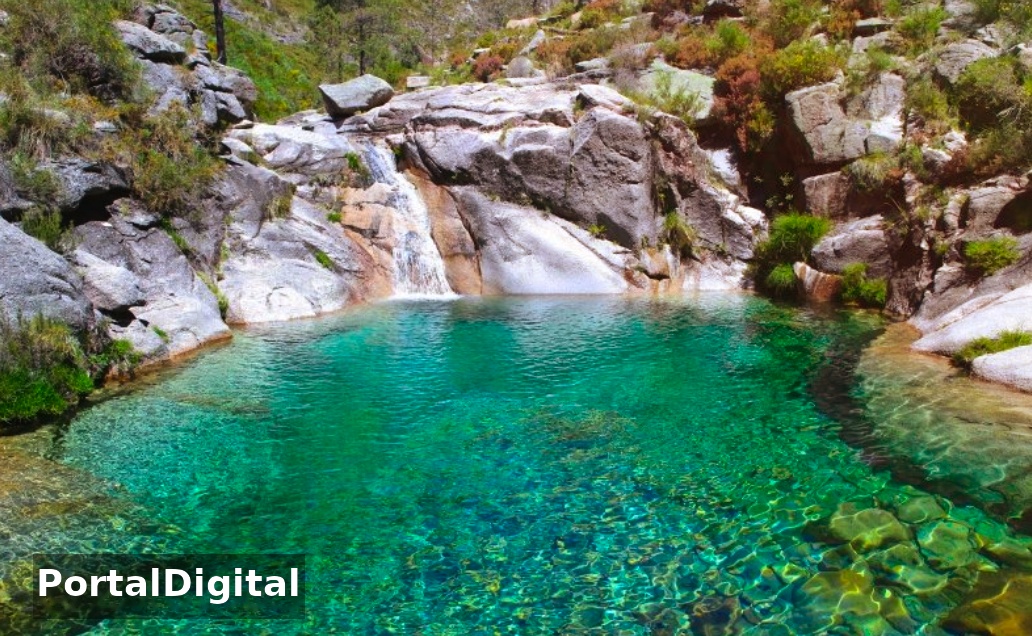
In the park area there are diverse landscapes and habitats such as: steep cliffs and cliffs, beaches, several islets and reefs (the island of Pessegueiro and the coral reef in Carrapateira), the Mira estuary, Cape Sardão, the Sagres promontory, Cape São Vicente, dune systems, heaths, salt marshes, salt steppes, temporary lagoons and ravines (valleys embedded with dense vegetation cover).
The flora of the Southwest Alentejano and Costa Vicentina Natural Park is distributed across three types of geomorphological environments: on the Vincentian plateau to the south with vegetation typical of limestone soils with a dry and hot climate, coastal plateau with more diverse vegetation in the dunes, heaths and wetlands, coastal mountains and ravines with a cooler and wetter climate, with dense tree and shrub vegetation flanking the streams.
Throughout the park there is a mixture of Mediterranean, North-Atlantic and African vegetation, but with a predominance of Mediterranean vegetation.
In this area there are around 750 species, more than 100 species are endemic, rare or localized, and 12 species do not exist anywhere else in the world.
The park is a transit area for soaring birds and trans-Saharan migratory passerines, as they move between wintering areas in Africa and nesting areas in Europe, and is the last breeding area for the osprey in the Iberian Peninsula.
Nesting on cliffs and sea cliffs is a characteristic of the park area, with emphasis on the white stork, the peregrine falcon and the red-billed crow, and the only place in the world where storks nest on sea cliffs.
Weasels, foxes (also called zorras), badgers and sacarrabos (or scalavars) are found in the dune and cliff areas.
Badgers dig burrows in the cliffs and an area where otters are found in a marine habitat.
Caves such as Monte Clérigo and Amarela are refuges for important communities of bats (Chiroptera).
Various species of amphibians breed in the temporary lagoons: the toad (Bufo bufo), the black-clawed toad (Pelobates cultripes) and the green wart frog (Pelodytes punctatus).
Crustaceans such as Triops cancriformis mauritanicus and other Iberian endemics are found in the humid areas.
In the marine area of the park you can find species of fish and other animals common in the northeast of the Atlantic.
The area includes territories of parishes in the following municipalities and districts: District of Setúbal, Sines (parishes of Porto Covo and Sines), District of Beja, Odemira (parishes of Longueira / Almograve, Santa Maria, São Luís, São Salvador, São Teotónio, Vila Nova de Milfontes and Zambujeira do Mar), District of Faro, Aljezur (parishes of Aljezur, Bordeira, Odeceixe and Rogil), Vila do Bispo (parishes of Budens, Raposeira, Sagres and Vila do Bispo).
The Park consists of the coastal strip, an underwater area 2 km from the coast, the Mira river valley from its mouth to the village of Odemira and part of Serra do Cercal.
In the park area there are diverse landscapes and habitats such as: steep cliffs and cliffs, beaches, several islets and reefs (the island of Pessegueiro and the coral reef in Carrapateira), the Mira estuary, Cape Sardão, the Sagres promontory, Cape São Vicente, dune systems, heaths, salt marshes, salt steppes, temporary lagoons and ravines (valleys embedded with dense vegetation cover).
The flora of the Southwest Alentejano and Costa Vicentina Natural Park is distributed across three types of geomorphological environments: on the Vincentian plateau to the south with vegetation typical of limestone soils with a dry and hot climate, coastal plateau with more diverse vegetation in the dunes, heaths and wetlands, coastal mountains and ravines with a cooler and wetter climate, with dense tree and shrub vegetation flanking the streams.
Throughout the park there is a mixture of Mediterranean, North-Atlantic and African vegetation, but with a predominance of Mediterranean vegetation.
In this area there are around 750 species, more than 100 species are endemic, rare or localized, and 12 species do not exist anywhere else in the world.
The park is a transit area for soaring birds and trans-Saharan migratory passerines, as they move between wintering areas in Africa and nesting areas in Europe, and is the last breeding area for the osprey in the Iberian Peninsula.
Nesting on cliffs and sea cliffs is a characteristic of the park area, with emphasis on the white stork, the peregrine falcon and the red-billed crow, and the only place in the world where storks nest on sea cliffs.
Weasels, foxes (also called zorras), badgers and sacarrabos (or scalavars) are found in the dune and cliff areas.
Badgers dig burrows in the cliffs and an area where otters are found in a marine habitat.
Caves such as Monte Clérigo and Amarela are refuges for important communities of bats (Chiroptera).
Various species of amphibians breed in the temporary lagoons: the toad (Bufo bufo), the black-clawed toad (Pelobates cultripes) and the green wart frog (Pelodytes punctatus).
Crustaceans such as Triops cancriformis mauritanicus and other Iberian endemics are found in the humid areas.
In the marine area of the park you can find species of fish and other animals common in the northeast of the Atlantic.