

It is located in the Northeast of Trás-os-Montes, Northeast of Portugal
The Park has a size of around 75 thousand hectares, recognized in 1979 as a Natural Park, currently has 9,000 inhabitants and 92 villages and is located in the Terra Fria Trás-os-Montes, temperatures vary between – 12º C and 40º C.
It presents a heterogeneous relief with undulating plateaus cut by deep valleys, some mountains and the two most important stand out: the Serra de Montesinho to the north of Bragança, and the Serra da Coroa to the north of Vinhais.
Altitudes vary between 1486 meters in Serra de Montesinho, and 438 meters in the bed of the Mente river.
In the Serra de Montesinho there is extensive biodiversity inhabited by species of Iberian wolves, roe deer and deer. Shales are the dominant rocks, but granites, ultrabasic rocks and small limestone patches can also be found.
The Park to the north borders Spain, running through communities in Galicia and Castilla-León, and to the west and east also with Spain (Galicia and Castile-León).
In the west it borders the municipality of Chaves, and to the south it continues to be part of the municipalities of Vinhais and Bragança.
The Park is crossed by some of the most important watercourses in the Douro River basin: the Sabor, Maçãs and Baceiro rivers.
The Sabor River originates on the border with Spain on the tops of the Serra de Montesinho, passing a short distance from Bragança.
The Maçãs River originates in Spain, and forms the international border in two distinct stretches, also constituting the easternmost and southernmost borders of the Park.
The Baceiro River also originates in Spain, being the smallest of the main rivers and along its route there is an important trout farm still located in the park next to the Castrelos Bridge.
In the Vineyard area there are the Mente, Rabaçal and Tuela rivers that originate in Spain, the first two coming from Galicia, and the last from Castilla-León.
The Mente runs along part of its route along the international border, forming the western border of the Park, where the thermal waters of Sendim/Segirei are located, shared by the municipalities of Vinhais and Chaves.
The Rabaçal is one of two rivers (the other is the Tuela) that form the Tua river, upstream of Mirandela.
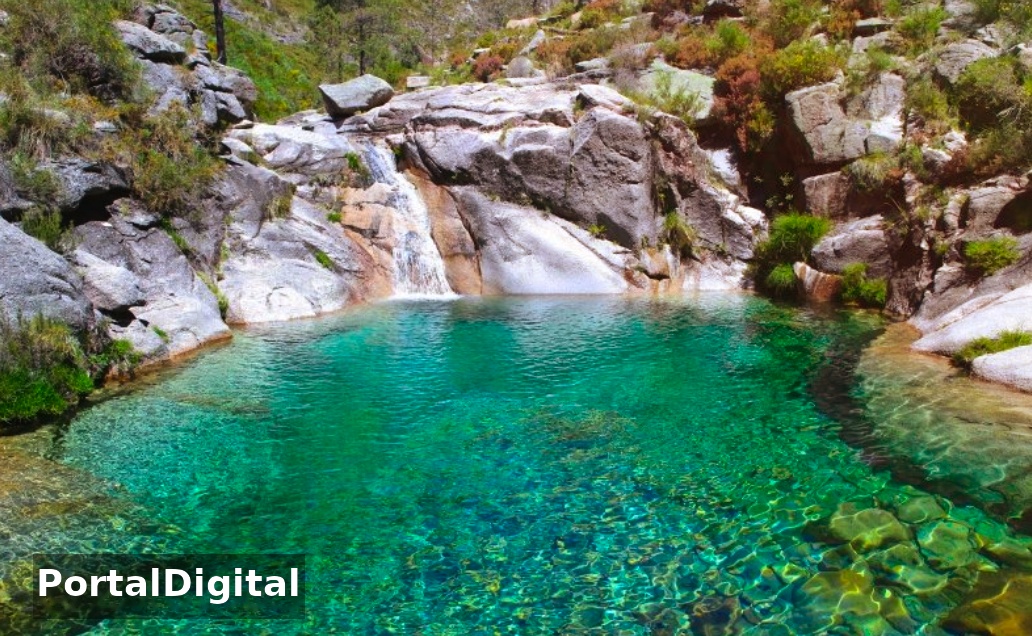
The Park offers the leisure of a river beach next to the Sobreiró de Cima road bridge in the Lomba Zone, and in fact the series of mountains between the Mente and Rabaçal rivers that gave shape to the term Terras de Lomba due to its continuous undulating profile between the two valleys.
The two rivers run very close to the north, they progressively move apart as they go south, but they come closer together again and end up converging forming a peninsula or hump.
The Tuela, which passes a short distance from Vinhais (already outside the PNM), offers two popular beaches as an attraction, one of which is close to the PNM border at Ponte de Soeira (EN103).
These rivers with deep valleys and waters that are sometimes crystal clear and sometimes black, with thermal or simply refreshing properties for the region's torrid summer heat, wind through valleys that are as inhospitable as they are verdant and full of life, both animal and plant.
Ancestral mills, most of which are still used by the population, and crossed by ancient Roman bridges, are an attraction for fishing (trout, boga, barbel and scallop).
In the Montesinho Natural Park there is a great diversity of fauna and flora, consisting of: heather, rockrose and broom occupy large territories of land abandoned by agriculture, edges of forests or land formerly occupied by an autochthonous forest.
Forests are extremely important biotopes for several species of wildlife.
The marshes, also known as meadows or mountain pastures, are associated with a large part of the riverside areas that run through the Park.
Chestnut chestnut groves (leafy trees) occupy vast territories in the region, holm oak forests (sardoais) occur in less elevated areas along steep, sunny slopes.
Black oak forests are one of the main types of autochthonous arboreal vegetation that occurs in the Park, forming part of a continuum that extends south to the Serra da Nogueira.
The Montesinho Natural Park is among the most important mountain areas for fauna at national and European level.
A significant part of the Portuguese terrestrial fauna is represented here, with around two hundred and fifty species of vertebrates and a high richness and diversity of invertebrates is also recognized.
In this area, the presence of the Iberian wolf, the deer, the water mole, the wild cat, the greater horseshoe bat and the marsh rat stands out, there are around 160 species of birds including the golden eagle and the black stork.
It presents a heterogeneous relief with undulating plateaus cut by deep valleys, some mountains and the two most important stand out: the Serra de Montesinho to the north of Bragança, and the Serra da Coroa to the north of Vinhais.
Altitudes vary between 1486 meters in Serra de Montesinho, and 438 meters in the bed of the Mente river.
In the Serra de Montesinho there is extensive biodiversity inhabited by species of Iberian wolves, roe deer and deer. Shales are the dominant rocks, but granites, ultrabasic rocks and small limestone patches can also be found.
The Park to the north borders Spain, running through communities in Galicia and Castilla-León, and to the west and east also with Spain (Galicia and Castile-León).
In the west it borders the municipality of Chaves, and to the south it continues to be part of the municipalities of Vinhais and Bragança.
The Park is crossed by some of the most important watercourses in the Douro River basin: the Sabor, Maçãs and Baceiro rivers.
The Sabor River originates on the border with Spain on the tops of the Serra de Montesinho, passing a short distance from Bragança.
The Maçãs River originates in Spain, and forms the international border in two distinct stretches, also constituting the easternmost and southernmost borders of the Park.
The Baceiro River also originates in Spain, being the smallest of the main rivers and along its route there is an important trout farm still located in the park next to the Castrelos Bridge.
In the Vineyard area there are the Mente, Rabaçal and Tuela rivers that originate in Spain, the first two coming from Galicia, and the last from Castilla-León.
The Mente runs along part of its route along the international border, forming the western border of the Park, where the thermal waters of Sendim/Segirei are located, shared by the municipalities of Vinhais and Chaves.
The Rabaçal is one of two rivers (the other is the Tuela) that form the Tua river, upstream of Mirandela.
The Park offers the leisure of a river beach next to the Sobreiró de Cima road bridge in the Lomba Zone, and in fact the series of mountains between the Mente and Rabaçal rivers that gave shape to the term Terras de Lomba due to its continuous undulating profile between the two valleys.
The two rivers run very close to the north, they progressively move apart as they go south, but they come closer together again and end up converging forming a peninsula or hump.
The Tuela, which passes a short distance from Vinhais (already outside the PNM), offers two popular beaches as an attraction, one of which is close to the PNM border at Ponte de Soeira (EN103).
These rivers with deep valleys and waters that are sometimes crystal clear and sometimes black, with thermal or simply refreshing properties for the region's torrid summer heat, wind through valleys that are as inhospitable as they are verdant and full of life, both animal and plant.
Ancestral mills, most of which are still used by the population, and crossed by ancient Roman bridges, are an attraction for fishing (trout, boga, barbel and scallop).
In the Montesinho Natural Park there is a great diversity of fauna and flora, consisting of: heather, rockrose and broom occupy large territories of land abandoned by agriculture, edges of forests or land formerly occupied by an autochthonous forest.
Forests are extremely important biotopes for several species of wildlife.
The marshes, also known as meadows or mountain pastures, are associated with a large part of the riverside areas that run through the Park.
Chestnut chestnut groves (leafy trees) occupy vast territories in the region, holm oak forests (sardoais) occur in less elevated areas along steep, sunny slopes.
Black oak forests are one of the main types of autochthonous arboreal vegetation that occurs in the Park, forming part of a continuum that extends south to the Serra da Nogueira.
The Montesinho Natural Park is among the most important mountain areas for fauna at national and European level.
A significant part of the Portuguese terrestrial fauna is represented here, with around two hundred and fifty species of vertebrates and a high richness and diversity of invertebrates is also recognized.
In this area, the presence of the Iberian wolf, the deer, the water mole, the wild cat, the greater horseshoe bat and the marsh rat stands out, there are around 160 species of birds including the golden eagle and the black stork.