
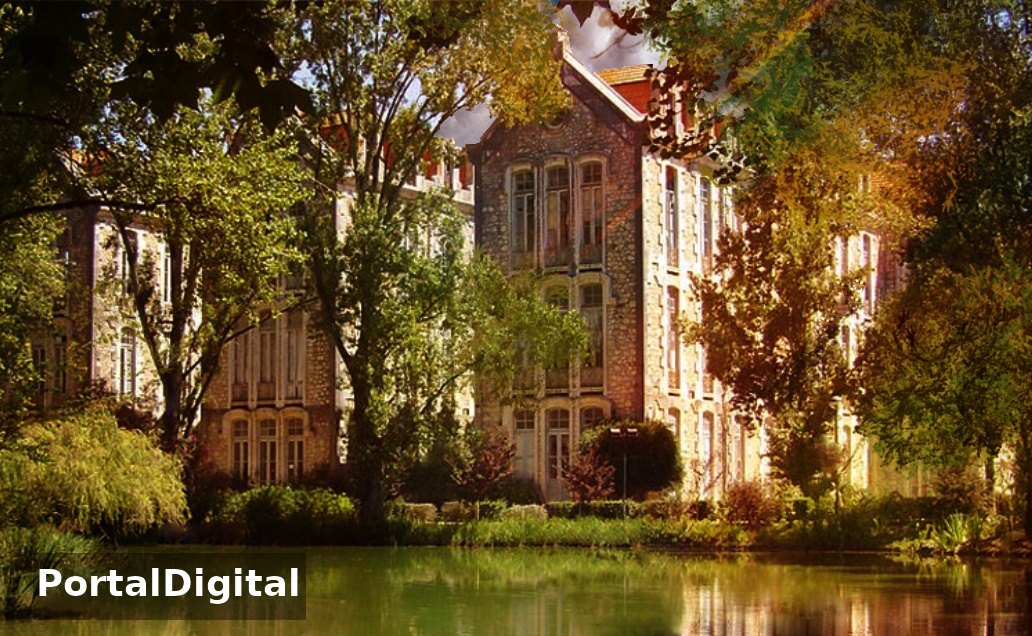
It is located on Rua de Camões, in the city of Caldas da Rainha, District of Leiria, Central Portugal
Parque D. Carlos I is a romantic garden attached to the Rainha D. Leonor Thermal Hospital in honor of King Carlos I of Portugal (1863-1908).
King D. Carlos I, together with his son, were murdered in 1908 and in the Royal Pantheon of the Bragança Dynasty in the Monastery of São Vicente de Fora in Lisbon, next to his son, urns with transparent lids were deposited there for 25 years. In 1933, a private commission opened a national subscription that led to the inauguration of two beautiful tombs designed by the architect Raúl Lino, next to which there is a female figure representing "The Pain" sculpted by Francisco Franco, a set that can still be seen today.
The concept of a thermal hospital park dates back to a wooded space attached to the "Casa da Convalescença" built during the reign of João V of Portugal integrated in the Mata Rainha D. Leonor where patients could walk and heal.
At the turn of the 18th century to the 19th century, the so-called “Cup Tour” was implemented on the initiative of Dr. António Gomes da Silva Pinheiro, administrator of the hospital between 1799 and 1833.
The typically Baroque Garden with elements such as staircases, supporting walls and axes of symmetry, its dual function was to allow patients who came for treatment at the hospital to recover on walks as was customary at the time.
The changes brought by Liberalism in Portugal, the Garden will be altered and there will be a new plan of the new "Passeio da Copa" dated 1806 which corresponds to the northern part of the current park.
From then on, the influx of the ruling classes to thermal waters, especially those in Caldas da Rainha, increased: going to the waters for treatment and fun became fashionable, reflecting a trend throughout Europe.
On January 3, 1888, a new administrator took office at the Hospital Termal: the architect Rodrigo Maria Berquó, who had previously worked in Caldas da Felgueira, began the project for the new Park, which he proposed naming "D. Carlos I" in honor of the monarch and authorized it on November 20, 1889.
The project for the new Park included a tree park, a large artificial lake, and highlighted the need to establish different games (tennis, croquet, pistol), music on the bandstand and boat trips on the lake or cycling along the boulevards.
Berquó Park was defined as a Romantic landscape then in fashion in Europe that valued sentimentalism and naturalism.
The park would be remodeled in 1948 with a landscape design designed by Francisco Caldeira Cabral, with work lasting until 1951.
The new project covered the grassing of vacant spaces, the cultivation of hedges with varied and colorful flowers, the planting of new trees using shadow/light contrast, tanks and fountains embellished with tiles and stonework spouts, a flower greenhouse where existing ones could be preserved or new species developed.
Currently in the D. Carlos I Park, the highlights are secular trees, recreational equipment, a lake with boats, the bandstand, the restaurant-bar with terrace, the picnic area, the tennis court, and the José Malhoa Museum (opened in 1934 at Casa dos Barcos).
The various sculptures distributed throughout the park area are: Bust of Silva Porto in bronze by the sculptor Salvador Barata Feyo, Statue of Ramalho Ortigão, "Grupo Decorativo" in bronze by Leopoldo de Almeida, "Ternura" in bronze by the sculptor Henrique Moreira.
King D. Carlos I, together with his son, were murdered in 1908 and in the Royal Pantheon of the Bragança Dynasty in the Monastery of São Vicente de Fora in Lisbon, next to his son, urns with transparent lids were deposited there for 25 years. In 1933, a private commission opened a national subscription that led to the inauguration of two beautiful tombs designed by the architect Raúl Lino, next to which there is a female figure representing "The Pain" sculpted by Francisco Franco, a set that can still be seen today.
The concept of a thermal hospital park dates back to a wooded space attached to the "Casa da Convalescença" built during the reign of João V of Portugal integrated in the Mata Rainha D. Leonor where patients could walk and heal.
At the turn of the 18th century to the 19th century, the so-called “Cup Tour” was implemented on the initiative of Dr. António Gomes da Silva Pinheiro, administrator of the hospital between 1799 and 1833.
The typically Baroque Garden with elements such as staircases, supporting walls and axes of symmetry, its dual function was to allow patients who came for treatment at the hospital to recover on walks as was customary at the time.
The changes brought by Liberalism in Portugal, the Garden will be altered and there will be a new plan of the new "Passeio da Copa" dated 1806 which corresponds to the northern part of the current park.
From then on, the influx of the ruling classes to thermal waters, especially those in Caldas da Rainha, increased: going to the waters for treatment and fun became fashionable, reflecting a trend throughout Europe.
On January 3, 1888, a new administrator took office at the Hospital Termal: the architect Rodrigo Maria Berquó, who had previously worked in Caldas da Felgueira, began the project for the new Park, which he proposed naming "D. Carlos I" in honor of the monarch and authorized it on November 20, 1889.
The project for the new Park included a tree park, a large artificial lake, and highlighted the need to establish different games (tennis, croquet, pistol), music on the bandstand and boat trips on the lake or cycling along the boulevards.
Berquó Park was defined as a Romantic landscape then in fashion in Europe that valued sentimentalism and naturalism.
The park would be remodeled in 1948 with a landscape design designed by Francisco Caldeira Cabral, with work lasting until 1951.
The new project covered the grassing of vacant spaces, the cultivation of hedges with varied and colorful flowers, the planting of new trees using shadow/light contrast, tanks and fountains embellished with tiles and stonework spouts, a flower greenhouse where existing ones could be preserved or new species developed.
Currently in the D. Carlos I Park, the highlights are secular trees, recreational equipment, a lake with boats, the bandstand, the restaurant-bar with terrace, the picnic area, the tennis court, and the José Malhoa Museum (opened in 1934 at Casa dos Barcos).
The various sculptures distributed throughout the park area are: Bust of Silva Porto in bronze by the sculptor Salvador Barata Feyo, Statue of Ramalho Ortigão, "Grupo Decorativo" in bronze by Leopoldo de Almeida, "Ternura" in bronze by the sculptor Henrique Moreira.