
It is located on Rua São Roque da Lameira, city and municipality of Porto, North of Portugal.
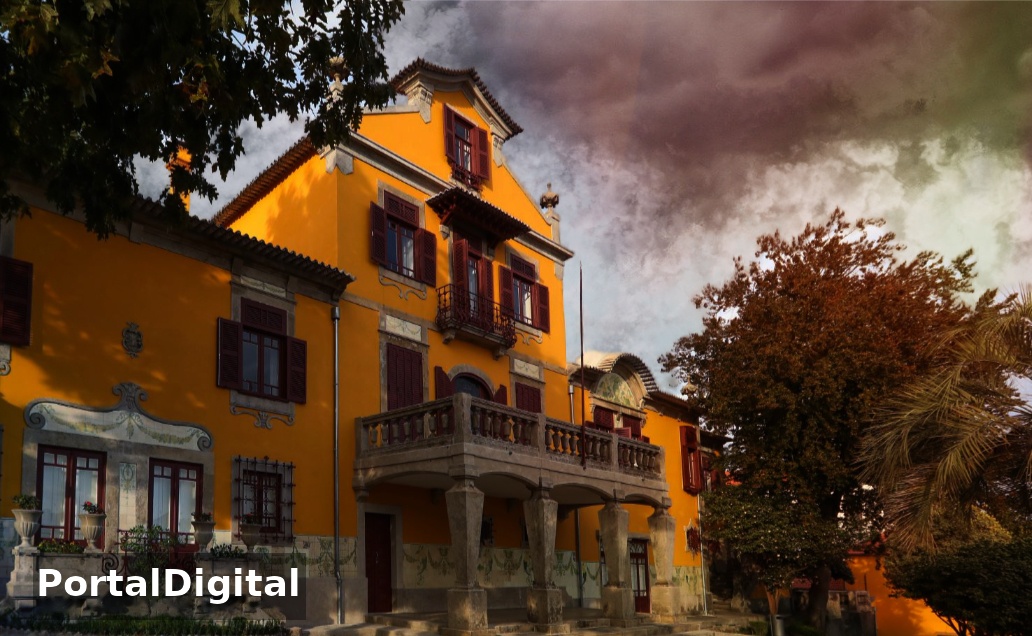
Casa São Roque (formerly Casa Ramos Pinto) dates back to 1759 when, as part of Quinta da Lameira, it functioned as a mansion and typical hunting lodge for the bourgeoisie and noble families of Porto.
In the 19th century, it belonged to the family of Maria Virgínia de Castro, who in 1888 married António Ramos Pinto, one of the best-known producers and exporters of Port wine.
The wine producer commissioned the architect José Marques da Silva to remodel and expand the house, at the same time that Jacinto de Matos designed the garden (1900-1911).
The farm and the house were acquired by the Porto City Council from the last owner, António Eugénio de Castro Ramos Pinto Cálem, grandson of Maria Virgínia and António. (1979).
The furniture and most important objects from the house were preserved and are still in use today in the Casa do Roseiral collection, while the remainder were acquired by antiques dealer Aurora Rodrigues Martins.
The building today maintains its original eclectic style, introduced with the remodeling by Marques da Silva who was inspired by 19th century French historicism and Belgian art nouveau, having recently been rehabilitated under the supervision of architect João Mendes Ribeiro.
Casa São Roque is today a striking example of period houses in Porto due to its architectural and decorative characteristics, where its winter garden is a unique example.
At Casa São Roque, the migrations of modernity are told through private stories and singular narratives, on a small scale, developed over the years.
Participants include artists, researchers, children and teachers: Aura Rosenberg, Chantal Benjamin, Lais Benjamin Campos, Marcelo de Souza Campos Granja, Patrizia Bach, Arno Gisinger, Joanna Zielinska, Jean-Luc Moulène, Jean-Michel Alberola, André Cepeda, Paulo Nozolino, João Barrento, Sismographer.
The building hosts exhibitions such as “Footnote 14: Angel of History” is an extensive collective exhibition, a research project accompanied by a conference and publication.
The Project aims to continue the sequence of exhibitions dedicated to the notion of home, an old living space transformed into a new contemporary art center.
The “historical” visit to the old Ramos Pinto mansion built in 1759, remodeled in 1900–1910 by the Porto-Parisian architect José Marques da Silva, where both the place and its architect are symbolic representatives of progress and the process of local modernization.
In the 19th century, it belonged to the family of Maria Virgínia de Castro, who in 1888 married António Ramos Pinto, one of the best-known producers and exporters of Port wine.
The wine producer commissioned the architect José Marques da Silva to remodel and expand the house, at the same time that Jacinto de Matos designed the garden (1900-1911).
The farm and the house were acquired by the Porto City Council from the last owner, António Eugénio de Castro Ramos Pinto Cálem, grandson of Maria Virgínia and António. (1979).
The furniture and most important objects from the house were preserved and are still in use today in the Casa do Roseiral collection, while the remainder were acquired by antiques dealer Aurora Rodrigues Martins.
The building today maintains its original eclectic style, introduced with the remodeling by Marques da Silva who was inspired by 19th century French historicism and Belgian art nouveau, having recently been rehabilitated under the supervision of architect João Mendes Ribeiro.
Casa São Roque is today a striking example of period houses in Porto due to its architectural and decorative characteristics, where its winter garden is a unique example.
At Casa São Roque, the migrations of modernity are told through private stories and singular narratives, on a small scale, developed over the years.
Participants include artists, researchers, children and teachers: Aura Rosenberg, Chantal Benjamin, Lais Benjamin Campos, Marcelo de Souza Campos Granja, Patrizia Bach, Arno Gisinger, Joanna Zielinska, Jean-Luc Moulène, Jean-Michel Alberola, André Cepeda, Paulo Nozolino, João Barrento, Sismographer.
The building hosts exhibitions such as “Footnote 14: Angel of History” is an extensive collective exhibition, a research project accompanied by a conference and publication.
The Project aims to continue the sequence of exhibitions dedicated to the notion of home, an old living space transformed into a new contemporary art center.
The “historical” visit to the old Ramos Pinto mansion built in 1759, remodeled in 1900–1910 by the Porto-Parisian architect José Marques da Silva, where both the place and its architect are symbolic representatives of progress and the process of local modernization.