
It is located on Rua da Misericórdia, parish of Louriçal, Municipality of Pombal, District of Leiria, in the province of Beira Litoral, in the region of Central Portugal
The Marquês de Pombal Museum was founded in 1978 and the idea was due to the benefactor who donated the original collection to the Municipality under the condition of creating a Municipal Museum that would house and conserve and value the entire collection, which should be called “Marquês de Pombal Museum Library” and be installed on the ground floor of the Paços do Concelho building, Former Convent of Santo António.
The Museum opened to the public in the Paços do Concelho building on May 8, 1982 as part of the celebrations of the Bicentenary of the death of the statesman Sebastião José de Carvalho e Melo, 1st Count of Oeiras (1759) and 1st Marquis of Pombal (1769).
It opened with the current name “Museu Marquês de Pombal” meaning a fair tribute to the eminent statesman and unique testimony of Portuguese culture in the 18th century.
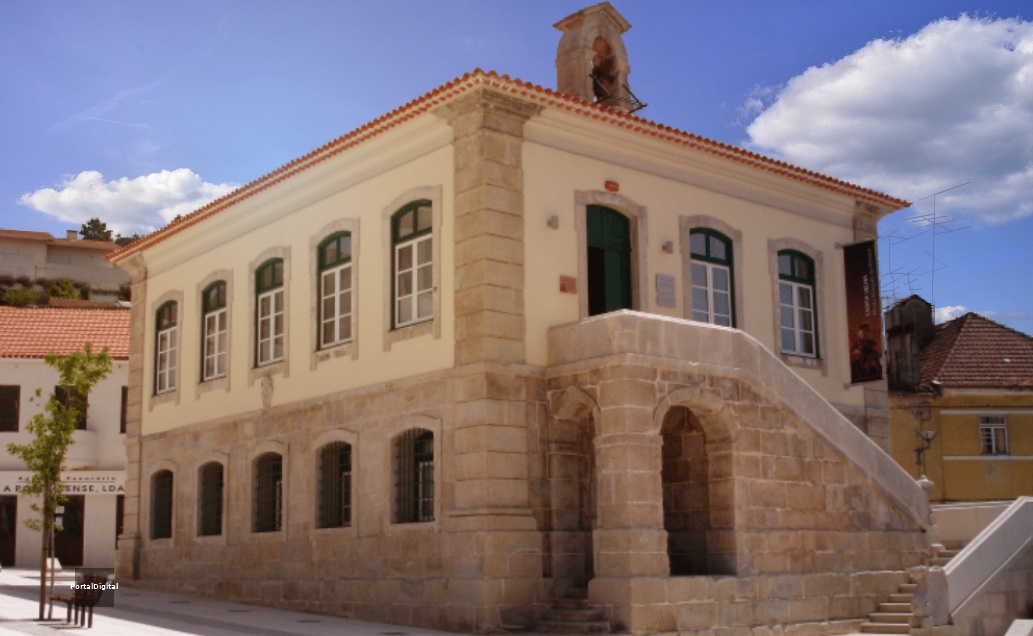
The Marquês de Pombal Museum, having remained in the Old Convent of Santo António, was transferred to Cadeia Velha in Praça Marquês de Pombal in July 2004 after remodeling and adaptation works on the building that transformed it into one of the most interesting cultural centers in the region.
The Museum building with a two-story cage structure was built by Dom Sebastião José de Carvalho e Melo, 1st Marquis of Pombal and on the outside of the building there is a frieze with the coat of arms of the Marquis of Pombal.
The collection is very varied and covers different areas/collections. Distributed across different centers, it is organized by typologies that document the life and work of Sebastião José de Carvalho e Melo and various actions, reforms and events of the 18th century.
The Museum displays a notable documentary collection, consisting of a bibliographic nucleus, in which the oldest book dates from 1717, an important nucleus of legislative documents such as charters, letters of law and sentences and a collection of manuscripts, some written by the Marquis of Pombal himself, which give us insight into matters relating to his public and private life.
This museum's collection contains a collection of paintings and engravings, costumes, an important collection of period furniture, works belonging to the Marquis of Pombal and a collection of paintings made up of oils on canvas.
The Museum has collections of medals, ceramics, glass, metals, stone elements, photography, several busts of the Marquis of Pombal, a collection of pieces related to the death of the Marquis of Pombal and the celebrations that have taken place in his honor.
The Museum opened to the public in the Paços do Concelho building on May 8, 1982 as part of the celebrations of the Bicentenary of the death of the statesman Sebastião José de Carvalho e Melo, 1st Count of Oeiras (1759) and 1st Marquis of Pombal (1769).
It opened with the current name “Museu Marquês de Pombal” meaning a fair tribute to the eminent statesman and unique testimony of Portuguese culture in the 18th century.
The Marquês de Pombal Museum, having remained in the Old Convent of Santo António, was transferred to Cadeia Velha in Praça Marquês de Pombal in July 2004 after remodeling and adaptation works on the building that transformed it into one of the most interesting cultural centers in the region.
The Museum building with a two-story cage structure was built by Dom Sebastião José de Carvalho e Melo, 1st Marquis of Pombal and on the outside of the building there is a frieze with the coat of arms of the Marquis of Pombal.
The collection is very varied and covers different areas/collections. Distributed across different centers, it is organized by typologies that document the life and work of Sebastião José de Carvalho e Melo and various actions, reforms and events of the 18th century.
The Museum displays a notable documentary collection, consisting of a bibliographic nucleus, in which the oldest book dates from 1717, an important nucleus of legislative documents such as charters, letters of law and sentences and a collection of manuscripts, some written by the Marquis of Pombal himself, which give us insight into matters relating to his public and private life.
This museum's collection contains a collection of paintings and engravings, costumes, an important collection of period furniture, works belonging to the Marquis of Pombal and a collection of paintings made up of oils on canvas.
The Museum has collections of medals, ceramics, glass, metals, stone elements, photography, several busts of the Marquis of Pombal, a collection of pieces related to the death of the Marquis of Pombal and the celebrations that have taken place in his honor.