
It is located in Páteo de S. Miguel, City of Évora, Alentejo region, Central Portugal
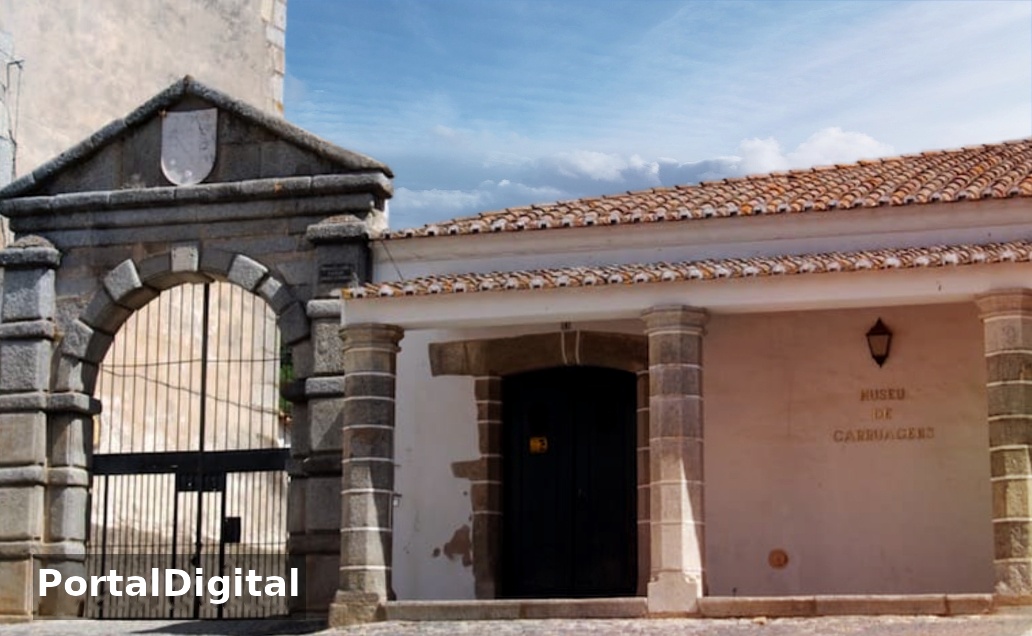
Former barn of the Cabido da Sé de Évora, the building that houses the Collection of Carriages was acquired by Vasco Maria Eugénio de Almeida in 1959 with the aim of integrating it into the Páteo de São Miguel building complex and temporarily transferring there the headquarters of the Sociedade Recreativa e Dramática Eborense, which for decades will occupy the noble halls of the Paço de São Miguel.
The Carriage Collection brings together the trailers and travel utilities that were at the service of Casa Eugénio de Almeida between the second half of the 19th century and the first years of the 20th century, and was open to the public since 1998 and subject to requalification between 2011 and 2012.
Purchased from the main manufacturers in Europe, the carriages arrived in Lisbon on sailboats and steamboats ready for use or to be assembled at their destination, piece by piece.
The luxurious refinement of the finishes, the elegance in the presentation of the horses, which were also imported from France, Antwerp or England, the laborious detail of the harnesses and harnessing utensils, the poise of the coachman and the thirty-year-old, or the costs associated with the acquisition and maintenance of the carriages constituted, in the city environments of the 19th century, a clear manifestation of the social status of their occupants.
The Eugénio de Almeida family living in Lisbon moved in carriages to make their social trips.
From the end of the 19th century and the first years of the 20th century, the use of carriages began to be progressively replaced by the automobile, which was more comfortable and faster.
In the case of the Eugénio de Almeida family, the transition between the two worlds began in 1907 with the acquisition of their first car.
The horse stables located in the Parque de Santa Gertrudes, an integral part of the São Sebastião da Pedreira Palace in Lisbon, then undergo the first adaptation works in order to be converted into a “car station” while the “outdated” carriages via the railway go to the family properties in Évora.
The family carriages have always been preserved in good condition, assuming the importance of their conservation and restoration, which allows us to appreciate this collection at the Eugénio de Almeida Foundation in the 21st century.
The architectural complex of the Pátio de São Miguel includes: the Paço dos Condes de Basto, the Eugénio de Almeida Archive and Library, the Carriage Museum and the Hermitage of S. Miguel (which is also the headquarters of the Eugénio de Almeida Foundation).
The Museum is made up of 2 rooms that feature a collection of well-preserved carriages, saddles, some family souvenirs, and some artifacts that make up the museum.
The Carriage Collection brings together the trailers and travel utilities that were at the service of Casa Eugénio de Almeida between the second half of the 19th century and the first years of the 20th century, and was open to the public since 1998 and subject to requalification between 2011 and 2012.
Purchased from the main manufacturers in Europe, the carriages arrived in Lisbon on sailboats and steamboats ready for use or to be assembled at their destination, piece by piece.
The luxurious refinement of the finishes, the elegance in the presentation of the horses, which were also imported from France, Antwerp or England, the laborious detail of the harnesses and harnessing utensils, the poise of the coachman and the thirty-year-old, or the costs associated with the acquisition and maintenance of the carriages constituted, in the city environments of the 19th century, a clear manifestation of the social status of their occupants.
The Eugénio de Almeida family living in Lisbon moved in carriages to make their social trips.
From the end of the 19th century and the first years of the 20th century, the use of carriages began to be progressively replaced by the automobile, which was more comfortable and faster.
In the case of the Eugénio de Almeida family, the transition between the two worlds began in 1907 with the acquisition of their first car.
The horse stables located in the Parque de Santa Gertrudes, an integral part of the São Sebastião da Pedreira Palace in Lisbon, then undergo the first adaptation works in order to be converted into a “car station” while the “outdated” carriages via the railway go to the family properties in Évora.
The family carriages have always been preserved in good condition, assuming the importance of their conservation and restoration, which allows us to appreciate this collection at the Eugénio de Almeida Foundation in the 21st century.
The architectural complex of the Pátio de São Miguel includes: the Paço dos Condes de Basto, the Eugénio de Almeida Archive and Library, the Carriage Museum and the Hermitage of S. Miguel (which is also the headquarters of the Eugénio de Almeida Foundation).
The Museum is made up of 2 rooms that feature a collection of well-preserved carriages, saddles, some family souvenirs, and some artifacts that make up the museum.