
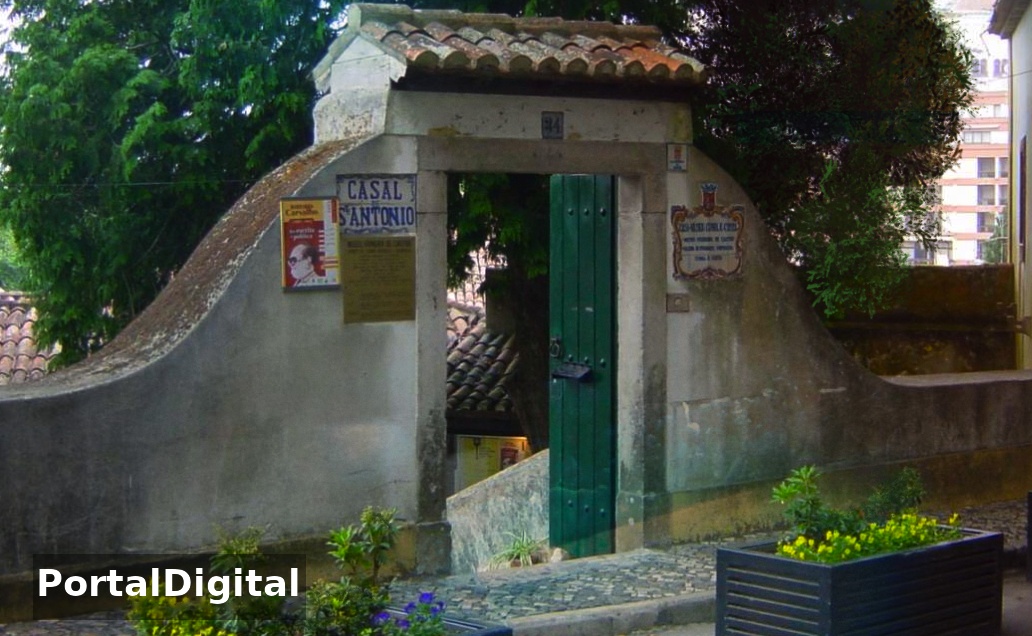
It is located on Rua Consiglieri Pedroso, Vila Velha, São Martinho, city and municipality of Sintra, Central Portugal
The first mentor was the then president of the Chamber, António José Pereira Forjaz, who in a letter dated April 10, 1973 addressed to the novelist, expressed his joy after verifying that the donation complied with legal provisions.
The Museum opened on June 6, 1982, three years later closed for works, reopened on July 22, 1992, after remodeling the exhibition contents and preparing a new guide for visitors.
José Maria Ferreira de Castro (born in Ossela, Oliveira de Azeméis, 24 May 1898/died 29 June 1974 in Porto) was a Portuguese writer.
Paying homage to the writer there is a library and a secondary school named after him in Oliveira de Azeméis, a secondary school and a museum in Sintra.
The emigrant, journalist and fiction writer is nowadays one of the authors with the most translated works in the world, and his work can be included in the category of modern universal literature, a precursor of neorealism in writing, characteristically identified with social and ideological intervention.
As an example of its great relevance, we can mention the recent and very successful film adaptation of the work The Jungle (1930).
In 1967, Ferreira de Castro donated the property to the local authority, which committed itself from that date to maintaining and conserving it by providing guided tours to anyone who wanted to do so.
The writer's experiential journey in this museum can be appreciated through rare editions, manuscripts, personal objects and original illustrations for his works and other objects with a connection to Ferreira de Castro.
The Ferreira de Castro Museum presents the writer's life path chronologically, grouped into thematic groups: Childhood" (1898-1911) refers to the writer's childhood in the "native village" of Salgueiros, parish of Ossela, municipality of Oliveira de Azeméis, a period of intimate contact with the verdant nature of the region that would mark him so much.
"In Brazil - From the Amazon jungle to Belém do Pará" (1911-1919), recounts the time when Ferreira de Castro lived as a child and alone in a rubber plantation in the Amazon (until 1914) and the dramatic and rocamboesque experience in Belém, highlighting the manuscript of Criminal by Ambition, masks of the Parintintins Indians (a now extinct tribe), the land of the rubber plantation where Castro worked, and copies of Criminal by Ambition and Alma Lusitana, both from 1916, the first titles he published.
"O Regresso - Journalism and renegade work" (1919-1927) shows part of the journalistic activity and displays the books that correspond to the first phase of Ferreira de Castro de Mas... (1921) to O Voo nas Trevas (1927) --, which he suppressed from his complete works and which are now bibliographic rarities.
"Triunfo - From Emigrantes to the direction of O Diabo" (1928-1935); "The Last Vagamundo" (travels, 1929-1939); "The Master - From The Tempest to The Fragments" (1940-1974) contemplates the time in which Ferreira de Castro pontificated as a prominent author in Portugal at the time. It is the period of The Jungle, Cold Land, The Wool and the Snow, The Bend in the Road, The Mission.
In the last room, translations of his works in different languages are on display: the visitor will come into contact with rare editions, manuscripts, personal objects, original illustrations for his books, and others related to the novelist's life and writing.
The Museum also presents original canvases and drawings by Arlindo Vicente, Bernardo Marques, Cândido Portinari, Elena Muriel, Jorge Barradas, José Rodrigues, Júlio Pomar and Roberto Nobre.
The Works of Ferreira Castro on Adolescence and Youth: Criminal by Ambition (1916), Alma Lusitana (1916), Rugas Sociais (1917), Carne Fáminta (1922), O Êxito Fácil (1923), Sangue Negro (1923), O Drama da Sombra (1926), A Epopeia do Trabalho (1926), A Morte Redemida (1925), The Flight in Darkness (1927), Yes, a Doubt is Enough (1936)- published in 1994, The Interval (1936)- published in 1974 and the Fragments (1974).
Ferreira de Castro's works are: Emigrants (1928), The Jungle (1930), Eternity (1933), Cold Land (1934), Small Worlds, Old Civilizations (1937), The Tempest (1940), Around the World (1940 and 1944), The Wool and the Snow (1947), The Bend of the Road (1950), The Mission (1954), The Artistic Wonders of the World (Vol. I) (1959), The Artistic Wonders of the World (Vol. II) (1963) and The Supreme Instinct (1968).
The Ferreira de Castro Literary Prize is a literary prize established by the Sintra City Council in order to honor the writer. The prize was awarded annually to original and unpublished works of narrative fiction written in the Portuguese language. (1987/1992).
The Museum opened on June 6, 1982, three years later closed for works, reopened on July 22, 1992, after remodeling the exhibition contents and preparing a new guide for visitors.
José Maria Ferreira de Castro (born in Ossela, Oliveira de Azeméis, 24 May 1898/died 29 June 1974 in Porto) was a Portuguese writer.
Paying homage to the writer there is a library and a secondary school named after him in Oliveira de Azeméis, a secondary school and a museum in Sintra.
The emigrant, journalist and fiction writer is nowadays one of the authors with the most translated works in the world, and his work can be included in the category of modern universal literature, a precursor of neorealism in writing, characteristically identified with social and ideological intervention.
As an example of its great relevance, we can mention the recent and very successful film adaptation of the work The Jungle (1930).
In 1967, Ferreira de Castro donated the property to the local authority, which committed itself from that date to maintaining and conserving it by providing guided tours to anyone who wanted to do so.
The writer's experiential journey in this museum can be appreciated through rare editions, manuscripts, personal objects and original illustrations for his works and other objects with a connection to Ferreira de Castro.
The Ferreira de Castro Museum presents the writer's life path chronologically, grouped into thematic groups: Childhood" (1898-1911) refers to the writer's childhood in the "native village" of Salgueiros, parish of Ossela, municipality of Oliveira de Azeméis, a period of intimate contact with the verdant nature of the region that would mark him so much.
"In Brazil - From the Amazon jungle to Belém do Pará" (1911-1919), recounts the time when Ferreira de Castro lived as a child and alone in a rubber plantation in the Amazon (until 1914) and the dramatic and rocamboesque experience in Belém, highlighting the manuscript of Criminal by Ambition, masks of the Parintintins Indians (a now extinct tribe), the land of the rubber plantation where Castro worked, and copies of Criminal by Ambition and Alma Lusitana, both from 1916, the first titles he published.
"O Regresso - Journalism and renegade work" (1919-1927) shows part of the journalistic activity and displays the books that correspond to the first phase of Ferreira de Castro de Mas... (1921) to O Voo nas Trevas (1927) --, which he suppressed from his complete works and which are now bibliographic rarities.
"Triunfo - From Emigrantes to the direction of O Diabo" (1928-1935); "The Last Vagamundo" (travels, 1929-1939); "The Master - From The Tempest to The Fragments" (1940-1974) contemplates the time in which Ferreira de Castro pontificated as a prominent author in Portugal at the time. It is the period of The Jungle, Cold Land, The Wool and the Snow, The Bend in the Road, The Mission.
In the last room, translations of his works in different languages are on display: the visitor will come into contact with rare editions, manuscripts, personal objects, original illustrations for his books, and others related to the novelist's life and writing.
The Museum also presents original canvases and drawings by Arlindo Vicente, Bernardo Marques, Cândido Portinari, Elena Muriel, Jorge Barradas, José Rodrigues, Júlio Pomar and Roberto Nobre.
The Works of Ferreira Castro on Adolescence and Youth: Criminal by Ambition (1916), Alma Lusitana (1916), Rugas Sociais (1917), Carne Fáminta (1922), O Êxito Fácil (1923), Sangue Negro (1923), O Drama da Sombra (1926), A Epopeia do Trabalho (1926), A Morte Redemida (1925), The Flight in Darkness (1927), Yes, a Doubt is Enough (1936)- published in 1994, The Interval (1936)- published in 1974 and the Fragments (1974).
Ferreira de Castro's works are: Emigrants (1928), The Jungle (1930), Eternity (1933), Cold Land (1934), Small Worlds, Old Civilizations (1937), The Tempest (1940), Around the World (1940 and 1944), The Wool and the Snow (1947), The Bend of the Road (1950), The Mission (1954), The Artistic Wonders of the World (Vol. I) (1959), The Artistic Wonders of the World (Vol. II) (1963) and The Supreme Instinct (1968).
The Ferreira de Castro Literary Prize is a literary prize established by the Sintra City Council in order to honor the writer. The prize was awarded annually to original and unpublished works of narrative fiction written in the Portuguese language. (1987/1992).