
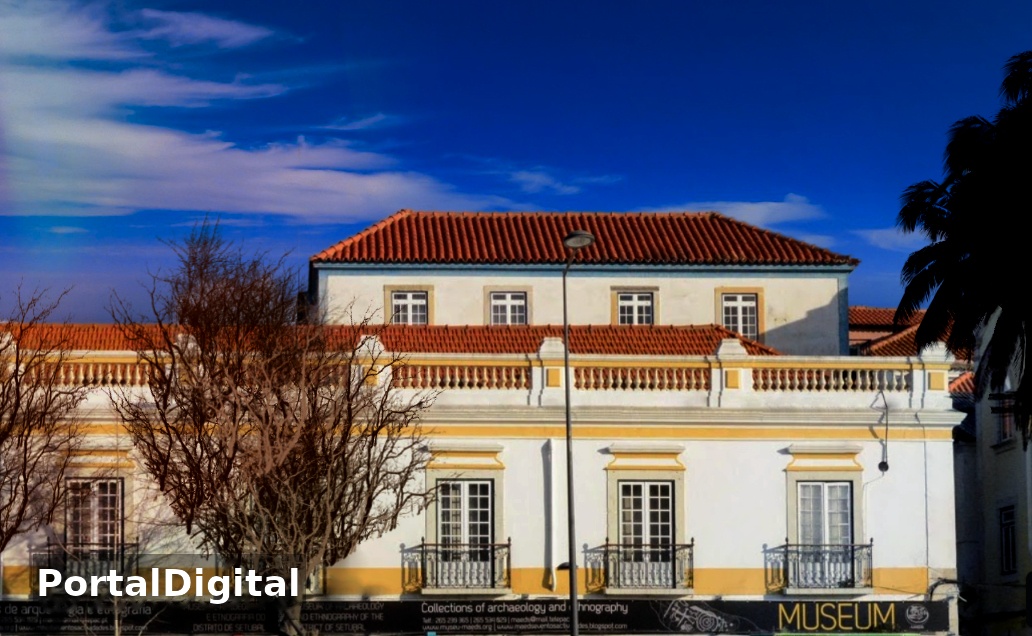
Located in Setúbal, District of Lisbon, Central Portugal
The Museum of Archeology and Ethnography of the District of Setúbal was founded in December 1974 and opened to the public in 1976 and the museum's collection includes two aspects: archaeological and ethnographic.
On the archaeological side, the collection includes materials from prehistoric archaeological sites, from the Paleolithic to the Iron Age and Roman times.
On the ethnographic side, the museum presents materials related to fishing activities, salt production, agriculture, livestock farming, spinning and weaving, rural and urban crafts and popular art.
The Museum has a valuable collection representing the District of Setúbal in the archaeological field, with emphasis on prehistoric collections (lower and middle Paleolithic, Epipaleolithic, Mesolithic, Neolithic, Chalcolithic, Bronze and Iron Ages), Roman and post-Roman.
Ethnography collections, especially with regard to artefacts relating to traditional activities of fishing, gathering, forestry, livestock farming, agriculture, shipbuilding, spinning and weaving, folk art and rural and urban crafts.
The Center for Archaeological Studies operates within the museum and has a specialized library with around 5000 volumes and publishes a specialized magazine called Setúbal Arqueológica.
A space where you can observe archaeological collections, mainly from the southern areas of the district, it has an ethnography section linked to the region's fishing and agricultural traditions, and miniatures of boats and factories built by the popular artist Borda d''Água.
The Setúbal Archeology and Ethnography Museum presents a collection on archeology from the entire district of Setúbal, with prehistoric collections, ethnographic objects and popular crafts.
The permanent archeology exhibition presents a narrative from the Paleolithic to the Roman era through artifacts and documentation.
In the permanent ethnography exhibition, visitors observe utensils related to the region's traditional activities: fishing, salt mines, agriculture, shipbuilding, weaving, livestock, folk art and crafts.
A museum where the visitor can see valuable local treasures, get a quick prehistory of an area and provide a basis for comparing one area to another, series of exhibitions on the different phases of the ancient past of this part of Portugal with maps of sites and artefacts from different phases of occupation. The ethnographic section of the Museum has models of sailing ships and large examples of ancient tools.
On the archaeological side, the collection includes materials from prehistoric archaeological sites, from the Paleolithic to the Iron Age and Roman times.
On the ethnographic side, the museum presents materials related to fishing activities, salt production, agriculture, livestock farming, spinning and weaving, rural and urban crafts and popular art.
The Museum has a valuable collection representing the District of Setúbal in the archaeological field, with emphasis on prehistoric collections (lower and middle Paleolithic, Epipaleolithic, Mesolithic, Neolithic, Chalcolithic, Bronze and Iron Ages), Roman and post-Roman.
Ethnography collections, especially with regard to artefacts relating to traditional activities of fishing, gathering, forestry, livestock farming, agriculture, shipbuilding, spinning and weaving, folk art and rural and urban crafts.
The Center for Archaeological Studies operates within the museum and has a specialized library with around 5000 volumes and publishes a specialized magazine called Setúbal Arqueológica.
A space where you can observe archaeological collections, mainly from the southern areas of the district, it has an ethnography section linked to the region's fishing and agricultural traditions, and miniatures of boats and factories built by the popular artist Borda d''Água.
The Setúbal Archeology and Ethnography Museum presents a collection on archeology from the entire district of Setúbal, with prehistoric collections, ethnographic objects and popular crafts.
The permanent archeology exhibition presents a narrative from the Paleolithic to the Roman era through artifacts and documentation.
In the permanent ethnography exhibition, visitors observe utensils related to the region's traditional activities: fishing, salt mines, agriculture, shipbuilding, weaving, livestock, folk art and crafts.
A museum where the visitor can see valuable local treasures, get a quick prehistory of an area and provide a basis for comparing one area to another, series of exhibitions on the different phases of the ancient past of this part of Portugal with maps of sites and artefacts from different phases of occupation. The ethnographic section of the Museum has models of sailing ships and large examples of ancient tools.