
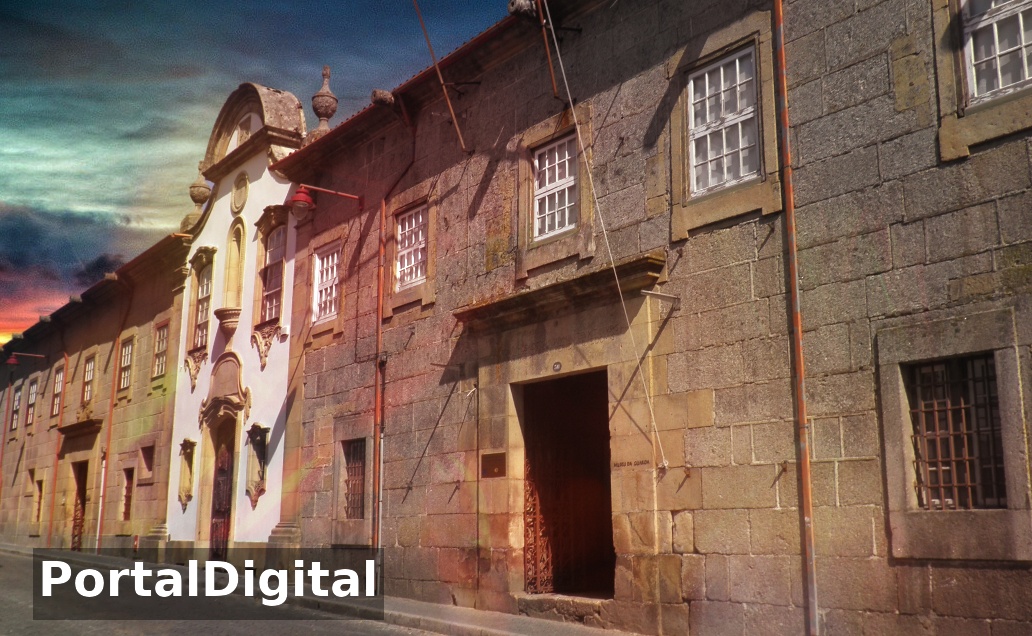
It is located on Rua Alves Roçadas, city and municipality in the District of Guarda, and headquarters of the sub-region of Beiras and Serra da Estrela, Central Portugal
The city of Guarda's desire to have a museum dates back to the end of the 19th century. XIX.
In 1910, a commission was created to create a museum unit that would compensate for the archaeological and artistic aspects.
In the context of the centenary celebrations of national independence (1640-1940), an installation commission was appointed for the emerging museum entity, which despite its municipal management assumed the name of Guarda Regional Museum – a name that it never lost until it was transferred to the IPPC.
In the Chamber session of January 6, 1940, Kings Day, the Museum was officially founded by unanimous deliberation of the Executive.
The Museum would be housed in the old seminary, whose adaptation works were paid for by the municipality, and opened its doors to the public on July 30, 1940.
The museum consisted of five exhibition spaces: Painting Gallery (modernist painting), religious art room (painting, sculpture and liturgical implements), ceramics room, atrium and corridors, and containing a miscellany of pieces ranging from archaeological to sculptural.
At the beginning of the 60s, the Museum entered a new phase: the first change of guardianship, that is, in view of the maintenance expenses that the municipality claimed it could not afford, it decided to cede the museum entity's “mobilizable assets” to the District Council (1962).
In February 1982, the Guarda District Assembly and the IPPC signed an agreement to transfer the Guarda Museum to the latter entity's dependency.
In 1983, renovation work began on the building and the museographic program was drawn up for the collections in storage.
Thus, the museum opened to the public in June 1985 under the name Museu da Guarda and under the responsibility of the Portuguese Institute of Cultural Heritage.
In 2007, the Guarda Museum became dependent on the Institute of Museums and Conservation (IMC), which remained until 2012.
With the creation of the General Directorate of Cultural Heritage (DGPC), the remaining regional directorates of Culture (North, Center, Alentejo and Algarve) were organized, which saw their powers reinforced and also began to manage some museums that until then were in the IMC.
In 2015, the Museum was once again under the aegis of the Municipal Council of Guarda, thus returning to its tutelary origins.
The Guarda Museum is located in the architectural complex formed by the former Episcopal Palace “winter residence of the prelates”, and the former Guarda Seminary complex that began to be built at the beginning of the 17th century.
The construction of the diocesan seminary began in 1601 by Bishop D. Nuno de Noronha, and operated until the republican revolution of 1910, with the Palace and the Seminary only in 1911, through an act of possession dated October 19th, passing to the Municipal Council of Guarda, reserving part of the former for the bishop's residence.
The monument with a privileged location in the heart of the city of Guarda is characterized by being an emblematic building with a strong symbolic identity in the organization of the urban environment in a vast commercial, cultural and leisure area.
From 2016 onwards, following the change of ownership of the Museum to the Municipal Council of Guarda, a new direction seems to have been charted.
At the Guarda Museum, events are created aimed at promoting and enriching the Museum's collections, and on the other hand, the creation of a new Museum concept.
The permanent exhibition at the Museu da Guarda presents to the public a collection made up of collections of Archaeology, Numismatics, Sacred Sculpture from the 13th to 18th centuries and Sacred Painting from the 16th to 18th centuries.
The expository discourse is based on sequential and chronological criteria and the descriptive approaches are residual.
The space is divided into 4 sections: Prehistoric Archaeology, Protohistoric and Roman Archaeology, Medieval and post-medieval Archaeology, and Sacred Art.
In Archeology, two swords from the Bronze Age stand out, a Hispanic annular fibula from the 5th/6th century BC, Roman numismas and a Roman imperial torso from the 2nd century, and in Sacred Art and sculpture, a polychrome granite from the 13th century, representing Our Lady of Consolation and chair backrests from the 16th and 18th centuries.
Its collection is much larger, with an appreciable amount of archaeological specimens in storage, resulting from private donations and also the result of archaeological prospecting and excavations carried out in Mileu and in the important proto-historic sanctuary of Cabeço das Fráguas (late 8th century BC and 1st century AD).
In the deposit there are also paintings from the beginning of the 20th century that include names such as, for example, Eduarda Lapa, Eduardo Malta, António Carneiro, Adelaide Lima Cruz, Túlio Vitorino, Abel Santos, António Saúde, Carlos Reis, Falcão Trigoso, Columbano, Veloso Salgado, José Tagarro and João Vaz, which from time to time are integrated into temporary exhibitions.
In recent years, works that were part of its Contemporary Art collection by artists such as: João Cutileiro, Júlio Pomar, Júlio Cunha, Vítor Pomar, Mário Rita, Pires Vieira, Evelina Coelho, among others, have also become part of the Guarda Museum's collection.
In 1910, a commission was created to create a museum unit that would compensate for the archaeological and artistic aspects.
In the context of the centenary celebrations of national independence (1640-1940), an installation commission was appointed for the emerging museum entity, which despite its municipal management assumed the name of Guarda Regional Museum – a name that it never lost until it was transferred to the IPPC.
In the Chamber session of January 6, 1940, Kings Day, the Museum was officially founded by unanimous deliberation of the Executive.
The Museum would be housed in the old seminary, whose adaptation works were paid for by the municipality, and opened its doors to the public on July 30, 1940.
The museum consisted of five exhibition spaces: Painting Gallery (modernist painting), religious art room (painting, sculpture and liturgical implements), ceramics room, atrium and corridors, and containing a miscellany of pieces ranging from archaeological to sculptural.
At the beginning of the 60s, the Museum entered a new phase: the first change of guardianship, that is, in view of the maintenance expenses that the municipality claimed it could not afford, it decided to cede the museum entity's “mobilizable assets” to the District Council (1962).
In February 1982, the Guarda District Assembly and the IPPC signed an agreement to transfer the Guarda Museum to the latter entity's dependency.
In 1983, renovation work began on the building and the museographic program was drawn up for the collections in storage.
Thus, the museum opened to the public in June 1985 under the name Museu da Guarda and under the responsibility of the Portuguese Institute of Cultural Heritage.
In 2007, the Guarda Museum became dependent on the Institute of Museums and Conservation (IMC), which remained until 2012.
With the creation of the General Directorate of Cultural Heritage (DGPC), the remaining regional directorates of Culture (North, Center, Alentejo and Algarve) were organized, which saw their powers reinforced and also began to manage some museums that until then were in the IMC.
In 2015, the Museum was once again under the aegis of the Municipal Council of Guarda, thus returning to its tutelary origins.
The Guarda Museum is located in the architectural complex formed by the former Episcopal Palace “winter residence of the prelates”, and the former Guarda Seminary complex that began to be built at the beginning of the 17th century.
The construction of the diocesan seminary began in 1601 by Bishop D. Nuno de Noronha, and operated until the republican revolution of 1910, with the Palace and the Seminary only in 1911, through an act of possession dated October 19th, passing to the Municipal Council of Guarda, reserving part of the former for the bishop's residence.
The monument with a privileged location in the heart of the city of Guarda is characterized by being an emblematic building with a strong symbolic identity in the organization of the urban environment in a vast commercial, cultural and leisure area.
From 2016 onwards, following the change of ownership of the Museum to the Municipal Council of Guarda, a new direction seems to have been charted.
At the Guarda Museum, events are created aimed at promoting and enriching the Museum's collections, and on the other hand, the creation of a new Museum concept.
The permanent exhibition at the Museu da Guarda presents to the public a collection made up of collections of Archaeology, Numismatics, Sacred Sculpture from the 13th to 18th centuries and Sacred Painting from the 16th to 18th centuries.
The expository discourse is based on sequential and chronological criteria and the descriptive approaches are residual.
The space is divided into 4 sections: Prehistoric Archaeology, Protohistoric and Roman Archaeology, Medieval and post-medieval Archaeology, and Sacred Art.
In Archeology, two swords from the Bronze Age stand out, a Hispanic annular fibula from the 5th/6th century BC, Roman numismas and a Roman imperial torso from the 2nd century, and in Sacred Art and sculpture, a polychrome granite from the 13th century, representing Our Lady of Consolation and chair backrests from the 16th and 18th centuries.
Its collection is much larger, with an appreciable amount of archaeological specimens in storage, resulting from private donations and also the result of archaeological prospecting and excavations carried out in Mileu and in the important proto-historic sanctuary of Cabeço das Fráguas (late 8th century BC and 1st century AD).
In the deposit there are also paintings from the beginning of the 20th century that include names such as, for example, Eduarda Lapa, Eduardo Malta, António Carneiro, Adelaide Lima Cruz, Túlio Vitorino, Abel Santos, António Saúde, Carlos Reis, Falcão Trigoso, Columbano, Veloso Salgado, José Tagarro and João Vaz, which from time to time are integrated into temporary exhibitions.
In recent years, works that were part of its Contemporary Art collection by artists such as: João Cutileiro, Júlio Pomar, Júlio Cunha, Vítor Pomar, Mário Rita, Pires Vieira, Evelina Coelho, among others, have also become part of the Guarda Museum's collection.