
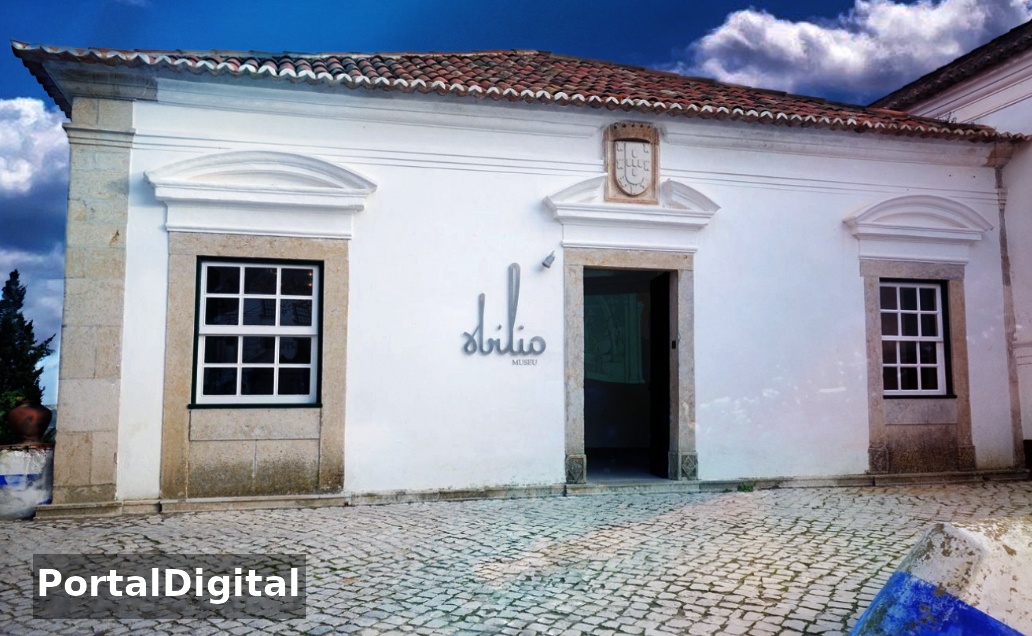
It is located in Praça de Santa Maria, Vila de Óbidos, District of Leiria, Central Portugal
The building was used as a town hall, court, jail, private residence and is now a museum dedicated to the painter Abílio de Mattos e Silva.
The performer, set designer and costume designer Abílio Mattos e Silva was born in 1908 and lived most of his life in Óbidos until his death in 1985.
His residence was previously the old Town Hall and the town's former prison, having been transformed into the Municipal Museum after his death.
The Abílio de Mattos e Silva Museum was born from the will of Maria José Salavisa, his widow, and was opened by the will of Maria José Salavisa more than ten years ago, in the city of Óbidos, Portugal.
Abílio Mattos Silva, Portuguese painter born on April 1, 1908, in Sardoal, and died in 1985, stood out for his work as a scenographer and costume designer in theater, opera and ballet.
In his youth he lived in Óbidos and went to high school in Coimbra and attended the Faculty of Law of the University of Lisbon for two years.
Mattos Silva was placed in Nazaré where he would learn to paint with John Barber, Barry Green and Hagedorn and had an exhibition of his works at the I Salão dos Independentes in 1930.
Years later, he returned to Lisbon, but Óbidos and Nazaré continued to be his main source of inspiration. He worked for the theater for the first time, creating sets and costumes for the play Tá-Mar, on stage at Teatro D. Maria II, and from then on he performed more than a hundred plays, opera and ballet, and became stage director at Teatro São Carlos.
Abílio Mattos Silva passed away a year after managing to organize a themed exhibition about Óbidos, his adopted land.
Abílio de Mattos e Silva was an artist who was born in Sardoal in 1908, despite not being from Óbidos he had an intimate relationship with the city, as it was here where he grew up and lived with his wife, the interior designer Maria José Salavisa.
Although Abílio de Mattos was a promising artist in the visual arts, he also dedicated his time to other types of art such as opera and theater.
The Abílio de Mattos e Silva Museum focuses on disseminating the artist's work in its multiple facets.
The diversity of knowledge intersects with the arts and performing arts artists, thus promoting a direct relationship with this world of aesthetics and with artists of all times who have dedicated themselves to these areas.
The museum's move to its current location in 2004, the space was transformed into another museum named after Abílio, it was his wife's idea who thought that visitors could learn from the themes and arts (theatre, opera, plastic arts) that her husband explored.
In this space, visitors can find books on illustration and heritage, pieces from private collections and other museums now displayed in temporary exhibitions.
The performer, set designer and costume designer Abílio Mattos e Silva was born in 1908 and lived most of his life in Óbidos until his death in 1985.
His residence was previously the old Town Hall and the town's former prison, having been transformed into the Municipal Museum after his death.
The Abílio de Mattos e Silva Museum was born from the will of Maria José Salavisa, his widow, and was opened by the will of Maria José Salavisa more than ten years ago, in the city of Óbidos, Portugal.
Abílio Mattos Silva, Portuguese painter born on April 1, 1908, in Sardoal, and died in 1985, stood out for his work as a scenographer and costume designer in theater, opera and ballet.
In his youth he lived in Óbidos and went to high school in Coimbra and attended the Faculty of Law of the University of Lisbon for two years.
Mattos Silva was placed in Nazaré where he would learn to paint with John Barber, Barry Green and Hagedorn and had an exhibition of his works at the I Salão dos Independentes in 1930.
Years later, he returned to Lisbon, but Óbidos and Nazaré continued to be his main source of inspiration. He worked for the theater for the first time, creating sets and costumes for the play Tá-Mar, on stage at Teatro D. Maria II, and from then on he performed more than a hundred plays, opera and ballet, and became stage director at Teatro São Carlos.
Abílio Mattos Silva passed away a year after managing to organize a themed exhibition about Óbidos, his adopted land.
Abílio de Mattos e Silva was an artist who was born in Sardoal in 1908, despite not being from Óbidos he had an intimate relationship with the city, as it was here where he grew up and lived with his wife, the interior designer Maria José Salavisa.
Although Abílio de Mattos was a promising artist in the visual arts, he also dedicated his time to other types of art such as opera and theater.
The Abílio de Mattos e Silva Museum focuses on disseminating the artist's work in its multiple facets.
The diversity of knowledge intersects with the arts and performing arts artists, thus promoting a direct relationship with this world of aesthetics and with artists of all times who have dedicated themselves to these areas.
The museum's move to its current location in 2004, the space was transformed into another museum named after Abílio, it was his wife's idea who thought that visitors could learn from the themes and arts (theatre, opera, plastic arts) that her husband explored.
In this space, visitors can find books on illustration and heritage, pieces from private collections and other museums now displayed in temporary exhibitions.