
It is located in the city and municipality of Guimarães, district of Braga, northwest of Portugal
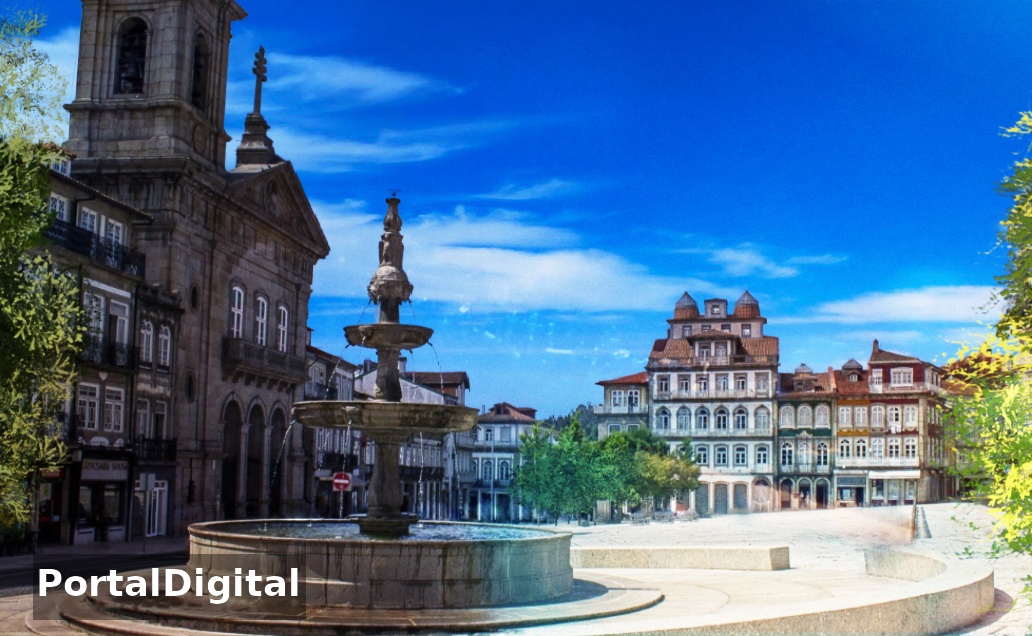
Largo do Toural is one of the most central and important squares in the Portuguese city of Guimarães.
In the 17th century it was an extramural square next to the town's main gate where cattle fairs and other various products were held.
In 1791, the Chamber built buildings on the land next to the wall that were later built according to a plan possibly coming from Lisbon, and thus marked the beginning of the slow transformation of Toural.
In the second half of the 18th century, a Public Garden was built surrounded by an iron railing where urban furniture was created within the new iron architecture: bandstand, urinal, benches and lamps that opened in 1878.
During the period of the establishment of the Republic, the statue of D. Afonso Henriques was placed in the center of Toural, and later this sculpture went to Parque do Castelo and was replaced by an eye-catching Artistic Fountain.
Currently, as a result of the intervention carried out in 2011, the Renaissance Fountain with three cups, originally placed in Toural in 1583, and later transferred to Largo Martins Sarmento between 1873 and 2011, has returned to the square.
In the architecture of Largo do Toural, one can notice the concern for wide and airy planning typical of the 21st century Enlightenment. XVIII revealing different phases of urban history that Guimarães has preserved.
Largo do Toural is one of the main squares and considered the heart of the city, but it didn't always look the way it does today.
Largo do Toural has been the target of several interventions over the years with different purposes, in other words, the place was once a public garden, has an imposing statue of D. Afonso Henrique that was later replaced by an eye-catching fountain.
The 2011 rehabilitation saw the return of the Renaissance fountain or “Fonte Monumental do Toural” with three bowls placed in the central courtyard, the work of architect José António Sequeira Braga and the sculpture by Eduardo Tavares inaugurated in 1953.
During the period of the Establishment of the Republic, the fences in the Toural garden were removed and the space became public and open to all citizens, but a statue of Dom Afonso Henriques was also placed, which was previously located in the Sanctuary of Santo Francisco.
In 1929, a new bridge was built on the Portuguese cobblestone pavement, and during the centenary celebrations the statue of the Founding King was moved close to the Castle (1940).
Today it is a different city with more light characterized by an expressive design of its central square made of quartz and basalt, a commercial hub and symbol of city life.
The Largo is surrounded by some of the city's most emblematic spaces passed down from generation to generation, and new concepts that aim to bring innovation to the square without ever losing the marks of history that are attached to the buildings.
Currently in Largo do Toural you will find the Basilica of Saint Peter, traditional shops, pastry shops with typical sweets from the region (Guimarães pies or crescent-shaped pastries), restaurants that give a new dynamic that enriches both Largo do Toural and the city of Guimarães.
In the 17th century it was an extramural square next to the town's main gate where cattle fairs and other various products were held.
In 1791, the Chamber built buildings on the land next to the wall that were later built according to a plan possibly coming from Lisbon, and thus marked the beginning of the slow transformation of Toural.
In the second half of the 18th century, a Public Garden was built surrounded by an iron railing where urban furniture was created within the new iron architecture: bandstand, urinal, benches and lamps that opened in 1878.
During the period of the establishment of the Republic, the statue of D. Afonso Henriques was placed in the center of Toural, and later this sculpture went to Parque do Castelo and was replaced by an eye-catching Artistic Fountain.
Currently, as a result of the intervention carried out in 2011, the Renaissance Fountain with three cups, originally placed in Toural in 1583, and later transferred to Largo Martins Sarmento between 1873 and 2011, has returned to the square.
In the architecture of Largo do Toural, one can notice the concern for wide and airy planning typical of the 21st century Enlightenment. XVIII revealing different phases of urban history that Guimarães has preserved.
Largo do Toural is one of the main squares and considered the heart of the city, but it didn't always look the way it does today.
Largo do Toural has been the target of several interventions over the years with different purposes, in other words, the place was once a public garden, has an imposing statue of D. Afonso Henrique that was later replaced by an eye-catching fountain.
The 2011 rehabilitation saw the return of the Renaissance fountain or “Fonte Monumental do Toural” with three bowls placed in the central courtyard, the work of architect José António Sequeira Braga and the sculpture by Eduardo Tavares inaugurated in 1953.
During the period of the Establishment of the Republic, the fences in the Toural garden were removed and the space became public and open to all citizens, but a statue of Dom Afonso Henriques was also placed, which was previously located in the Sanctuary of Santo Francisco.
In 1929, a new bridge was built on the Portuguese cobblestone pavement, and during the centenary celebrations the statue of the Founding King was moved close to the Castle (1940).
Today it is a different city with more light characterized by an expressive design of its central square made of quartz and basalt, a commercial hub and symbol of city life.
The Largo is surrounded by some of the city's most emblematic spaces passed down from generation to generation, and new concepts that aim to bring innovation to the square without ever losing the marks of history that are attached to the buildings.
Currently in Largo do Toural you will find the Basilica of Saint Peter, traditional shops, pastry shops with typical sweets from the region (Guimarães pies or crescent-shaped pastries), restaurants that give a new dynamic that enriches both Largo do Toural and the city of Guimarães.