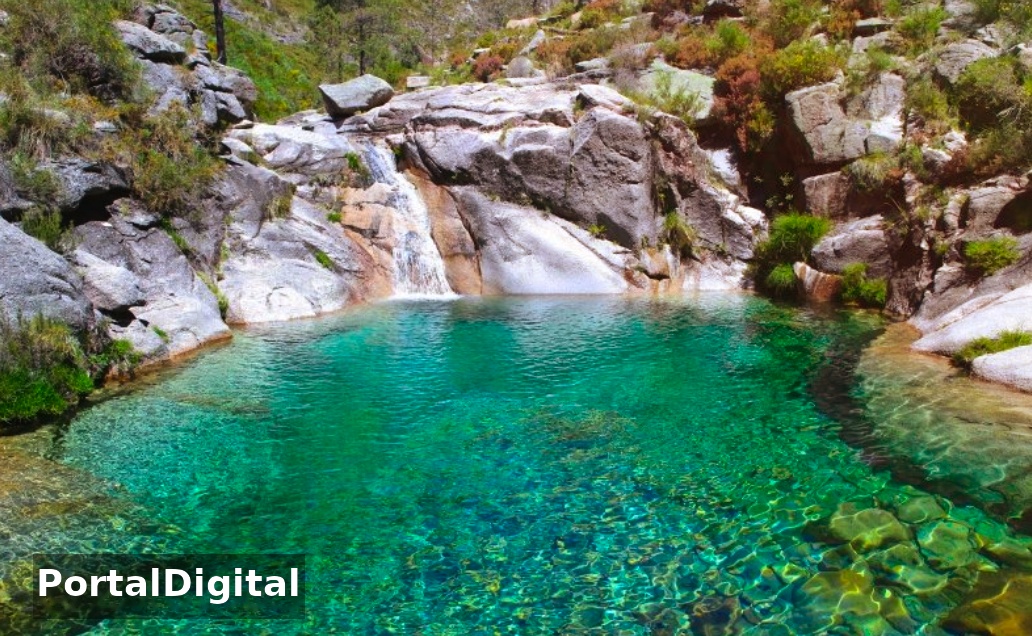


It is located in Fajã da Caldeira de Santo Cristo, on the island of São Jorge, Azores, Azores, Portugal
The Fajã de Santo Cristo Lagoon is possibly one of the most interesting in the Azores, both from a scenic and environmental point of view.
This lagoon is actually a lagoon, and the fajã where it is located was classified as a natural reserve by the Regional Government of the Azores in 1984, and especially because of the existence of a population with commercial interest in clams of the species Ruditapes decussatus (the only clam commercially exploited in the Azores).
This lagoon is located under a huge cliff and was formed by the collapse of the mountains on the north coast of the island which, due to the geological formation of the island itself, the settlement of the land, maritime abrasion and telluric movements and relatively recent volcanism from a geological point of view, combined to precipitate large quantities of rocky materials from the higher lands.
Over the centuries and again due to the very lively nature that devastates the entire coast of the island of São Jorge facing North with large storms, the channel that connected the lagoon to the sea became blocked, which was only restored a few years ago.
A lagoon with very warm waters due to its relative distance from the sea, and in Fajã dos Cubres it is a lagoon with brackish water and subject to tides that make its waters oscillate, contributing to their oxygenation.
In this lagoon there are many species of different birds that can be observed in this place, whether passing through or resident: the shearwater (Calonectris diomedea), the pink tern (Sterna dougallii) and the common tern (Sterna hirundo) nest here, and are birds that are protected by national and international laws.
Falésia and part of Lagoa da Caldeira de Santo Cristo, on the island of São Jorge, lay an average of 1 to 2 eggs in small nests made on the ground with pieces of plants and small stones and are therefore difficult to see. If the colonies are disturbed, the young can be abandoned by their parents and even starve to death.
There are also the wild or mute duck, the goose, the sparrow, the lambandeira, the blackbird, and the starling and dozens of other migratory birds that pass through the lagoon on their way to their destination.
Regarding flora, there is the heather (Erica azorica) endemic to the Azores and the common beech (Myrica faya Aiton) native to the Azores.
The main natural habitats of this place are: pebble beaches, sea cliffs and sea rocks.
This lagoon is actually a lagoon, and the fajã where it is located was classified as a natural reserve by the Regional Government of the Azores in 1984, and especially because of the existence of a population with commercial interest in clams of the species Ruditapes decussatus (the only clam commercially exploited in the Azores).
This lagoon is located under a huge cliff and was formed by the collapse of the mountains on the north coast of the island which, due to the geological formation of the island itself, the settlement of the land, maritime abrasion and telluric movements and relatively recent volcanism from a geological point of view, combined to precipitate large quantities of rocky materials from the higher lands.
Over the centuries and again due to the very lively nature that devastates the entire coast of the island of São Jorge facing North with large storms, the channel that connected the lagoon to the sea became blocked, which was only restored a few years ago.
A lagoon with very warm waters due to its relative distance from the sea, and in Fajã dos Cubres it is a lagoon with brackish water and subject to tides that make its waters oscillate, contributing to their oxygenation.
In this lagoon there are many species of different birds that can be observed in this place, whether passing through or resident: the shearwater (Calonectris diomedea), the pink tern (Sterna dougallii) and the common tern (Sterna hirundo) nest here, and are birds that are protected by national and international laws.
Falésia and part of Lagoa da Caldeira de Santo Cristo, on the island of São Jorge, lay an average of 1 to 2 eggs in small nests made on the ground with pieces of plants and small stones and are therefore difficult to see. If the colonies are disturbed, the young can be abandoned by their parents and even starve to death.
There are also the wild or mute duck, the goose, the sparrow, the lambandeira, the blackbird, and the starling and dozens of other migratory birds that pass through the lagoon on their way to their destination.
Regarding flora, there is the heather (Erica azorica) endemic to the Azores and the common beech (Myrica faya Aiton) native to the Azores.
The main natural habitats of this place are: pebble beaches, sea cliffs and sea rocks.