
It is located in Praça de Santa Maria, Vila de Óbidos, District of Leiria, Central Portugal
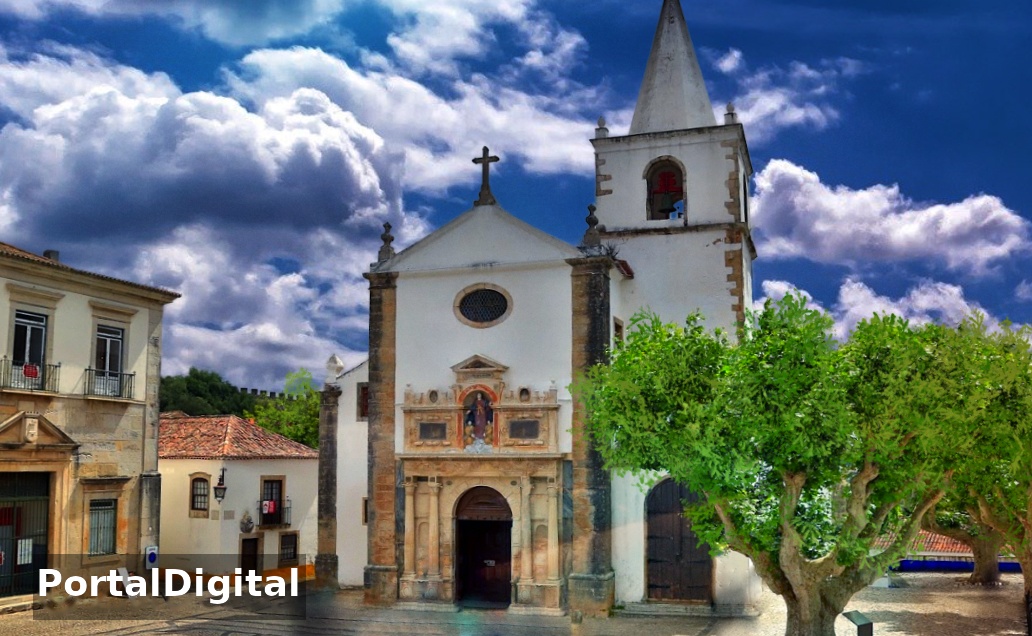
The Church of Santa Maria or Igreja Matriz de Óbidos (founded between 1148 and 1185) is the main church in the town of Óbidos given its heritage importance and is classified as a Property of Public Interest.
According to tradition, the origins of this church date back to the Visigothic period, having been converted into a mosque during the Muslim period and converted to Christianity after D. Afonso Henriques conquered the town in 1148, consecrating it to the Marian Devotion.
From 1210 onwards, the town of Óbidos became part of the Casa das Rainhas, benefiting from the artistic and religious patronage of the Crown for the next six hundred years, and the various modifications to the Church of Santa Maria bear witness to this fact.
The temple that is now located in Largo de Santa Maria, at the end of the main street of Rua Direita, dates from the 16th century and was built on the initiative of Queen D. Leonor, wife of D. João II.
In this church, Infante D. Afonso, later King D. Afonso V of Portugal, married his cousin D. Isabel at the age of eight. (15 August 1441).
The medieval temple was rebuilt at the end of the 15th century, with work continuing through the first quarter of the 16th century.
The buildings from that period that survive today are the bell tower and the chapel of Nossa Senhora da Piedade with the tomb that houses the remains of D. João de Noronha and D. Isabel de Sousa, designed by Nicolau Chanterene (c. 1526-1528).
On August 15, 1571 (the day of the Assumption of Our Lady), its complete reconstruction began, with a procession and great religious apparatus, with work continuing under the protection of Queen D. Catarina and Prior D. Rodrigo Sanches, the Queen's chief almoner and a figure of great prestige in the court of Charles V.
From 1571 onwards, given its state of ruin, it was completely restored by order of Queen D. Catherine of Austria to its current configuration with a probable design by the architect António Rodrigues.
A century later, it underwent new improvements at the initiative of Prior Doctor Francisco de Azevedo Caminha, who decorated the church using an artistic program with a Baroque taste (ceiling, tiles and nave screens).
The building was constructed over several centuries, reflecting the stylistic characteristics of successive periods featuring Manueline, Renaissance, Mannerist and Baroque elements.
The structure of the church reveals affinities with mendicant temples, it has a longitudinal plan, with 3 naves (the central one being the highest) separated by four sections of arches based on Doric columns.
The wooden ceiling is decorated with ornamental paintings from the 17th century. XVII, Renaissance axial portal in a triumphal arch, with two pairs of classical columns supporting a pediment where there is a niche that houses a sculpture of the patron saint, a prismatic bell tower covered by a pyramidal dome (trace of the Manueline works campaign).
At the entrance, on the Mannerist portal is the image of Our Lady of the Assunção, patron saint of the parish.
On the altar, the Renaissance tomb of D. João de Noronha ("The Boy"), captain of Óbidos in the 16th century, deserves to be admired, a masterpiece of Renaissance tomb sculptures attributed to the Frenchman Nicolau Chanterenne.
Visitors can observe paintings by Baltazar Gomes Figueira and the famous Josefa de Óbidos (1634-1684), which combined the profane and the sacred in environments of soft sensuality and mysticism in the 1611 altarpiece, which represents the Mystic Wedding of Santa Catarina, on display in the sacristy.
The work of this notable painter (and the church's collection) is preserved in museums, particularly in Óbidos.
The collateral chapel of Nossa Senhora da Piedade presents a notable tomb by João de Ruão (set) and Nicolau Chanterene (Deposition in the Tomb, according to the attribution of some authors, Assumption of the Virgin).
The sculptural ensemble follows the canons and ornamental theme of the Renaissance, integrating itself into the Coimbra production center, topped by a bas-relief with the Assumption of the Virgin and presents a Deposition in the Tomb in which the figures of Christ, the Virgin, St. John the Evangelist and St. Mary Magdalene, carved in Ançã stone, reveal in the draperies and in the exquisite plasticity of the faces and hands, the genius of an exceptional artist.
The dynamism of the interior parietal surfaces is achieved by the baroque decoration of tile coverings, paintings and gilded carvings.
In the carved altarpiece of the main altar, Corinthian columns frame eight paintings by the Obidense painter João da Costa with steps from the life of Our Lady: Annunciation, Adoration of the shepherds, Adoration of the Magi, Presentation in the temple, The Apostles around the Sepulcher of the Virgin and a set of three images in the upper area represents the Assumption of the Virgin.
In the altarpiece of the collateral altar (Epistle side) there are five paintings by Josefa de Óbidos alluding to Saint Catherine (c. 1661): Saint Catherine arguing with the Doctors and the destruction of the wheel of martyrdom, the upper canvases: Saint Teresa, St. Francis of Assisi and The mystic marriage of Saint Catherine.
The two paintings located at the top of each side nave are also attributed to Josefa de Óbidos (The Baptism of Christ; The Ascension) and finally, the rich tile covering from the 17th and 18th centuries is worth highlighting.
According to tradition, the origins of this church date back to the Visigothic period, having been converted into a mosque during the Muslim period and converted to Christianity after D. Afonso Henriques conquered the town in 1148, consecrating it to the Marian Devotion.
From 1210 onwards, the town of Óbidos became part of the Casa das Rainhas, benefiting from the artistic and religious patronage of the Crown for the next six hundred years, and the various modifications to the Church of Santa Maria bear witness to this fact.
The temple that is now located in Largo de Santa Maria, at the end of the main street of Rua Direita, dates from the 16th century and was built on the initiative of Queen D. Leonor, wife of D. João II.
In this church, Infante D. Afonso, later King D. Afonso V of Portugal, married his cousin D. Isabel at the age of eight. (15 August 1441).
The medieval temple was rebuilt at the end of the 15th century, with work continuing through the first quarter of the 16th century.
The buildings from that period that survive today are the bell tower and the chapel of Nossa Senhora da Piedade with the tomb that houses the remains of D. João de Noronha and D. Isabel de Sousa, designed by Nicolau Chanterene (c. 1526-1528).
On August 15, 1571 (the day of the Assumption of Our Lady), its complete reconstruction began, with a procession and great religious apparatus, with work continuing under the protection of Queen D. Catarina and Prior D. Rodrigo Sanches, the Queen's chief almoner and a figure of great prestige in the court of Charles V.
From 1571 onwards, given its state of ruin, it was completely restored by order of Queen D. Catherine of Austria to its current configuration with a probable design by the architect António Rodrigues.
A century later, it underwent new improvements at the initiative of Prior Doctor Francisco de Azevedo Caminha, who decorated the church using an artistic program with a Baroque taste (ceiling, tiles and nave screens).
The building was constructed over several centuries, reflecting the stylistic characteristics of successive periods featuring Manueline, Renaissance, Mannerist and Baroque elements.
The structure of the church reveals affinities with mendicant temples, it has a longitudinal plan, with 3 naves (the central one being the highest) separated by four sections of arches based on Doric columns.
The wooden ceiling is decorated with ornamental paintings from the 17th century. XVII, Renaissance axial portal in a triumphal arch, with two pairs of classical columns supporting a pediment where there is a niche that houses a sculpture of the patron saint, a prismatic bell tower covered by a pyramidal dome (trace of the Manueline works campaign).
At the entrance, on the Mannerist portal is the image of Our Lady of the Assunção, patron saint of the parish.
On the altar, the Renaissance tomb of D. João de Noronha ("The Boy"), captain of Óbidos in the 16th century, deserves to be admired, a masterpiece of Renaissance tomb sculptures attributed to the Frenchman Nicolau Chanterenne.
Visitors can observe paintings by Baltazar Gomes Figueira and the famous Josefa de Óbidos (1634-1684), which combined the profane and the sacred in environments of soft sensuality and mysticism in the 1611 altarpiece, which represents the Mystic Wedding of Santa Catarina, on display in the sacristy.
The work of this notable painter (and the church's collection) is preserved in museums, particularly in Óbidos.
The collateral chapel of Nossa Senhora da Piedade presents a notable tomb by João de Ruão (set) and Nicolau Chanterene (Deposition in the Tomb, according to the attribution of some authors, Assumption of the Virgin).
The sculptural ensemble follows the canons and ornamental theme of the Renaissance, integrating itself into the Coimbra production center, topped by a bas-relief with the Assumption of the Virgin and presents a Deposition in the Tomb in which the figures of Christ, the Virgin, St. John the Evangelist and St. Mary Magdalene, carved in Ançã stone, reveal in the draperies and in the exquisite plasticity of the faces and hands, the genius of an exceptional artist.
The dynamism of the interior parietal surfaces is achieved by the baroque decoration of tile coverings, paintings and gilded carvings.
In the carved altarpiece of the main altar, Corinthian columns frame eight paintings by the Obidense painter João da Costa with steps from the life of Our Lady: Annunciation, Adoration of the shepherds, Adoration of the Magi, Presentation in the temple, The Apostles around the Sepulcher of the Virgin and a set of three images in the upper area represents the Assumption of the Virgin.
In the altarpiece of the collateral altar (Epistle side) there are five paintings by Josefa de Óbidos alluding to Saint Catherine (c. 1661): Saint Catherine arguing with the Doctors and the destruction of the wheel of martyrdom, the upper canvases: Saint Teresa, St. Francis of Assisi and The mystic marriage of Saint Catherine.
The two paintings located at the top of each side nave are also attributed to Josefa de Óbidos (The Baptism of Christ; The Ascension) and finally, the rich tile covering from the 17th and 18th centuries is worth highlighting.