
It is located next to Passeio de Baixo in Machico, in the parish of Machico, municipality of Machico, on the island of Madeira, Autonomous Region of Madeira, Portugal
The Fort was built in 1706, at the expense of Captain Francisco Dias Franco, clerk of the Chamber of Machico, as can be seen on the plaque at the entrance to the fort topped by the national weapons in regional stonework, and had the function of defense against attacks by pirates and privateers.
Built in 1706, at the expense of Captain Francisco Dias Franco, clerk of the Chamber of Machico, as can be seen on the commemorative plaque at the entrance to the fort, topped by the national coat of arms, all in regional stonework.
In the context of the Portuguese Civil War (1828-1834) during the disembarkation of Miguelista troops who aimed to eradicate the Liberal Regime in Madeira in 1828, it was the last fort on the island to capitulate.
In 1910, with the proclamation of the Portuguese Republic, the Crown on the Stone of Arms over the Fort Gate was removed.
In 1940, the property was handed over to the Tax Guard, being classified as a Property of Public Interest by Decree nº 30/762 of September 26, 1940 and in 1993 it was donated to the Regional Government of Madeira.
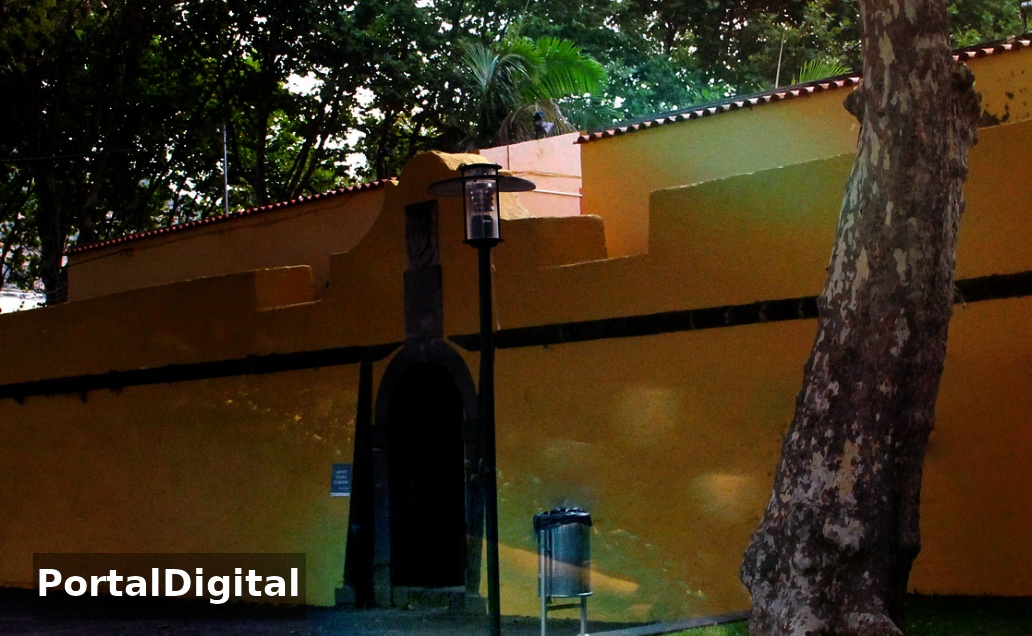
On the side facing the land, the arms gate in rigid stonework with a round arch topped by a baroque pediment was torn apart.
A tombstone with an epigraphic inscription marking the foundation of the fort is inscribed on this pediment, surmounted by the national coat of arms.
In the pediment you can access a tunnel with a staircase in island stonework that communicates with the embankment, partially landscaped and paved with pebbles decorated with iron artillery pieces, the walls are topped by merlons with a protruding cord
The service buildings are twins, with a rectangular plan of horizontal volumes almost attached to the wall facing the land.
Its facades face the sea, with doors and windows with stonework frames and a roof made of single-pitched Portuguese straw tiles.
The Nossa Senhora do Amparo Fort located in Largo Dr. José António d’Almeida / Rua do Mercado / Alameda dos Plátanos, is an isolated building within the Military Architecture typology.
A building with a triangular plan of the “two-phase stronghold” type, with the third facing the earth where the tunnel entrance opens with a stonework staircase that gives access to the terrace.
It features facades topped by merlons with a protruding cordon in insular stonework, an earth-facing façade with a portal in rigid stonework with a round arch surmounted by a baroque wavy pediment.
The fort's esplanade is partially landscaped and paved with rolled pebbles and decorated with iron fire hydrants from ships that passed through the island, and given their extensive use, they are no longer in use.
The Fort has had several uses such as: Tax Guard Post, Tourism Office, Cultural Office of the Municipality of Machico.
It currently houses the Madeira European Office and the Machico Municipal Assembly Headquarters.
Built in 1706, at the expense of Captain Francisco Dias Franco, clerk of the Chamber of Machico, as can be seen on the commemorative plaque at the entrance to the fort, topped by the national coat of arms, all in regional stonework.
In the context of the Portuguese Civil War (1828-1834) during the disembarkation of Miguelista troops who aimed to eradicate the Liberal Regime in Madeira in 1828, it was the last fort on the island to capitulate.
In 1910, with the proclamation of the Portuguese Republic, the Crown on the Stone of Arms over the Fort Gate was removed.
In 1940, the property was handed over to the Tax Guard, being classified as a Property of Public Interest by Decree nº 30/762 of September 26, 1940 and in 1993 it was donated to the Regional Government of Madeira.
On the side facing the land, the arms gate in rigid stonework with a round arch topped by a baroque pediment was torn apart.
A tombstone with an epigraphic inscription marking the foundation of the fort is inscribed on this pediment, surmounted by the national coat of arms.
In the pediment you can access a tunnel with a staircase in island stonework that communicates with the embankment, partially landscaped and paved with pebbles decorated with iron artillery pieces, the walls are topped by merlons with a protruding cord
The service buildings are twins, with a rectangular plan of horizontal volumes almost attached to the wall facing the land.
Its facades face the sea, with doors and windows with stonework frames and a roof made of single-pitched Portuguese straw tiles.
The Nossa Senhora do Amparo Fort located in Largo Dr. José António d’Almeida / Rua do Mercado / Alameda dos Plátanos, is an isolated building within the Military Architecture typology.
A building with a triangular plan of the “two-phase stronghold” type, with the third facing the earth where the tunnel entrance opens with a stonework staircase that gives access to the terrace.
It features facades topped by merlons with a protruding cordon in insular stonework, an earth-facing façade with a portal in rigid stonework with a round arch surmounted by a baroque wavy pediment.
The fort's esplanade is partially landscaped and paved with rolled pebbles and decorated with iron fire hydrants from ships that passed through the island, and given their extensive use, they are no longer in use.
The Fort has had several uses such as: Tax Guard Post, Tourism Office, Cultural Office of the Municipality of Machico.
It currently houses the Madeira European Office and the Machico Municipal Assembly Headquarters.