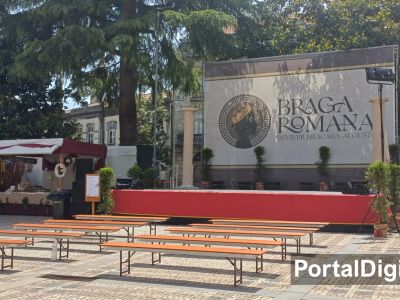


It is located in Largo do Conde de Fontalva, city and municipality of Caldas da Rainha, district of Leiria, sub-region of Oeste, Central Portugal
In Largo do Conde de Fontalva there is the statue of Queen D. Leonor in which the official acts of the 15th of May are celebrated, which is a municipal holiday and which serve as thanks and recognition for D. Leonor and all the attention she gave to this land and its waters.
The plaster sketch of the Queen's statue can also be included in the permanent collection of the José Malhoa Museum, due to the quantity and quality of the art exhibited there, but also because it is built right in the center of Parque D. Carlos I.
The most important figure in the city of Caldas da Rainha is Queen D. Leonor (1458- 1525), founder and responsible for the construction of the Thermal Hospital and due to which what is today our city developed, and whose name refers to D. Leonor.
D. Leonor was born in Beja in 1458 and before becoming Queen by marriage (1481) with the future King D. João II, her cousin, D. Leonor, before her marriage to the Perfect Prince, was already a princess of the House of Avis as she was the great-granddaughter of King D. João I (1385-1433) the Master of Avis, and was also the granddaughter of the first Duke of Bragança, D. Afonso, who in turn was married to D. Beatriz Pereira, daughter of D. Nuno Álvares Pereira, Constable of the Kingdom and right-hand man of D. João I, in the Battle of Aljubarrota.
D. Leonor was only the third and last queen consort (through marriage with the heir to the throne) born in Portugal and was also the first representative of national royalty to belong to Casa Bragança, which would come to represent Portugal as a Royal House after the Restoration of Independence in 1640.
Legend has it that on the day of funeral celebrations in honor of D. Afonso V, father of D. João II and the uncle and father-in-law of D. Leonor, taking place at the Monastery of Batalha, on the way from Óbidos to Batalha the Queen came across a group of people who were bathing in the puddles near the road and who was wondering what it was all about and was told that the waters helped the said people to feel better about their physical or health difficulties.
The construction of what is considered by many to be the first Thermal Hospital in the world was a small step for D. Leonor, who paid for its construction, starting work in 1484.
The worthy Queen was also responsible for drafting the respective regulation, which became known as the Queen's Commitment, which defined that the institution would serve to support the poor and disadvantaged of the kingdom free of charge (published in 1512).
D. Manuel I, Leonor's brother, granted the town charter to Caldas da Rainha which would enshrine the rapid growth of the place, the affirmation of its importance and above all its independence from the municipality of Óbidos to which it belonged until then with the name Caldas de Óbidos.
The Thermal Hospital is the reason for the founding of the city and the main legacy of D. Leonor, the institution uses the queen's name as its official name, which stands out in relation to the square where the Hospital is built and which also has a toponymy with the aim of honoring our founder.
Part of the permanent collection of the José Malhoa Museum, the painting collection includes a representation of Queen D. Leonor painted by José Malhoa himself, a painter from Caldas da Rainha, who, at the invitation of António Montez in 1924, created that painting with the triple objective of honoring D. Leonor, bringing José Malhoa closer to his homeland and decorating the main hall of the Industrial and Commercial Association at that time.
Caldas da Rainha has shown its gratitude and recognition to D. Leonor for her generous attitude more than 500 years ago.
The plaster sketch of the Queen's statue can also be included in the permanent collection of the José Malhoa Museum, due to the quantity and quality of the art exhibited there, but also because it is built right in the center of Parque D. Carlos I.
The most important figure in the city of Caldas da Rainha is Queen D. Leonor (1458- 1525), founder and responsible for the construction of the Thermal Hospital and due to which what is today our city developed, and whose name refers to D. Leonor.
D. Leonor was born in Beja in 1458 and before becoming Queen by marriage (1481) with the future King D. João II, her cousin, D. Leonor, before her marriage to the Perfect Prince, was already a princess of the House of Avis as she was the great-granddaughter of King D. João I (1385-1433) the Master of Avis, and was also the granddaughter of the first Duke of Bragança, D. Afonso, who in turn was married to D. Beatriz Pereira, daughter of D. Nuno Álvares Pereira, Constable of the Kingdom and right-hand man of D. João I, in the Battle of Aljubarrota.
D. Leonor was only the third and last queen consort (through marriage with the heir to the throne) born in Portugal and was also the first representative of national royalty to belong to Casa Bragança, which would come to represent Portugal as a Royal House after the Restoration of Independence in 1640.
Legend has it that on the day of funeral celebrations in honor of D. Afonso V, father of D. João II and the uncle and father-in-law of D. Leonor, taking place at the Monastery of Batalha, on the way from Óbidos to Batalha the Queen came across a group of people who were bathing in the puddles near the road and who was wondering what it was all about and was told that the waters helped the said people to feel better about their physical or health difficulties.
The construction of what is considered by many to be the first Thermal Hospital in the world was a small step for D. Leonor, who paid for its construction, starting work in 1484.
The worthy Queen was also responsible for drafting the respective regulation, which became known as the Queen's Commitment, which defined that the institution would serve to support the poor and disadvantaged of the kingdom free of charge (published in 1512).
D. Manuel I, Leonor's brother, granted the town charter to Caldas da Rainha which would enshrine the rapid growth of the place, the affirmation of its importance and above all its independence from the municipality of Óbidos to which it belonged until then with the name Caldas de Óbidos.
The Thermal Hospital is the reason for the founding of the city and the main legacy of D. Leonor, the institution uses the queen's name as its official name, which stands out in relation to the square where the Hospital is built and which also has a toponymy with the aim of honoring our founder.
Part of the permanent collection of the José Malhoa Museum, the painting collection includes a representation of Queen D. Leonor painted by José Malhoa himself, a painter from Caldas da Rainha, who, at the invitation of António Montez in 1924, created that painting with the triple objective of honoring D. Leonor, bringing José Malhoa closer to his homeland and decorating the main hall of the Industrial and Commercial Association at that time.
Caldas da Rainha has shown its gratitude and recognition to D. Leonor for her generous attitude more than 500 years ago.