
It is located in the parish of Soajo, Vila de Arcos de Valdevez, in the district of Viana do Castelo, North region and sub-region of Alto Minho, seat of the municipality of Arcos de Valdevez
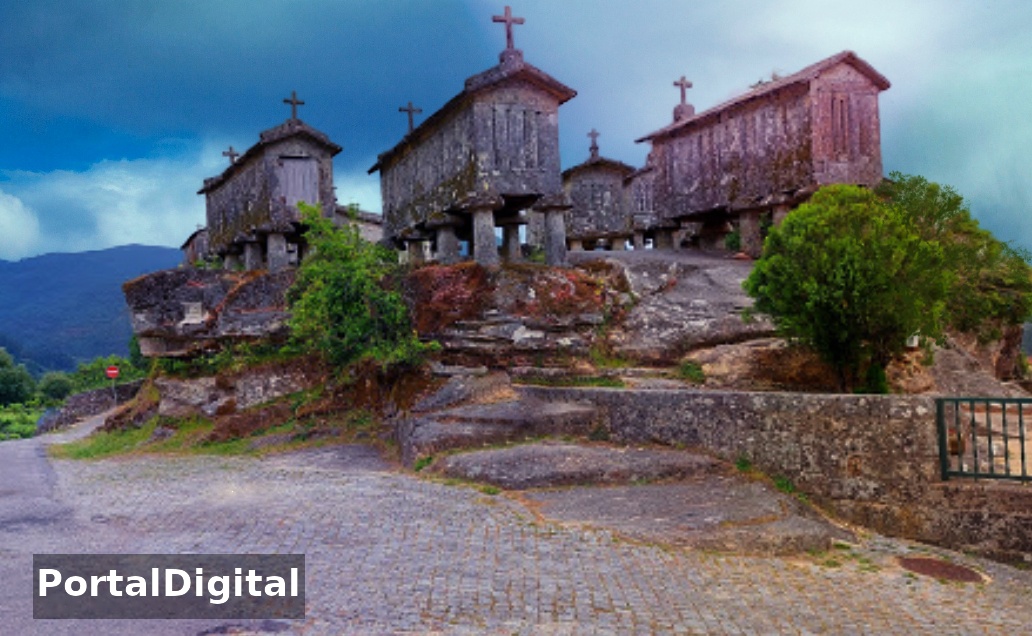
On the huge granite slabs, located in the center of the village of Soajo, stand out the 24 granite granaries that are one of the biggest tourist attractions in this area.
The so-called Eira Comunitária do Soajo has 24 granaries overlooking the mountains and green hills.
In the town of Soajo, in the municipality of Arcos de Valdevez, there is a group of granaries that are the biggest local attraction: the Espigueiros do Soajo, of which there are 24 and characterized by being corn barns and despite being of different heights, one of the oldest dates back to 1782.
Granaries were and still are used to dry corn and are placed in strategically higher places so that animals do not eat the populations' food.
To keep away the rodents that can climb, the population cunningly installed stone wheels.
The walls of the granaries have small openings to circulate air between the ears, which are stacked inside.
At the top they have a small cross that shows the devotion of the populations asking for divine protection for their crops and even today some granaries are used by the local community.
A group of Community Granaries in Soajo are unique buildings typical of Minho, there is a car park nearby, a small playground is a pleasant space for a brief stop.
The more adventurous visitors can follow trails of enormous beauty around the village with degrees of difficulty for all tastes and see wild animals, hear the birds and enjoy the fresh air at 1400m altitude.
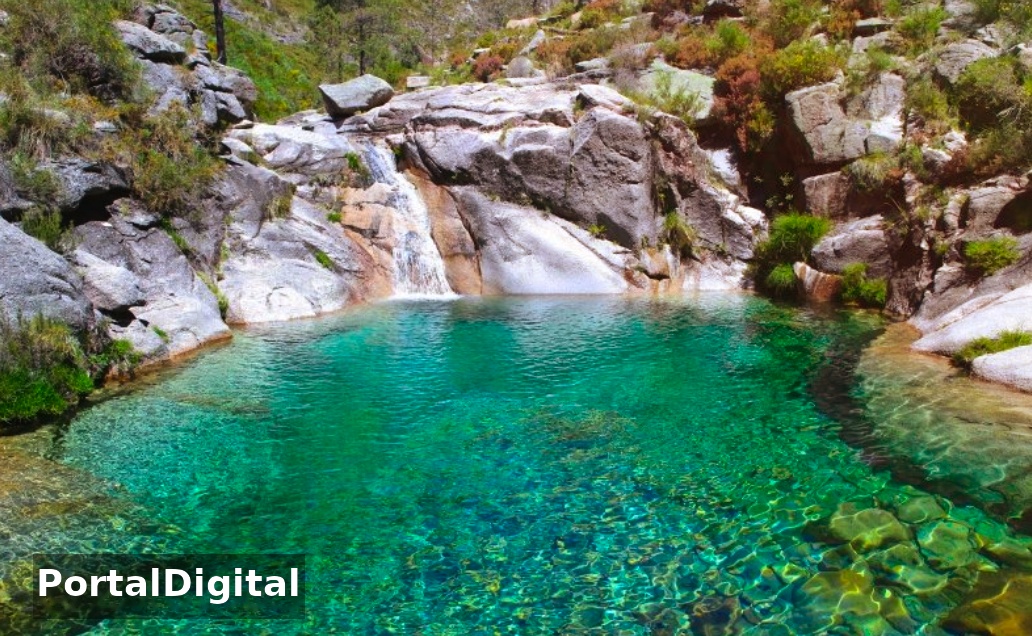
A place to rest and admire the magnificent landscape of Serra do Soajo, the Sanctuary of Sra da Peneda with its waterfall and you can see wild oxen.
The Soajo mountain range is the sixth highest mountain range in mainland Portugal with 1416 m of altitude and 768 m of topographic prominence. It is located in the municipalities of Arcos de Valdevez, Melgaço and Monção.
Serra do Soajo is part of the Peneda-Gerês National Park and its top called "Pico da Pedrada" is the highest point in the district of Viana do Castelo.
The so-called Eira Comunitária do Soajo has 24 granaries overlooking the mountains and green hills.
In the town of Soajo, in the municipality of Arcos de Valdevez, there is a group of granaries that are the biggest local attraction: the Espigueiros do Soajo, of which there are 24 and characterized by being corn barns and despite being of different heights, one of the oldest dates back to 1782.
Granaries were and still are used to dry corn and are placed in strategically higher places so that animals do not eat the populations' food.
To keep away the rodents that can climb, the population cunningly installed stone wheels.
The walls of the granaries have small openings to circulate air between the ears, which are stacked inside.
At the top they have a small cross that shows the devotion of the populations asking for divine protection for their crops and even today some granaries are used by the local community.
A group of Community Granaries in Soajo are unique buildings typical of Minho, there is a car park nearby, a small playground is a pleasant space for a brief stop.
The more adventurous visitors can follow trails of enormous beauty around the village with degrees of difficulty for all tastes and see wild animals, hear the birds and enjoy the fresh air at 1400m altitude.
A place to rest and admire the magnificent landscape of Serra do Soajo, the Sanctuary of Sra da Peneda with its waterfall and you can see wild oxen.
The Soajo mountain range is the sixth highest mountain range in mainland Portugal with 1416 m of altitude and 768 m of topographic prominence. It is located in the municipalities of Arcos de Valdevez, Melgaço and Monção.
Serra do Soajo is part of the Peneda-Gerês National Park and its top called "Pico da Pedrada" is the highest point in the district of Viana do Castelo.
Classification of Espigueiros do Soajo
In 1983, the group of granaries in Soajo was classified as a Property of Public Interest by IGESPAR (Institute for Management of Architectural and Archaeological Heritage).