
It is located on Avenida dos Combatentes da Grande Guerra, city of Viana do Castelo, Northern Portugal
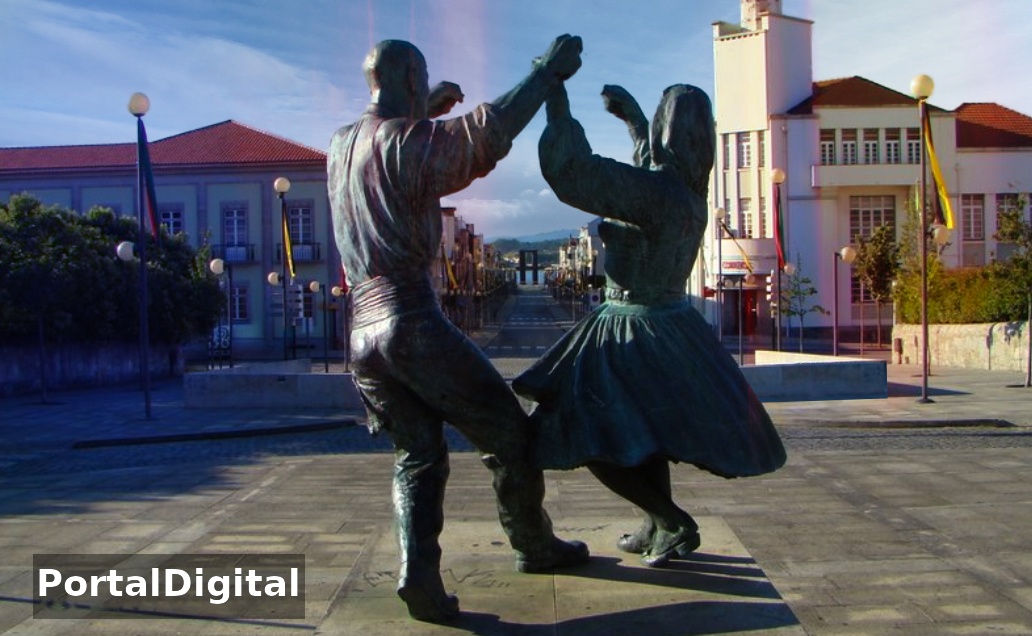
The sculpture is located right in front of the Viana do Castelo Train Station and is intended to immortalize the typical Minho dance and keep alive the traditions of a festive and hospitable people, remembering the folklore traditions of Viana.
The city of Viana grew along the banks of the River Lima, it is just 70 km from Porto and 25 km from the Spanish border, and it was in the 19th century during the reign of D. Maria II of Portugal that the Minho Line was built, taking the train to Viana do Castelo, resulting in a significant increase in the region's development.
In front of the train station building, next to some stairs, there is a large bronze sculpture of a woman and a man dressed in typical Viana dance costumes and written below: “Hei-de return to Viana” and was placed there in June 2000.
The Pilgrimage d’Agonia joins the history of the Chapel of Nossa Senhora da Agonia, which dates back to 1674 in honor of the patron saint of fishermen.
At the time, a chapel was built in primitive invocation to Bom Jesus do Santo Sepulcro do Calvário, and a little above a small chapel devoted to Our Lady of Conception.
Currently, the name of the saint “Our Lady of Agony” is associated with the queen of pilgrimages and the multiple traditions of the largest popular festival in Portugal: the pilgrimage in honor of Our Lady of Agony born in 1772 from the devotion of seafarers from Galicia and the entire Portuguese coast for religious and pagan celebrations that are still repeated annually during the week of August 20th, which is a municipal holiday.
The Pilgrimage in Honor of Our Lady of Agonia is the pinnacle of Viennese festivities, the queen of pilgrimages is grand in its programme, in the number of visitors and in the strength of the Viennese costume, in the weight of the gold that the butlers wear on their chests.
The procession to the sea and the streets of Ribeira decorated with flowered carpets are testimonies of the deep religious devotion that gave rise to the Pilgrimage of Agonia.
Ethnography has its place in the Stewardship Parade with hundreds of women parading their costumes with 'chieira' (pride, vanity), and also in the Historical and Ethnographic Parade and the unparalleled Costume Festival.
In the month of August, visitors can hear the concertinas and bass drums, the typical Viana folklore dances, the fireworks that light up the entire city, starting from the Gustave Eiffel bridge, passing through the Castle of Santiago da Barra to the Temple: Monumento de Santa Luzia.
The city of Viana grew along the banks of the River Lima, it is just 70 km from Porto and 25 km from the Spanish border, and it was in the 19th century during the reign of D. Maria II of Portugal that the Minho Line was built, taking the train to Viana do Castelo, resulting in a significant increase in the region's development.
In front of the train station building, next to some stairs, there is a large bronze sculpture of a woman and a man dressed in typical Viana dance costumes and written below: “Hei-de return to Viana” and was placed there in June 2000.
The Pilgrimage d’Agonia joins the history of the Chapel of Nossa Senhora da Agonia, which dates back to 1674 in honor of the patron saint of fishermen.
At the time, a chapel was built in primitive invocation to Bom Jesus do Santo Sepulcro do Calvário, and a little above a small chapel devoted to Our Lady of Conception.
Currently, the name of the saint “Our Lady of Agony” is associated with the queen of pilgrimages and the multiple traditions of the largest popular festival in Portugal: the pilgrimage in honor of Our Lady of Agony born in 1772 from the devotion of seafarers from Galicia and the entire Portuguese coast for religious and pagan celebrations that are still repeated annually during the week of August 20th, which is a municipal holiday.
The Pilgrimage in Honor of Our Lady of Agonia is the pinnacle of Viennese festivities, the queen of pilgrimages is grand in its programme, in the number of visitors and in the strength of the Viennese costume, in the weight of the gold that the butlers wear on their chests.
The procession to the sea and the streets of Ribeira decorated with flowered carpets are testimonies of the deep religious devotion that gave rise to the Pilgrimage of Agonia.
Ethnography has its place in the Stewardship Parade with hundreds of women parading their costumes with 'chieira' (pride, vanity), and also in the Historical and Ethnographic Parade and the unparalleled Costume Festival.
In the month of August, visitors can hear the concertinas and bass drums, the typical Viana folklore dances, the fireworks that light up the entire city, starting from the Gustave Eiffel bridge, passing through the Castle of Santiago da Barra to the Temple: Monumento de Santa Luzia.