
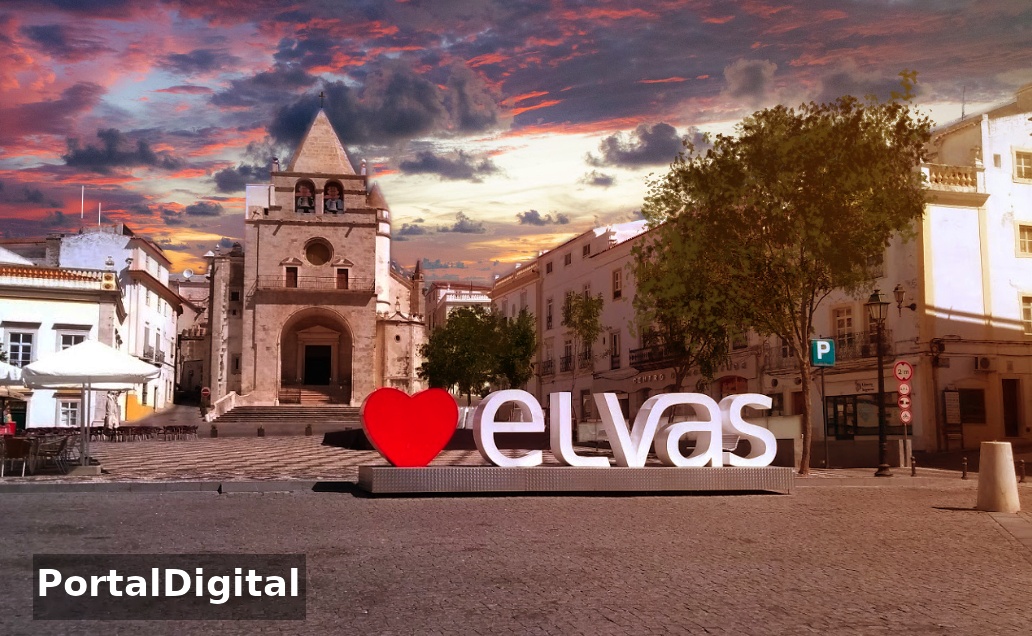
Elvas is a Portuguese city in the district of Portalegre, in the Alentejo region and in the sub-region of Alto Alentejo, Portugal
The City of Elvas has 16,084 inhabitants (2021), and is subdivided into 7 parishes: Union of Parishes of Assunção, Ajuda, Salvador and Santo Ildefonso (urban), Union of Parishes of Caia, São Pedro and Alcáçova, Santa Eulália, São Brás and São Lourenço, São Vicente and Ventosa, Union of Parishes of Barbacena and Vila Fernando and Union of Parishes from Terrugem and Vila Boim.
The Goths and Celts were the first settlers of this authentic "fortress city" that today extends beyond its star-shaped walls.
In 714 the Arabs conquered it and gave it the name "al-Bash", leaving so many marks of their presence that some still persist to this day.
During the reign of D. Afonso Henriques, more precisely in 1166, Elvas was conquered from the Moors for the first time.
Elvas was reconquered again by Christianity, being definitively integrated into Portuguese territory by D. D. Sancho II in 1229.
The first charter was granted by D. Afonso Henriques and during the reconquest a second charter was granted by D. Sancho II.
A new charter in 1513 granted by D. Manuel I of Portugal marked the elevation of Elvas to the category of city.
On January 14, 1659, its lines of walls and the fort of Santa Luzia played an important defensive role in the outcome of the Restoration War in the Battle of the Lines of Elvas.
Elvas is one of the hottest cities in the summer and often the hottest.
Elvas is a heavily touristic city and classified as a UNESCO World Heritage Site and is visited annually by thousands of people.
The tourist attractions of Elvas: Castle of Elvas, Pelourinho de Elvas, Municipal Garden of Elvas, Castle of Fontalva, Fort of Nossa Senhora da Graça, Fort of Santa Luzia, Church of Nossa Senhora da Assunção (Old Cathedral of Elvas), Sanctuary of Senhor Jesus da Piedade, Igreja das Dominicas, Casa da Cultura de Elvas, Igreja do Salvador, Parque da Piedade, Arco de Santa Clara, Convent and Church of São Domingos (Elvas), Church of Saint Peter (Elvas), Church of Santa Maria de Alcáçova, Aqueduct of Amoreira, Batalha das Linhas de Elvas, Ponte de Nossa Senhora da Ajuda, Porta da Alcáçova (Arco do Miradeiro), Museum of Contemporary Art of Elvas (MACE), Fort Square of Elvas, Museum of Archeology and Ethnography, Monument to Firefighters, Portas de São Vicente, Military Museum of Elvas, Cemetery of Ingleses, João Carpinteiro Municipal Photography Museum, Elvas Municipal Stadium, D. Sancho II de Elvas Secondary School, Comendador Rondão Almeida Coliseum, Caia Barrage Reservoir, Alfarofia Lake, Fortim de São Domingos and Portas de Olivença.
The Goths and Celts were the first settlers of this authentic "fortress city" that today extends beyond its star-shaped walls.
In 714 the Arabs conquered it and gave it the name "al-Bash", leaving so many marks of their presence that some still persist to this day.
During the reign of D. Afonso Henriques, more precisely in 1166, Elvas was conquered from the Moors for the first time.
Elvas was reconquered again by Christianity, being definitively integrated into Portuguese territory by D. D. Sancho II in 1229.
The first charter was granted by D. Afonso Henriques and during the reconquest a second charter was granted by D. Sancho II.
A new charter in 1513 granted by D. Manuel I of Portugal marked the elevation of Elvas to the category of city.
On January 14, 1659, its lines of walls and the fort of Santa Luzia played an important defensive role in the outcome of the Restoration War in the Battle of the Lines of Elvas.
Elvas is one of the hottest cities in the summer and often the hottest.
Elvas is a heavily touristic city and classified as a UNESCO World Heritage Site and is visited annually by thousands of people.
The tourist attractions of Elvas: Castle of Elvas, Pelourinho de Elvas, Municipal Garden of Elvas, Castle of Fontalva, Fort of Nossa Senhora da Graça, Fort of Santa Luzia, Church of Nossa Senhora da Assunção (Old Cathedral of Elvas), Sanctuary of Senhor Jesus da Piedade, Igreja das Dominicas, Casa da Cultura de Elvas, Igreja do Salvador, Parque da Piedade, Arco de Santa Clara, Convent and Church of São Domingos (Elvas), Church of Saint Peter (Elvas), Church of Santa Maria de Alcáçova, Aqueduct of Amoreira, Batalha das Linhas de Elvas, Ponte de Nossa Senhora da Ajuda, Porta da Alcáçova (Arco do Miradeiro), Museum of Contemporary Art of Elvas (MACE), Fort Square of Elvas, Museum of Archeology and Ethnography, Monument to Firefighters, Portas de São Vicente, Military Museum of Elvas, Cemetery of Ingleses, João Carpinteiro Municipal Photography Museum, Elvas Municipal Stadium, D. Sancho II de Elvas Secondary School, Comendador Rondão Almeida Coliseum, Caia Barrage Reservoir, Alfarofia Lake, Fortim de São Domingos and Portas de Olivença.