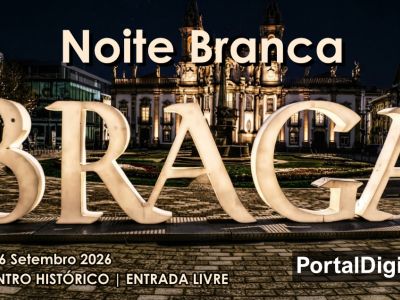


The city of Braga is located in the North of Portugal in the center of Minho with more than one million inhabitants, it is also the seat of the municipality of Braga with thirty-seven parishes and unions of parishes.
This city has a two-millennial history that began in the Bronze Age where it is possible to prove the existence of population clusters found in Alto da Ctividade where there was a settlement and a necropolis that existed in the Granjinhos area. During this period, the so-called “castros” developed, defined as villages that occupied high elevations.
The Celts were its inhabitants, and the Brácaros (in Latin: Bracari) lived in this region, who would give the city its name after its foundation.
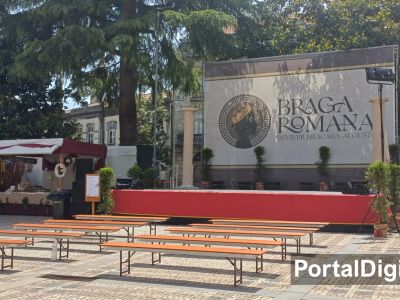
During the 2nd century the region was taken over by the Romans and this city was founded in 16 BC. named Bracara Augusta in honor of the Roman emperor Augustus.
After the fall of the Western Roman Empire, Bracara Augusta became the political and intellectual capital of the Suevian Kingdom that encompassed the region of Galicia (today Galicia, northern Portugal, part of Asturias and the provinces of León and Zamora and extending to the Tagus River). In the 11th century, the construction of the city wall and the Cathedral began by order of Bishop D. Pedro on the remains of an ancient Roman temple converted into a Christian church. During this period, the city developed around the Cathedral, being restricted to the perimeters of the wall. In the 16th century, the archbishop of Braga, D. Diogo de Sousa, modified the city by introducing streets, squares and new buildings, causing growth beyond the perimeter of the wall.
From the 16th to the 18th century, through various archbishops, buildings with medieval features were replaced by buildings with religious architecture of the time.
In the 18th century, at the hands of the Portuguese architect and sculptor André Soares, two artistic currents emerged: rococo and late-baroque. Among his works, the new facade of the Chapel of Santa Maria Madalena da Falperra and the Palácio do Raio stand out.
At the end of this century, Carlos Amarante appeared, a Portuguese engineer and architect who introduced the neoclassical movement and his works include Bom Jesus, Igreja do Pópulo and the Igreja do Hospital or Igreja de São Marcos in Braga.
In 1875, the Braga train line and station were inaugurated by King D. Luís, and here the city center ceased to be the Cathedral area and moved to Avenida da Liberdade and the buildings and Circus Theater were redesigned and the city developed at a high pace.
The city located to the Southeast on a mountain range in the East and South order: The Sanctuary of Bom Jesus, The Sanctuary of Sameiro or Nossa Senhora do Sameiro and Falperra constituted by the Church of Santa Maria Madalena and Santa Marta da Cortiças.
The city is strictly linked to the entire Minho: to the North is the traditional Alto-Minho, to the East: the Peneda-Gerês National Park and to the South: the manor lands of Basto and Industrial Ave and to the West: the Minho sea coast. Braga is the third largest city in the country, after Lisbon and Porto. In 2012 it was European Youth Capital and in 2019 it was considered the second best European tourist destination. Braga is known for its many beautiful churches, immense historical monuments, gastronomy, crafts, traditions and popular and religious festivals.
The Celts were its inhabitants, and the Brácaros (in Latin: Bracari) lived in this region, who would give the city its name after its foundation.
During the 2nd century the region was taken over by the Romans and this city was founded in 16 BC. named Bracara Augusta in honor of the Roman emperor Augustus.
After the fall of the Western Roman Empire, Bracara Augusta became the political and intellectual capital of the Suevian Kingdom that encompassed the region of Galicia (today Galicia, northern Portugal, part of Asturias and the provinces of León and Zamora and extending to the Tagus River). In the 11th century, the construction of the city wall and the Cathedral began by order of Bishop D. Pedro on the remains of an ancient Roman temple converted into a Christian church. During this period, the city developed around the Cathedral, being restricted to the perimeters of the wall. In the 16th century, the archbishop of Braga, D. Diogo de Sousa, modified the city by introducing streets, squares and new buildings, causing growth beyond the perimeter of the wall.
From the 16th to the 18th century, through various archbishops, buildings with medieval features were replaced by buildings with religious architecture of the time.
In the 18th century, at the hands of the Portuguese architect and sculptor André Soares, two artistic currents emerged: rococo and late-baroque. Among his works, the new facade of the Chapel of Santa Maria Madalena da Falperra and the Palácio do Raio stand out.
At the end of this century, Carlos Amarante appeared, a Portuguese engineer and architect who introduced the neoclassical movement and his works include Bom Jesus, Igreja do Pópulo and the Igreja do Hospital or Igreja de São Marcos in Braga.
In 1875, the Braga train line and station were inaugurated by King D. Luís, and here the city center ceased to be the Cathedral area and moved to Avenida da Liberdade and the buildings and Circus Theater were redesigned and the city developed at a high pace.
The city located to the Southeast on a mountain range in the East and South order: The Sanctuary of Bom Jesus, The Sanctuary of Sameiro or Nossa Senhora do Sameiro and Falperra constituted by the Church of Santa Maria Madalena and Santa Marta da Cortiças.
The city is strictly linked to the entire Minho: to the North is the traditional Alto-Minho, to the East: the Peneda-Gerês National Park and to the South: the manor lands of Basto and Industrial Ave and to the West: the Minho sea coast. Braga is the third largest city in the country, after Lisbon and Porto. In 2012 it was European Youth Capital and in 2019 it was considered the second best European tourist destination. Braga is known for its many beautiful churches, immense historical monuments, gastronomy, crafts, traditions and popular and religious festivals.