Located on the hillside of Cerdal, next to the Grova stream, a large picnic area in Mosteiró, parish of Cerdal, city of Valença, in the district of Viana do Castelo, North region and subregion of Alto Minho
Grova Waterfall is located a few meters from the ruins of the old Convent of the Monastery of Cerdal and visitors must follow the river from the leisure area next to the monastery or from the shooting range which is very close by.
In Parque das Merendas you can see a "water point" that is located a few meters from the ruins of the old Convent and the church of Mosteiró where the small stream flows that forms the waterfall a little further down.
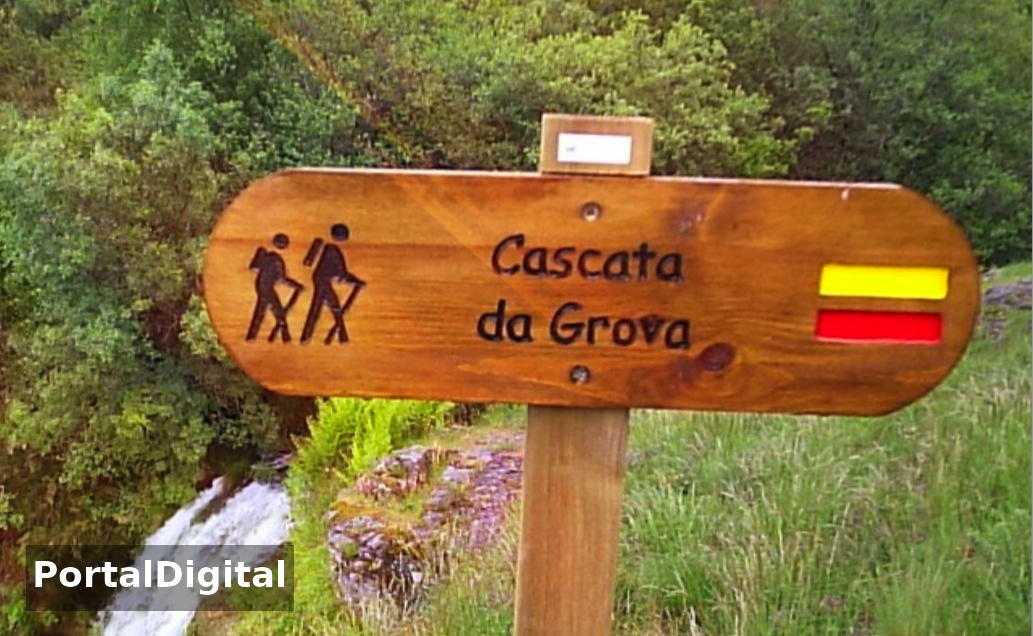
In the Park it is not possible to reach Cascata da Grova because it is a leisure area, the visitor must look for an entrance on the road a little further down or on the track that reaches a paragliding landing area (shooting range) and follow a trail up the river to Cascata da Grova and find the panels that indicate the direction to follow.
Visitors should not attempt to reach the waterfall from the north side of the river because access is impossible due to the slope of the land.
Visitors can enjoy a leisure area near Cascata da Grova where there are tables and barbecues, there is an artificial lake in front used as a water point for use against fires and in summer the area is crowded with people looking to spend a day close to nature.
The Grova waterfall is located in Cerdal, parish of Valença do Minho and access is not very difficult in the area, there are tables to rest and enjoy a snack and this beautiful waterfall surprises the visitor with its clear water.
The parish of Cerdal, with a very pronounced mountain component, occupies an area of around 2086 ha and is therefore the largest in the municipality of Valença to which it belongs and is approximately seven kilometers from the town of Valença.
Its limits are established as follows: to the North, the parishes of Arão and Gandra, to the South, the parishes of Fontoura and Ferreira (in the Municipality of Paredes de Coura), to the East, the parishes of Taião and Porreiras (in the Municipality of Paredes de Coura) and to the West, the parish of S. Pedro da Torre.
Its main places are: Pedreira, Mira, Bogim, Vilar, Alderete, Gondim, Igreja, Bade, Gondelim, Bacelar, Gosende, Tarouba and Passos.
When visiting the village of Cerdal and learning about its monumentality, its traditions and its history, it is possible to remember the Caminhos de Santiago, which are still a reference point here today.
Its built heritage deserves to be remembered as the Parish Church, the various chapels, sundials, manor houses, the Convent of Mosteiró (14th century) and the Roman Bridge on the Caminhos de Santiago.
In the history of Cerdal it is known that the first known people in this region date back to the Ancient Paleolithic.
Romanization left a Roman sidewalk that was, during the Middle Ages, an important means of communication along which illustrious pilgrims, including some monarchs, passed.
Cerdal is also known for the fair in Largo de S. Bento, which is visited by people from all over the country and abroad, with special emphasis on the people of Galicia and the Feira dos Santos on the 1st of November, which is part of the traditions of Alto-Minho.
Visitors can find a cultural and historical trail that takes place in a mountainous parish, highlighting its scenic beauty such as the existing streams.
In the village of Cerdal you can visit the parish church of Cerdal, the Grova waterfall, the Mira river dam and the Mosteiró sanctuary.
On the way the visitor can find traces of stone sinks, fountains and symbols that tell us about old customs, oil presses silent witnesses of their ancient work and stone crosses and giant windmills appear on the horizon.
In Parque das Merendas you can see a "water point" that is located a few meters from the ruins of the old Convent and the church of Mosteiró where the small stream flows that forms the waterfall a little further down.
In the Park it is not possible to reach Cascata da Grova because it is a leisure area, the visitor must look for an entrance on the road a little further down or on the track that reaches a paragliding landing area (shooting range) and follow a trail up the river to Cascata da Grova and find the panels that indicate the direction to follow.
Visitors should not attempt to reach the waterfall from the north side of the river because access is impossible due to the slope of the land.
Visitors can enjoy a leisure area near Cascata da Grova where there are tables and barbecues, there is an artificial lake in front used as a water point for use against fires and in summer the area is crowded with people looking to spend a day close to nature.
The Grova waterfall is located in Cerdal, parish of Valença do Minho and access is not very difficult in the area, there are tables to rest and enjoy a snack and this beautiful waterfall surprises the visitor with its clear water.
The parish of Cerdal, with a very pronounced mountain component, occupies an area of around 2086 ha and is therefore the largest in the municipality of Valença to which it belongs and is approximately seven kilometers from the town of Valença.
Its limits are established as follows: to the North, the parishes of Arão and Gandra, to the South, the parishes of Fontoura and Ferreira (in the Municipality of Paredes de Coura), to the East, the parishes of Taião and Porreiras (in the Municipality of Paredes de Coura) and to the West, the parish of S. Pedro da Torre.
Its main places are: Pedreira, Mira, Bogim, Vilar, Alderete, Gondim, Igreja, Bade, Gondelim, Bacelar, Gosende, Tarouba and Passos.
When visiting the village of Cerdal and learning about its monumentality, its traditions and its history, it is possible to remember the Caminhos de Santiago, which are still a reference point here today.
Its built heritage deserves to be remembered as the Parish Church, the various chapels, sundials, manor houses, the Convent of Mosteiró (14th century) and the Roman Bridge on the Caminhos de Santiago.
In the history of Cerdal it is known that the first known people in this region date back to the Ancient Paleolithic.
Romanization left a Roman sidewalk that was, during the Middle Ages, an important means of communication along which illustrious pilgrims, including some monarchs, passed.
Cerdal is also known for the fair in Largo de S. Bento, which is visited by people from all over the country and abroad, with special emphasis on the people of Galicia and the Feira dos Santos on the 1st of November, which is part of the traditions of Alto-Minho.
Visitors can find a cultural and historical trail that takes place in a mountainous parish, highlighting its scenic beauty such as the existing streams.
In the village of Cerdal you can visit the parish church of Cerdal, the Grova waterfall, the Mira river dam and the Mosteiró sanctuary.
On the way the visitor can find traces of stone sinks, fountains and symbols that tell us about old customs, oil presses silent witnesses of their ancient work and stone crosses and giant windmills appear on the horizon.