
It is located on Rua de Dom Hugo, City and municipality of Porto, North of Portugal.
The Guerra Junqueiro House-Museum or the House of Dr. Domingos Barbosa is a cultural center built in memory of the famous poet and writer Guerra Junqueiro located in Porto, Northern Portugal.
The Casa Museu Guerra Junqueiro was built in the 18th century, has baroque style architecture, and belonged to the famous poet Guerra Junqueiro (1850-1923).
The poet Abílio Manuel Guerra Junqueiro was born in 1850 in Freixo de Espada à Cinta and published his first verses at the age of 14 in 1864 and died in 1923 with the dream of a house where he could display all the objects he collected throughout his existence, and a wonderful literary estate.
His best-known works are: Journey to the Wheel of Parvónia, the Death of D. João (1874), Tales for Childhood (1875), The Muse on Vacation (1879), The old age of the eternal priest (1885), The Simple (1892), Prayer to Bread (1903), Prayer to Light (1904), Gritos da Alma (1912), Pátria (1915), Dispersed Poetry (1920), Two Pages of Fourteen Years and O Melro.
The mansion, dating from 1730 and attributed to Nicolau Nasoni, is located at Rua de D. Hugo, nº 32, in the city of Porto, and was donated in 1940 by the writer's family to the city's City Council with the poet's estate, and with the condition that all the pieces that had been collected on several trips that the writer made would be displayed there.
The current Guerra Junqueiro House-Museum was initially the home of the canon of the Cathedral of Porto, Dr. Domingos Barbosa, who ordered it to be built around 1730.
Traditionally attributed to Nicolau Nasoni (SMITH, 1966), the building has been reevaluated in light of new studies that place it within the sphere of activity of another architect, António Pereira, working in Porto at the same time.
The building that was the residence of the Canon of the Sé reveals aspects: it borders Rua D. Hugo, in the Sé neighborhood in which it is located through the side facade marked by the opening of the three bay windows with shutters from the time and which are mentioned in the Canon's will dated 1746, and which recall those on the rear facade of the Casa do Despacho da Ordem Terceira de São Francisco de Nasoni (SMITH, 1966).
The respective exotic flags are very similar to those of the Quinta de Fafiães chapel, designed by the Italian architect for Manuel Barbosa de Albuquerque, Chantre da Sé do Porto.
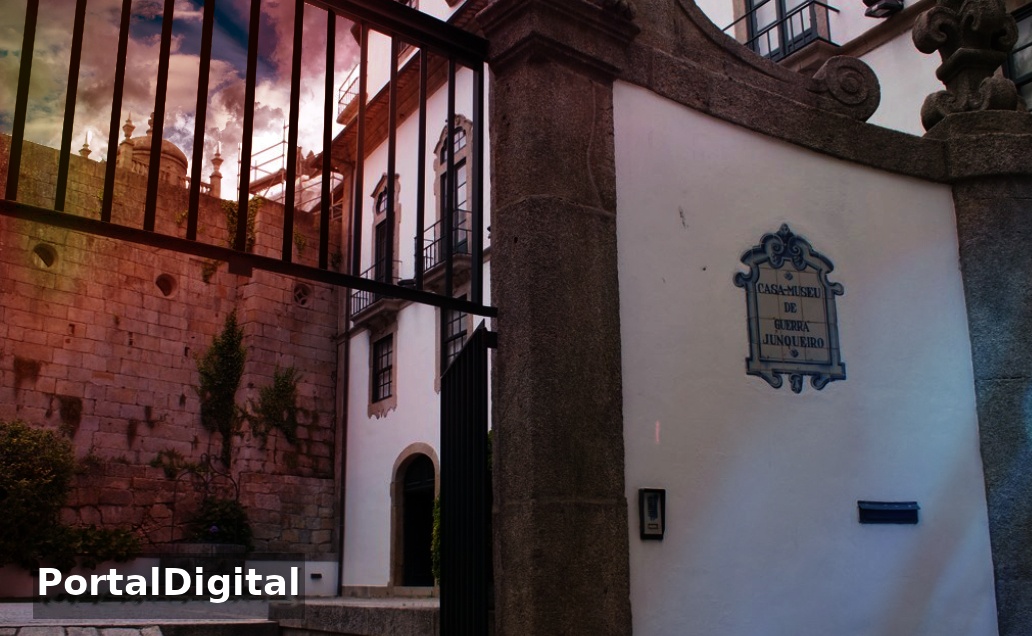
The elevation extends along the wall that isolates the courtyard from the public road and which stands out due to the monumentality of the portal, crowned by a pair of lions and two fleurs de lis as heraldic elements borrowed from the Barbosa de Albuquerque coat of arms.
The main facade of the house is characterized by the empty space that highlights the design of the opening frames, by a sense of verticality conferred not only by the composition of the windows, but also by the towers that finish the ends of the building.
The windows on both floors are connected to each other, forming a vertical line, crowned by volutes and fleurs de lis, which gains greater expression in the central axis, the entrance door, the pediment, the window and the upper balcony that is higher in relation to the others.
Inside, the staircase leading to the upper floor, which is located at the end of the entrance, deserves special attention.
Owned by the same family for years, the house was inherited by Guerra Junqueiro's son-in-law (Luís Augusto Pinto de Mesquita Carvalho was married to Isabel Maria, the writer's daughter) and in 1940 it was donated by his daughter to the Porto City Council with the condition that a House-Museum be installed there with Guerra Junqueiro's art and literature collections donated to the municipality (the collection had around 600 pieces).
The poet Guerra Junqueiro gathered a beautiful collection of furniture, goldsmithing and Portuguese silverware throughout his life, but visitors can also see some jewels, sculptures, ceramic, glass and metal figures.
In the museum, visitors can see a collection of sacred art, faience from Viana do Castelo, plates from Nuremberg, ceramics and furniture.
The Casa Museu Guerra Junqueiro was built in the 18th century, has baroque style architecture, and belonged to the famous poet Guerra Junqueiro (1850-1923).
The poet Abílio Manuel Guerra Junqueiro was born in 1850 in Freixo de Espada à Cinta and published his first verses at the age of 14 in 1864 and died in 1923 with the dream of a house where he could display all the objects he collected throughout his existence, and a wonderful literary estate.
His best-known works are: Journey to the Wheel of Parvónia, the Death of D. João (1874), Tales for Childhood (1875), The Muse on Vacation (1879), The old age of the eternal priest (1885), The Simple (1892), Prayer to Bread (1903), Prayer to Light (1904), Gritos da Alma (1912), Pátria (1915), Dispersed Poetry (1920), Two Pages of Fourteen Years and O Melro.
The mansion, dating from 1730 and attributed to Nicolau Nasoni, is located at Rua de D. Hugo, nº 32, in the city of Porto, and was donated in 1940 by the writer's family to the city's City Council with the poet's estate, and with the condition that all the pieces that had been collected on several trips that the writer made would be displayed there.
The current Guerra Junqueiro House-Museum was initially the home of the canon of the Cathedral of Porto, Dr. Domingos Barbosa, who ordered it to be built around 1730.
Traditionally attributed to Nicolau Nasoni (SMITH, 1966), the building has been reevaluated in light of new studies that place it within the sphere of activity of another architect, António Pereira, working in Porto at the same time.
The building that was the residence of the Canon of the Sé reveals aspects: it borders Rua D. Hugo, in the Sé neighborhood in which it is located through the side facade marked by the opening of the three bay windows with shutters from the time and which are mentioned in the Canon's will dated 1746, and which recall those on the rear facade of the Casa do Despacho da Ordem Terceira de São Francisco de Nasoni (SMITH, 1966).
The respective exotic flags are very similar to those of the Quinta de Fafiães chapel, designed by the Italian architect for Manuel Barbosa de Albuquerque, Chantre da Sé do Porto.
The elevation extends along the wall that isolates the courtyard from the public road and which stands out due to the monumentality of the portal, crowned by a pair of lions and two fleurs de lis as heraldic elements borrowed from the Barbosa de Albuquerque coat of arms.
The main facade of the house is characterized by the empty space that highlights the design of the opening frames, by a sense of verticality conferred not only by the composition of the windows, but also by the towers that finish the ends of the building.
The windows on both floors are connected to each other, forming a vertical line, crowned by volutes and fleurs de lis, which gains greater expression in the central axis, the entrance door, the pediment, the window and the upper balcony that is higher in relation to the others.
Inside, the staircase leading to the upper floor, which is located at the end of the entrance, deserves special attention.
Owned by the same family for years, the house was inherited by Guerra Junqueiro's son-in-law (Luís Augusto Pinto de Mesquita Carvalho was married to Isabel Maria, the writer's daughter) and in 1940 it was donated by his daughter to the Porto City Council with the condition that a House-Museum be installed there with Guerra Junqueiro's art and literature collections donated to the municipality (the collection had around 600 pieces).
The poet Guerra Junqueiro gathered a beautiful collection of furniture, goldsmithing and Portuguese silverware throughout his life, but visitors can also see some jewels, sculptures, ceramic, glass and metal figures.
In the museum, visitors can see a collection of sacred art, faience from Viana do Castelo, plates from Nuremberg, ceramics and furniture.