
It is located on Rua Dr. Adolfo Leitão, city of Marinha Grande, in the district of Leiria, in the province of Estremadura, region of Central Portugal
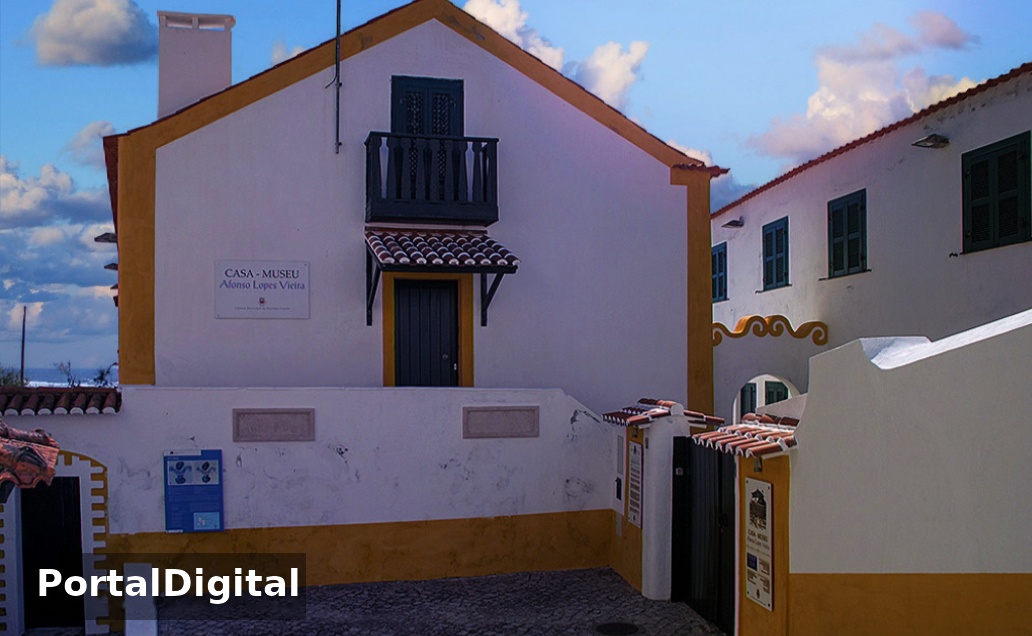
A main residential building located next to the sea where the Afonso Lopes Vieira House-Museum is located on the first floor and on the ground floor the facilities of the Bathing Colony, the Chapel and annex located to the North where the Bathing Colony dormitories operate.
The house was offered by Afonso Lopes Vieira's father as a wedding gift to the poet and his wife, D. Helena Aboim, in 1902.
They lived here for long periods of time, mainly during the warmer seasons, from April to October, alternating with stays at Casa das Cortes and Casa de Lisboa.
In "Casa-Nau" it was called that Afonso Lopes Vieira wrote a large part of his literary works, essays, conferences, articles and received great names in the arts and national literature at the beginning of the 20th century.
The house itself constitutes a literary testimony to the work of Afonso Lopes Vieira, as it has several decorative elements ordered by him throughout his life (mainly expressed in tombstones and tiles) that allude to some of his works.
In 1938, in his will, the poet donated the house to the Municipal Council of Marinha Grande so that a Children's Bathing Colony could be installed for the children of workers, glassmakers, firefighters and workers in the National Forests.
The Afonso Lopes Vieira House-Museum is located on the first floor and constitutes the stage par excellence for the creation of his works and his experience as a man of letters and art and a lover of nature.
Visitors can delight in his museum collection as faithfully as possible, in the image of how he would have left it after his death, consisting of countless personal objects as well as some examples of his literary work, and watch temporary exhibitions alluding to the poet's work and life.
The house also has a chapel dedicated to Our Lady of Fátima, built by the poet for his wife, inaugurated on August 12, 1929.
The chapel is decorated with decorative elements alluding to the sea, mainly with tiles and through the use of beach shells to create decorative motifs, inside and outside, and some of these tiles were decorated with transcriptions of parts of the Lusíadas text.
In the past, Afonso Lopes Vieira's house was a meeting place for many writers and intellectuals.
Today it is a House-Museum open to the public and houses several personal objects of this illustrious poet who wrote much of his work in São Pedro de Moel.
The Bathing Colony has also been operating there since 1949, as Afonso Lopes Vieira wished when donating his house to the Municipal Council of Marinha Grande.
The house was offered by Afonso Lopes Vieira's father as a wedding gift to the poet and his wife, D. Helena Aboim, in 1902.
They lived here for long periods of time, mainly during the warmer seasons, from April to October, alternating with stays at Casa das Cortes and Casa de Lisboa.
In "Casa-Nau" it was called that Afonso Lopes Vieira wrote a large part of his literary works, essays, conferences, articles and received great names in the arts and national literature at the beginning of the 20th century.
The house itself constitutes a literary testimony to the work of Afonso Lopes Vieira, as it has several decorative elements ordered by him throughout his life (mainly expressed in tombstones and tiles) that allude to some of his works.
In 1938, in his will, the poet donated the house to the Municipal Council of Marinha Grande so that a Children's Bathing Colony could be installed for the children of workers, glassmakers, firefighters and workers in the National Forests.
The Afonso Lopes Vieira House-Museum is located on the first floor and constitutes the stage par excellence for the creation of his works and his experience as a man of letters and art and a lover of nature.
Visitors can delight in his museum collection as faithfully as possible, in the image of how he would have left it after his death, consisting of countless personal objects as well as some examples of his literary work, and watch temporary exhibitions alluding to the poet's work and life.
The house also has a chapel dedicated to Our Lady of Fátima, built by the poet for his wife, inaugurated on August 12, 1929.
The chapel is decorated with decorative elements alluding to the sea, mainly with tiles and through the use of beach shells to create decorative motifs, inside and outside, and some of these tiles were decorated with transcriptions of parts of the Lusíadas text.
In the past, Afonso Lopes Vieira's house was a meeting place for many writers and intellectuals.
Today it is a House-Museum open to the public and houses several personal objects of this illustrious poet who wrote much of his work in São Pedro de Moel.
The Bathing Colony has also been operating there since 1949, as Afonso Lopes Vieira wished when donating his house to the Municipal Council of Marinha Grande.