
It is located on Rua Edmond Bartissol, city and municipality of Setúbal, central Portugal
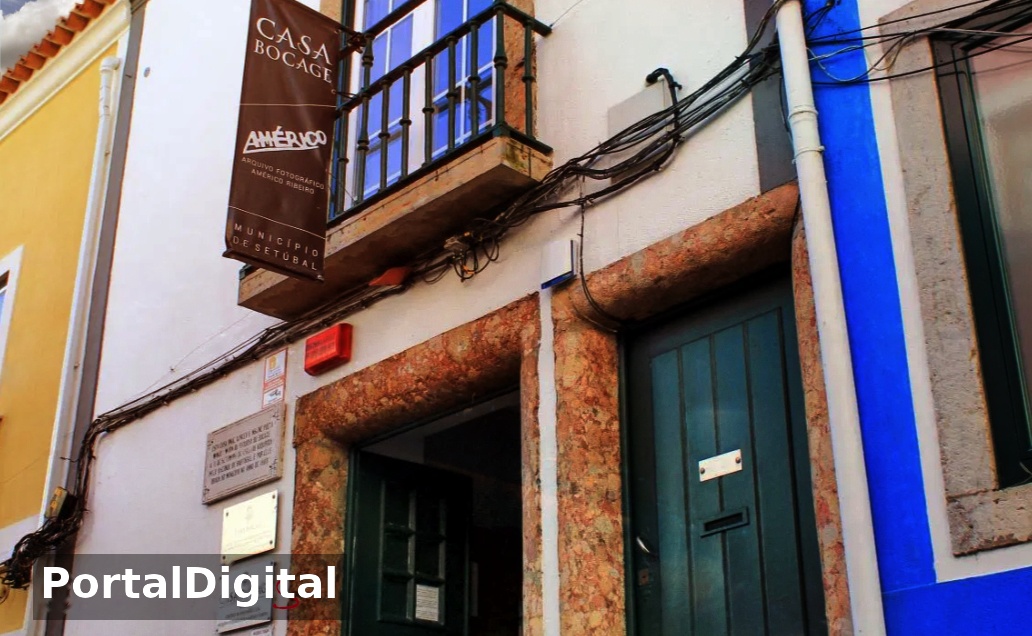
Casa de Bocage is a house-museum dedicated to the Portuguese poet Manuel Maria Barbosa du Bocage, located in Setúbal, at Rua Edmond Bartissol 12 (formerly Rua de S. Domingos) in the house where the Portuguese poet was born in 1765.
In 1864, a subscription was opened for the placement of a tombstone which took place on April 10th of the same year with the following description: “The renowned poet Manuel Maria Barbosa du Bocage was born in this house on September 15th, 1765. Some of his countrymen ordered this memorial to be made in 1864”.
In 1888 it was purchased by Viscount Edmond Bartissol, and by this man it was offered to the Council of Setúbal where a tombstone was placed with the following inscription: "This house where the renowned poet Manuel Maria Barbosa du Bocage was born on September 15, 1765, was acquired by the Viscount of Bartissol. And donated by him to the municipality in 1888".
It currently has a specialized library related to the poet's life and work, a gallery for temporary exhibitions housing the Américo Ribeiro Municipal Photography Archive.
The House-museum with a permanent exhibition dedicated to the life and work of the poet Manuel Maria Barbosa du Bocage (1765-1805), born in Setúbal.
On the upper floor there is the Documentation Center and the Américo Ribeiro Photographic Archive, where a significant part of the modern history of the municipality of Setúbal is preserved.
Casa Bocage boasts a tiled panel in its exterior courtyard offered by Galeria Ratton and created by artist Andreas Stöcklein.
Casa Bocage has a specialized library on the life, work and times of Bocage. It is of double importance and great value as it houses books published during the poet's lifetime (18th century) and works of art in painting format.
Visitors can also observe several collection pieces that are directly related to Bocage.
The Photographic Archive with Américo Ribeiro illustrates what Setúbal was like between 1920 and 1980.
Américo Ribeiro, a unique personality with an extraordinary sensitivity, left behind a photographic legacy, a time machine with more than 142 thousand specimens.
The Archive, located on the first floor of Casa Bocage, has an exhibition room where you can see a set of equipment associated with the practice of photography, pieces of furniture from the photography studio and the photographer's personal objects.
Américo Ribeiro (1906-1992) collected documentation related to his activity, press clippings, party menus, cards, programs and correspondence that can also be consulted.
Visitors can discover one of the most complete Portuguese photographic collections from the 20th century that portrays the true social character through the faces of Setúbal's citizens.
In 1864, a subscription was opened for the placement of a tombstone which took place on April 10th of the same year with the following description: “The renowned poet Manuel Maria Barbosa du Bocage was born in this house on September 15th, 1765. Some of his countrymen ordered this memorial to be made in 1864”.
In 1888 it was purchased by Viscount Edmond Bartissol, and by this man it was offered to the Council of Setúbal where a tombstone was placed with the following inscription: "This house where the renowned poet Manuel Maria Barbosa du Bocage was born on September 15, 1765, was acquired by the Viscount of Bartissol. And donated by him to the municipality in 1888".
It currently has a specialized library related to the poet's life and work, a gallery for temporary exhibitions housing the Américo Ribeiro Municipal Photography Archive.
The House-museum with a permanent exhibition dedicated to the life and work of the poet Manuel Maria Barbosa du Bocage (1765-1805), born in Setúbal.
On the upper floor there is the Documentation Center and the Américo Ribeiro Photographic Archive, where a significant part of the modern history of the municipality of Setúbal is preserved.
Casa Bocage boasts a tiled panel in its exterior courtyard offered by Galeria Ratton and created by artist Andreas Stöcklein.
Casa Bocage has a specialized library on the life, work and times of Bocage. It is of double importance and great value as it houses books published during the poet's lifetime (18th century) and works of art in painting format.
Visitors can also observe several collection pieces that are directly related to Bocage.
The Photographic Archive with Américo Ribeiro illustrates what Setúbal was like between 1920 and 1980.
Américo Ribeiro, a unique personality with an extraordinary sensitivity, left behind a photographic legacy, a time machine with more than 142 thousand specimens.
The Archive, located on the first floor of Casa Bocage, has an exhibition room where you can see a set of equipment associated with the practice of photography, pieces of furniture from the photography studio and the photographer's personal objects.
Américo Ribeiro (1906-1992) collected documentation related to his activity, press clippings, party menus, cards, programs and correspondence that can also be consulted.
Visitors can discover one of the most complete Portuguese photographic collections from the 20th century that portrays the true social character through the faces of Setúbal's citizens.