
It is located in Largo do Bom Jesus, city of Valença, district of Viana do Castelo, North region and sub-region of Alto Minho
Characteristics of the Bom Jesus Chapel in Valença
The chapel of Bom Jesus do Bonfim has a rectangular nave and chancel and a religious, baroque and rococo architecture.
The Bom Jesus Chapel has a rectangular plan composed of a single nave and a lower, narrow chancel, with two flights of access to the high choir and rectangular sacristy attached to the S. staircase.
The main facade is oriented and ends in a gable with double frieze and cornice crowned by the cross that rests on the national coat of arms with a closed crown framed by fins.
The side facades are torn by two rectangular windows in the nave and another two in the chancel with a capital, on the S side. the door leading to the choir has a straight framed lintel preceded by a staircase with two opposing flights with an iron guard approximately in the middle of the nave, fixed to the frieze of the iron bell facade and the sacristy has a straight lintel door facing S. Blind rear facade.
The round arched portal is part of a convex stonework structure supporting the interrupted pediment of “volutes”, flanked by balls on slightly protruding plinths.
The interior is plastered and whitewashed with windows featuring “capialço” and doors topped by polychrome carving valances in beige and gold.
The Nave with a high choir based on a wooden structure with a depressed arch on a wooden corbel with a guard on a full wooden balustrade.
The sub-choir has a carved wooden ceiling with the national coat of arms inserted in a cut-out cartouche and a holy water font on the Epistle side.
On the Gospel side between the windows there is a screen with a curved profile painted with the Descent from the Cross, on the Epistle side the door is flanked by a font of gummed holy water and has a pulpit with a rectangular basin on a voluted stone corbel with a full wooden guard.
The Presbytery is elevated by a step and delimited by webs of flat balusters and on the side of the confessional Gospel.
The perfectly round triumphal arch, based on Tuscan pilasters, flanked by two polychrome carved collateral altarpieces, with a straight plan and an axis and angle posts.
The chancel has side doors with straight lintels, the one on the Gospel side is boarded up and the one on the opposite side gives access to the sacristy.
The main altarpiece in polychrome carving with fake marbling in green, pink, blue and gold, with a convex plan and an axis defined by two columns with a smooth shaft decorated with a phytomorphic spiral on parallelepiped plinths decorated with phytomorphic motifs in cartouches and with a Corinthian "capital".
The Tabernacle in the shape of a temple, finished in a counter-curved cornice with acanthus, decorated on the side with shells and with a chalice on the door.
The flagged floor and barrel-vaulted roof with concave coffers resting on a frieze and cornice rhythmic with volutes.
Inside there is a high wooden choir, a pulpit on the Epistle side, rococo collateral altarpieces with a straight body and an axis with superimposed niches in the body due to some renovation, a main altarpiece in "neo rococo" revival style, reconciling backrest and pediment shapes.
The interior has a false barrel vault covering in the nave and a coffered vault in the main chapel, following the traditional options of the region and illuminated by rectangular “capialço” windows.
Inside it contains the image of Nª Sra do Carmo, patron saint of the 21st Infantry Regiment stationed in Valença. The visitor can appreciate the number of decorations on the image and the protection dedicated to the Valença Regiment on the side.
The Bom Jesus Chapel has a rectangular plan composed of a single nave and a lower, narrow chancel, with two flights of access to the high choir and rectangular sacristy attached to the S. staircase.
The main facade is oriented and ends in a gable with double frieze and cornice crowned by the cross that rests on the national coat of arms with a closed crown framed by fins.
The side facades are torn by two rectangular windows in the nave and another two in the chancel with a capital, on the S side. the door leading to the choir has a straight framed lintel preceded by a staircase with two opposing flights with an iron guard approximately in the middle of the nave, fixed to the frieze of the iron bell facade and the sacristy has a straight lintel door facing S. Blind rear facade.
The round arched portal is part of a convex stonework structure supporting the interrupted pediment of “volutes”, flanked by balls on slightly protruding plinths.
The interior is plastered and whitewashed with windows featuring “capialço” and doors topped by polychrome carving valances in beige and gold.
The Nave with a high choir based on a wooden structure with a depressed arch on a wooden corbel with a guard on a full wooden balustrade.
The sub-choir has a carved wooden ceiling with the national coat of arms inserted in a cut-out cartouche and a holy water font on the Epistle side.
On the Gospel side between the windows there is a screen with a curved profile painted with the Descent from the Cross, on the Epistle side the door is flanked by a font of gummed holy water and has a pulpit with a rectangular basin on a voluted stone corbel with a full wooden guard.
The Presbytery is elevated by a step and delimited by webs of flat balusters and on the side of the confessional Gospel.
The perfectly round triumphal arch, based on Tuscan pilasters, flanked by two polychrome carved collateral altarpieces, with a straight plan and an axis and angle posts.
The chancel has side doors with straight lintels, the one on the Gospel side is boarded up and the one on the opposite side gives access to the sacristy.
The main altarpiece in polychrome carving with fake marbling in green, pink, blue and gold, with a convex plan and an axis defined by two columns with a smooth shaft decorated with a phytomorphic spiral on parallelepiped plinths decorated with phytomorphic motifs in cartouches and with a Corinthian "capital".
The Tabernacle in the shape of a temple, finished in a counter-curved cornice with acanthus, decorated on the side with shells and with a chalice on the door.
The flagged floor and barrel-vaulted roof with concave coffers resting on a frieze and cornice rhythmic with volutes.
Inside there is a high wooden choir, a pulpit on the Epistle side, rococo collateral altarpieces with a straight body and an axis with superimposed niches in the body due to some renovation, a main altarpiece in "neo rococo" revival style, reconciling backrest and pediment shapes.
The interior has a false barrel vault covering in the nave and a coffered vault in the main chapel, following the traditional options of the region and illuminated by rectangular “capialço” windows.
Inside it contains the image of Nª Sra do Carmo, patron saint of the 21st Infantry Regiment stationed in Valença. The visitor can appreciate the number of decorations on the image and the protection dedicated to the Valença Regiment on the side.
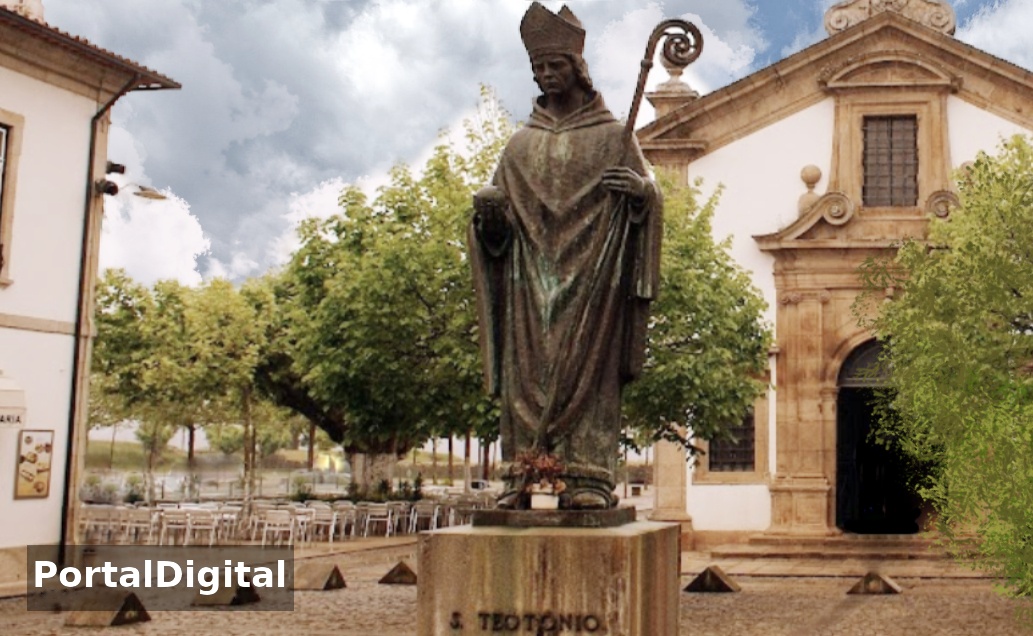
Statue of São Teotónio in front of the Bom Jesus Chapel in Valença
The statue of São Teotónio stands in front of the Capela do Bom Jesus in Valença and is a 20th century sculpture that shows us the figure of the 1st Portuguese Saint, inspirer and protector of the nationality.
São Teotónio (1082-1162) was born in the municipality of Valença and was a contemporary of the founding of Portugal, advisor to our first king Dom Afonso Henriques.
The statue dates from the 17th century. XX and is a tribute to this saint, unknown and little known to many.
Saint Teotónio became the first Portuguese saint celebrated as a reformer of religious life, he is known as the patron saint of enslaved Christians but also for having supported around 1000 Mozarabic men, women and children who were captured in an attack on Andalusia by D. Afonso Henriques.
São Teotónio (1082-1162) was born in the municipality of Valença and was a contemporary of the founding of Portugal, advisor to our first king Dom Afonso Henriques.
The statue dates from the 17th century. XX and is a tribute to this saint, unknown and little known to many.
Saint Teotónio became the first Portuguese saint celebrated as a reformer of religious life, he is known as the patron saint of enslaved Christians but also for having supported around 1000 Mozarabic men, women and children who were captured in an attack on Andalusia by D. Afonso Henriques.