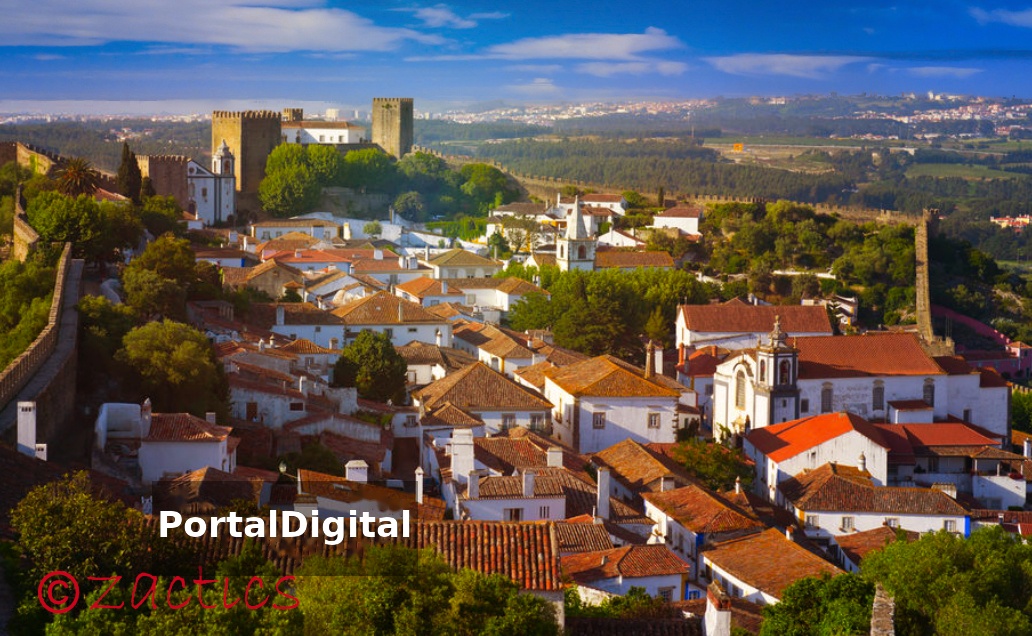
Caldas da Rainha is a Portuguese city in the district of Leiria, located in the province of Estremadura with around 31,000 inhabitants in its urban perimeter (2012) and integrating the Intermunicipal Community of the West in the Centro region
Caldas da Rainha is the seat of the municipality of Caldas da Rainha with an area of 255.69 km 2 and 51,729 inhabitants (2011), subdivided into 12 parishes, the municipality is limited to the northeast by the municipality of Alcobaça, to the east by Rio Maior, to the south by Cadaval, to the west by Bombarral and Óbidos and to the northwest by the Atlantic Ocean.
In Praça da República (“Fruit Square”), the only daily horticultural and fruit market in the country that has remained virtually unchanged since the end of the 19th century takes place outdoors in the morning.
Today, the city of Caldas da Rainha maintains the coat of arms of Queen D. Leonor, flanked on the left by her own emblem (the shrimp boat) and on the right by the emblem of D. João II (the pelican).
In 1484, during a trip from Óbidos to Batalha, Queen D. Leonor, wife of João II of Portugal, and her court passed by a place where several people were bathing in waters with an intense odor making a lot of noise. The queen asked them why they were doing so, and was told that they were sick and that those waters had healing powers. In the legend, the sovereign was cured the following year and determined to build a thermal hospital in that place to serve all those who wanted treatment there.
Caldas da Rainha achieved the status of a town in 1511, its development began with Afonso VI of Portugal, the royal family and the court enjoyed the thermal waters annually, which allowed the town to develop.
The Municipality of Caldas da Rainha was only created in 1821 during the 19th century when the town experienced its greatest splendor with the fashion of thermal spas becoming frequented by the wealthier classes who sought the sulfurous waters here for treatments.
The abundance of clay in the region allowed the development of numerous ceramic factories, with emphasis on the creations of Rafael Bordalo Pinheiro, started at the Fábrica de Faianças das Caldas da Rainha, between 1884 and 1907.
When the town was elevated to the category of city in 1927, in addition to ceramics, painting and sculpture flourished here, making Caldas da Rainha a center of plastic arts, where names such as José Malhoa, António Duarte and João Fragoso stood out.
The main attractions in Caldas da Rainha are: Church of Nossa Senhora do Pópulo (Igreja Matriz das Caldas da Rainha), Largo Rainha D. Leonor, Bullring, Chafariz das Cinco Bicas, Ermida de São Sebastião, Ermida do Espírito Santo, Arts Center, Atelier-Museu António Duarte, Atelier-Museu João Fragoso, Barata Feyo Museum, Ceramics Museum, José Museum Malhoa, Cycling Museum, Hospital and Caldas Museum, Caldas da Rainha Faience Factory, Caldas da Rainha Railway Station, Mata Rainha D. Leonor and D. Carlos I Park.
In Praça da República (“Fruit Square”), the only daily horticultural and fruit market in the country that has remained virtually unchanged since the end of the 19th century takes place outdoors in the morning.
Today, the city of Caldas da Rainha maintains the coat of arms of Queen D. Leonor, flanked on the left by her own emblem (the shrimp boat) and on the right by the emblem of D. João II (the pelican).
In 1484, during a trip from Óbidos to Batalha, Queen D. Leonor, wife of João II of Portugal, and her court passed by a place where several people were bathing in waters with an intense odor making a lot of noise. The queen asked them why they were doing so, and was told that they were sick and that those waters had healing powers. In the legend, the sovereign was cured the following year and determined to build a thermal hospital in that place to serve all those who wanted treatment there.
Caldas da Rainha achieved the status of a town in 1511, its development began with Afonso VI of Portugal, the royal family and the court enjoyed the thermal waters annually, which allowed the town to develop.
The Municipality of Caldas da Rainha was only created in 1821 during the 19th century when the town experienced its greatest splendor with the fashion of thermal spas becoming frequented by the wealthier classes who sought the sulfurous waters here for treatments.
The abundance of clay in the region allowed the development of numerous ceramic factories, with emphasis on the creations of Rafael Bordalo Pinheiro, started at the Fábrica de Faianças das Caldas da Rainha, between 1884 and 1907.
When the town was elevated to the category of city in 1927, in addition to ceramics, painting and sculpture flourished here, making Caldas da Rainha a center of plastic arts, where names such as José Malhoa, António Duarte and João Fragoso stood out.
The main attractions in Caldas da Rainha are: Church of Nossa Senhora do Pópulo (Igreja Matriz das Caldas da Rainha), Largo Rainha D. Leonor, Bullring, Chafariz das Cinco Bicas, Ermida de São Sebastião, Ermida do Espírito Santo, Arts Center, Atelier-Museu António Duarte, Atelier-Museu João Fragoso, Barata Feyo Museum, Ceramics Museum, José Museum Malhoa, Cycling Museum, Hospital and Caldas Museum, Caldas da Rainha Faience Factory, Caldas da Rainha Railway Station, Mata Rainha D. Leonor and D. Carlos I Park.