
It is located in the parish of Santo António, municipality and district of Lisbon, central Portugal
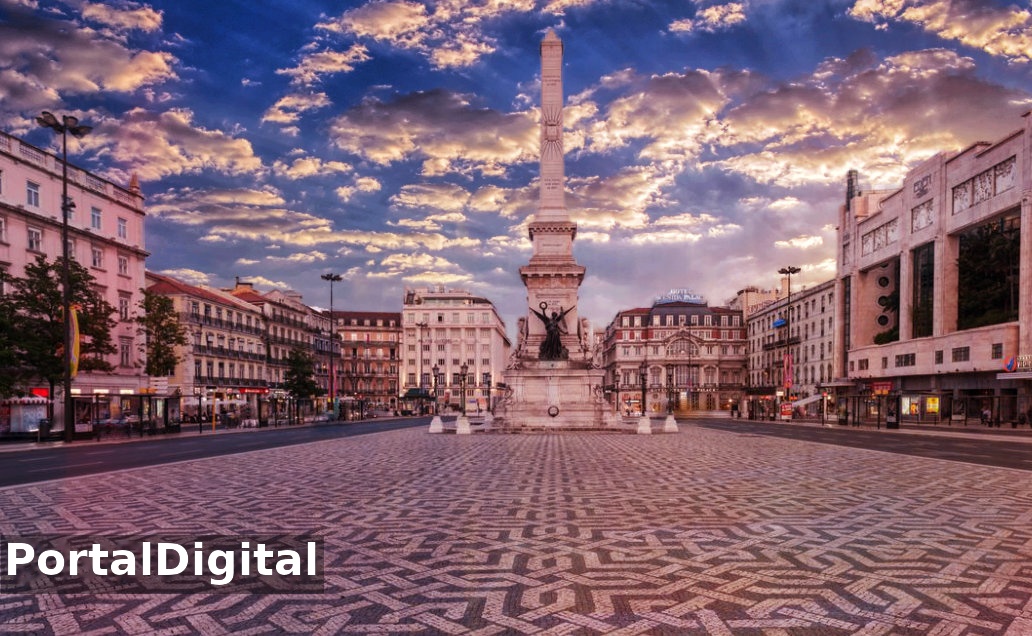
Avenida da Liberdade is one of the main avenues in the city of Lisbon and connects Praça dos Restauradores to Praça do Marquês de Pombal, measuring around 90 m wide and 1100 m long, it has several lanes and wide sidewalks decorated with gardens and Portuguese cobblestones.
Avenida da Liberdade and Praça dos Restauradores have their origins in the boulevard called Passeio Público, started in 1764, and created by the architect Reinaldo Manuel.
Initially walled, the slope underwent major changes in the 1830s and 1840s by the architect Malaquias Ferreira Leal, who introduced a new arrangement of gardens and fountains, with waterfalls and allegorical statues representing the Tagus River and the Douro River.
The avenue was built between 1879 and 1886, similar to the boulevards in Paris. Its creation was a milestone in the city's expansion to the north, and it quickly became a reference for the wealthier classes to locate their homes there.
The original buildings on the avenue have been replaced in recent decades by office buildings and hotels.
Today the avenue still contains very interesting buildings from an artistic and architectural point of view, especially from the late 19th century and early 20th century.
There are also statues of writers such as Almeida Garrett, Alexandre Herculano, António Feliciano de Castilho and others, and a Monument to the Dead of the Great War (First World War) that was inaugurated in 1931, the work of Rebelo de Andrade and Maximiano Alves, and which is located near Parque Mayer.
Its scenic qualities, prestigious shops, luxury hotels, several theaters, historic buildings, old tailors' shops, luxury fashion brand stores, national and international jewelry and watchmaking, offices and fashion stores make it a tourist landmark in the city considered the 35th most expensive avenue in the world.
Avenida da Liberdade is also the main stage for the city's traditional festival parades that take place on the night before the Santo António de Lisboa festival (the night of June 12th to 13th), in which Lisbon's neighborhoods compete with each other for the "best march".
On Avenida da Liberdade there are several monuments and statues: Statue of Simón Bolívar, by Arturo R. Aguilero, offered by the Portuguese community in Venezuela to Portugal, 1978, Statue of Oliveira Martins, by Leopoldo de Almeida, 1952, Statue of Alexandre Herculano, by Salvador Barata Feyo, 1950, Statue of Almeida Garrett, by Salvador Barata Feyo, 1950, Statue of António Feliciano de Castilho, by Leopoldo de Almeida, 1950 Monument to Rosa Araújo, by Costa Motta, 1936, Monument to the Dead of the Great War, by Maximiano Alves and architects Guilherme Rebelo de Andrade and Carlos Rebello de Andrade, 1931, Monument to Pinheiro Chagas, by Costa Motta, 1908, Palace where D. Maria Pia de Saxe-Coburgo Gotha and Bragança was born, in 1907
The avenue is served by three Lisbon Metropolitan stations: Estação Restauradores" at the beginning of the avenue served by the blue line, "Estação Avenida" in the center of the avenue, served by the blue line, "Estação Marquês de Pombal" next to Praça do Marquês de Pombal served by the blue and yellow lines.
On June 18, 2013, Avenida da Liberdade was classified as a Complex of Public Interest.
Avenida da Liberdade and Praça dos Restauradores have their origins in the boulevard called Passeio Público, started in 1764, and created by the architect Reinaldo Manuel.
Initially walled, the slope underwent major changes in the 1830s and 1840s by the architect Malaquias Ferreira Leal, who introduced a new arrangement of gardens and fountains, with waterfalls and allegorical statues representing the Tagus River and the Douro River.
The avenue was built between 1879 and 1886, similar to the boulevards in Paris. Its creation was a milestone in the city's expansion to the north, and it quickly became a reference for the wealthier classes to locate their homes there.
The original buildings on the avenue have been replaced in recent decades by office buildings and hotels.
Today the avenue still contains very interesting buildings from an artistic and architectural point of view, especially from the late 19th century and early 20th century.
There are also statues of writers such as Almeida Garrett, Alexandre Herculano, António Feliciano de Castilho and others, and a Monument to the Dead of the Great War (First World War) that was inaugurated in 1931, the work of Rebelo de Andrade and Maximiano Alves, and which is located near Parque Mayer.
Its scenic qualities, prestigious shops, luxury hotels, several theaters, historic buildings, old tailors' shops, luxury fashion brand stores, national and international jewelry and watchmaking, offices and fashion stores make it a tourist landmark in the city considered the 35th most expensive avenue in the world.
Avenida da Liberdade is also the main stage for the city's traditional festival parades that take place on the night before the Santo António de Lisboa festival (the night of June 12th to 13th), in which Lisbon's neighborhoods compete with each other for the "best march".
On Avenida da Liberdade there are several monuments and statues: Statue of Simón Bolívar, by Arturo R. Aguilero, offered by the Portuguese community in Venezuela to Portugal, 1978, Statue of Oliveira Martins, by Leopoldo de Almeida, 1952, Statue of Alexandre Herculano, by Salvador Barata Feyo, 1950, Statue of Almeida Garrett, by Salvador Barata Feyo, 1950, Statue of António Feliciano de Castilho, by Leopoldo de Almeida, 1950 Monument to Rosa Araújo, by Costa Motta, 1936, Monument to the Dead of the Great War, by Maximiano Alves and architects Guilherme Rebelo de Andrade and Carlos Rebello de Andrade, 1931, Monument to Pinheiro Chagas, by Costa Motta, 1908, Palace where D. Maria Pia de Saxe-Coburgo Gotha and Bragança was born, in 1907
The avenue is served by three Lisbon Metropolitan stations: Estação Restauradores" at the beginning of the avenue served by the blue line, "Estação Avenida" in the center of the avenue, served by the blue line, "Estação Marquês de Pombal" next to Praça do Marquês de Pombal served by the blue and yellow lines.
On June 18, 2013, Avenida da Liberdade was classified as a Complex of Public Interest.