

Schist Villages are located in Serra da Lousã at 1205 meters of altitude at the highest point (Trevim) located in the transition from the district of Coimbra to Leiria
The villages are part of the northern branch of the Central Cordillera made up of the Estrela, Açor and Lousã mountains and are also part of the Montejunto-Estrela System.
At the top, the mountain has 439 meters of topographic prominence and 31.17 km of topographic isolation and covers the municipalities of Miranda do Corvo, Lousã, Góis and Penela (in the District of Coimbra) and Castanheira de Pêra and Figueiró dos Vinhos (in the District of Leiria).
Serra da Lousã combines in a unique way the cultural and human aspect of the Schist Villages with nature and the leisure possibilities that its landscape provides.
On March 3, 1995, the reintroduction of cervids began, namely deer (Cervus elaphus) and roe deer (Capreolus capreolus) in Serra da Lousã.
In 2017, there were approximately three thousand animals living in the wild in an area of more than one hundred thousand hectares.
The Serra da Lousã Protected Designation of Origin honey region comprises ten municipalities: Arganil, Castanheira de Pera, Figueiró dos Vinhos, Góis, Lousã, Miranda do Corvo, Pampilhosa da Serra, Pedrógão Grande, Penela and Vila Nova de Poiares in the districts of Coimbra and Leiria.
At the top, the mountain has 439 meters of topographic prominence and 31.17 km of topographic isolation and covers the municipalities of Miranda do Corvo, Lousã, Góis and Penela (in the District of Coimbra) and Castanheira de Pêra and Figueiró dos Vinhos (in the District of Leiria).
Serra da Lousã combines in a unique way the cultural and human aspect of the Schist Villages with nature and the leisure possibilities that its landscape provides.
On March 3, 1995, the reintroduction of cervids began, namely deer (Cervus elaphus) and roe deer (Capreolus capreolus) in Serra da Lousã.
In 2017, there were approximately three thousand animals living in the wild in an area of more than one hundred thousand hectares.
The Serra da Lousã Protected Designation of Origin honey region comprises ten municipalities: Arganil, Castanheira de Pera, Figueiró dos Vinhos, Góis, Lousã, Miranda do Corvo, Pampilhosa da Serra, Pedrógão Grande, Penela and Vila Nova de Poiares in the districts of Coimbra and Leiria.
Characteristics of Schist Villages (Serra da Lousã)
There are 27 Schist Villages spread across the Central Region in a territory of enormous beauty that offers unique experiences.
The Schist Villages are crossed by countless walking trails and paths that take us to St. António da Neve, Alto do Trevim, Castelo da Lousã, Sra. da Piedade and the river beaches.
The Schist Village Network comprises 27 villages from 16 municipalities located in the center of Portugal in the territory between Castelo Branco and Coimbra.
A territory essentially made up of shale mountains surrounded and crossed by a good road network.
The mountains offer stones that are part of the identity of the territory and with the stones its history was created but with them a project for the future was created.
Villages that were in ruins and disappearing gave rise to an award-winning tourist destination that is unique and notable for having emerged in one of the most disadvantaged territories in the interior of the country.
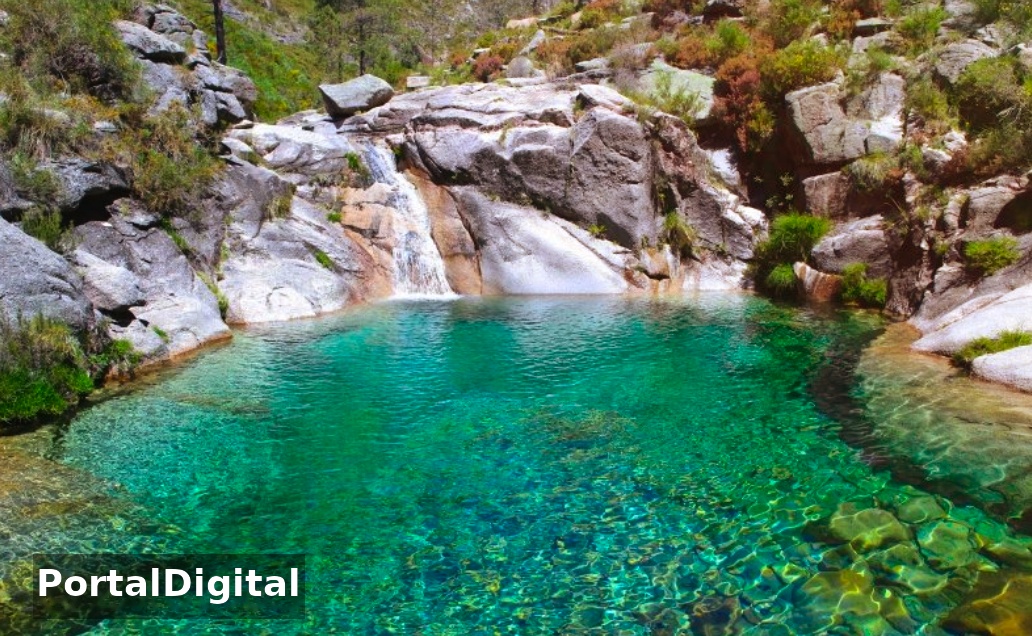
In Central Portugal, in a sea of mountains, clear water runs through the network of river beaches, competes with the beaches on the coast and offers kilometers of hiking/mountain biking trails for discovery and adventure.
The Schist Villages are crossed by countless walking trails and paths that take us to St. António da Neve, Alto do Trevim, Castelo da Lousã, Sra. da Piedade and the river beaches.
The Schist Village Network comprises 27 villages from 16 municipalities located in the center of Portugal in the territory between Castelo Branco and Coimbra.
A territory essentially made up of shale mountains surrounded and crossed by a good road network.
The mountains offer stones that are part of the identity of the territory and with the stones its history was created but with them a project for the future was created.
Villages that were in ruins and disappearing gave rise to an award-winning tourist destination that is unique and notable for having emerged in one of the most disadvantaged territories in the interior of the country.
In Central Portugal, in a sea of mountains, clear water runs through the network of river beaches, competes with the beaches on the coast and offers kilometers of hiking/mountain biking trails for discovery and adventure.