

It is located in the parish of Barroca, city of Fundão, district of Castelo Branco, in the province of Beira Baixa, Centro region (Beiras Region) and sub-region of Beiras and Serra da Estrela
Barroca continues to breathe a rural environment guided by its agricultural cycles and is the headquarters of the Schist Villages Network and Stores.
The oldest part of the Baroque period is located along a small hill flanked by two deeply dug lines of water forming a set perpendicular to the course of the Zêzere with which it borders.
Casa Grande is an old manor house from the 18th century where the Centro Dinamizador das Aldeias do Xisto operates today and the landscape is framed by the pine forest and the pyramids of Lavaria do Cabeço do Pião, which once belonged to Minas da Panasqueira.
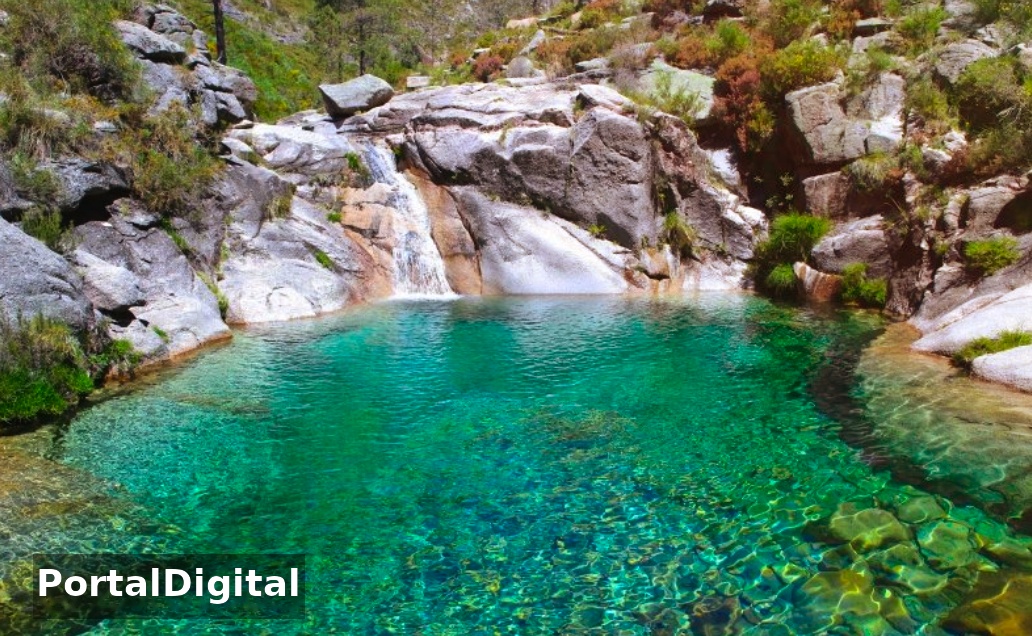
On the path that takes us to the banks of the Zêzere, we discover old mills that worked with the power of the river.
The water mirror and the landscape require a moment of pause, before crossing the pedestrian bridge to the other bank and discovering the rock engravings that the ancestors left engraved in the rock there thousands of years ago.
Casa Grande also houses an Interpretation Center for this heritage and challenges us to walk along the Pinhal Interior Rock Art Route.
The village has a group of scattered peripheral buildings built in the 1930s.
In the central square of its urban fabric, the old part of the village, structured by three streets connected by several streets, stands out.
The predominant construction material is slate, although a significant part of the building facades are plastered and painted predominantly white.
A significant number of larger aristocratic buildings from the 18th and 19th centuries are entirely made of schist, which is uncommon in the Schist Villages network.
In the village there are paving stones made of pebbles, but next to the river we find the slabs of an old medieval sidewalk.
In the village, houses sometimes have walkways on the first floor and reveal in their small details the desire to add emotions to the construction.
Constructions outside the village perimeter dedicated to field work dot dirt paths between the small properties spread across the hillsides.
The walkways and beautiful riverside routes have archaeological finds that may have existed more than 12 thousand and 20 thousand years ago.
In this Baroque Village there are also the chapels of Nossa Senhora da Rocha, São Romão, São Roque and Nossa Senhora da Agonia, the Church of São Sebastião, the Casa Grande (manor building of the Fabião family), a set of private houses from the 18th and 19th centuries, pedestrian bridges, washhouse, dam, mill and others.
In the village there is a modern Altar located next to the EN238 at the entrance to the village and at the end of the village on the left bank of the Zêzere next to the access to the pedestrian bridges (17th or 18th century).
The oldest part of the Baroque period is located along a small hill flanked by two deeply dug lines of water forming a set perpendicular to the course of the Zêzere with which it borders.
Casa Grande is an old manor house from the 18th century where the Centro Dinamizador das Aldeias do Xisto operates today and the landscape is framed by the pine forest and the pyramids of Lavaria do Cabeço do Pião, which once belonged to Minas da Panasqueira.
On the path that takes us to the banks of the Zêzere, we discover old mills that worked with the power of the river.
The water mirror and the landscape require a moment of pause, before crossing the pedestrian bridge to the other bank and discovering the rock engravings that the ancestors left engraved in the rock there thousands of years ago.
Casa Grande also houses an Interpretation Center for this heritage and challenges us to walk along the Pinhal Interior Rock Art Route.
The village has a group of scattered peripheral buildings built in the 1930s.
In the central square of its urban fabric, the old part of the village, structured by three streets connected by several streets, stands out.
The predominant construction material is slate, although a significant part of the building facades are plastered and painted predominantly white.
A significant number of larger aristocratic buildings from the 18th and 19th centuries are entirely made of schist, which is uncommon in the Schist Villages network.
In the village there are paving stones made of pebbles, but next to the river we find the slabs of an old medieval sidewalk.
In the village, houses sometimes have walkways on the first floor and reveal in their small details the desire to add emotions to the construction.
Constructions outside the village perimeter dedicated to field work dot dirt paths between the small properties spread across the hillsides.
The walkways and beautiful riverside routes have archaeological finds that may have existed more than 12 thousand and 20 thousand years ago.
In this Baroque Village there are also the chapels of Nossa Senhora da Rocha, São Romão, São Roque and Nossa Senhora da Agonia, the Church of São Sebastião, the Casa Grande (manor building of the Fabião family), a set of private houses from the 18th and 19th centuries, pedestrian bridges, washhouse, dam, mill and others.
In the village there is a modern Altar located next to the EN238 at the entrance to the village and at the end of the village on the left bank of the Zêzere next to the access to the pedestrian bridges (17th or 18th century).