
It is located on Rua Tenente Valadim, Largo da Infantaria, city and district of Leiria, in central Portugal
History of the ancient Church and Convent of Saint Augustine
The Church and Convent were built by Bishop D. Gaspar do Casal, during the second half of the 16th century (1577-79) and until the first half of the 17th century.
The Convent of Santo Agostinho was founded in 1577 on the initiative of D. Frei Gaspar do Casal, bishop of the diocese of Leiria, and the church was built first.
D. Frei Gaspar do Casal, second bishop of Leiria and hermit of Santo Agostinho, contrary to the opinion of the canons of the see, this way one of the most important monastic complexes in Leiria was born within its walls so that the reformist innovations of this magnificent assembly committed to providing its members with a more systematized study could flourish (the creation of the diocesan seminary in 1671 in an area adjacent to the convent is proof of this).
In the following two years, when construction of the convent complex began, the chancel, the transept and the first chapels in the nave were already completed.
However, due to disagreements with the Cabido da Sé, work on the convent dragged on until the first quarter of the 17th century.
In 1671, Bishop D. Pedro Vieira da Silva created the Seminary, handing over its direction to the Order of Saint Augustine the following year.
The complex was built over the first paper factory, with only part of the factory remaining to the east of the church to this day.
The church's facade would be changed during the construction campaign carried out in the second half of the 18th century, and a few years later the Seminary was detached from the convent.
At the beginning of the 19th century, between 1803 and 1804, the convent space would be renovated due to the state of ruin of its structure and with the extinction of the Religious Orders, the convent began to house a barracks and the church became a regimental chapel.
In the second half of the 18th century, the church underwent some renovations that gave it its current appearance.
The convent was handed over to the order of Saint Augustine, but due to the extinction of religious orders in 1834, a military barracks was installed in the convent, as well as in the old seminary (located next door).
In the 20th century, the church, convent and also the old seminary were returned to the diocese, with the church open to religious worship (1944 it once again belonged to the diocese of Leiria).
The Leiria Museum is currently housed in the former Convent of Santo Agostinho.
The architectural design of the convent is a mirror of the erudition that must include this building in the routes of Mannerism, although in the 18th century it was shaped by Baroque taste.
The convent of Santo Agostinho is one of the most lasting marks of the connection of the territory of Leiria to the figure of the Bishop of Hippo, assuming the responsibility for this notable figure of Western thought to be still considered the patron saint of the diocese of Leiria-Fátima.
The Convent of Santo Agostinho was founded in 1577 on the initiative of D. Frei Gaspar do Casal, bishop of the diocese of Leiria, and the church was built first.
D. Frei Gaspar do Casal, second bishop of Leiria and hermit of Santo Agostinho, contrary to the opinion of the canons of the see, this way one of the most important monastic complexes in Leiria was born within its walls so that the reformist innovations of this magnificent assembly committed to providing its members with a more systematized study could flourish (the creation of the diocesan seminary in 1671 in an area adjacent to the convent is proof of this).
In the following two years, when construction of the convent complex began, the chancel, the transept and the first chapels in the nave were already completed.
However, due to disagreements with the Cabido da Sé, work on the convent dragged on until the first quarter of the 17th century.
In 1671, Bishop D. Pedro Vieira da Silva created the Seminary, handing over its direction to the Order of Saint Augustine the following year.
The complex was built over the first paper factory, with only part of the factory remaining to the east of the church to this day.
The church's facade would be changed during the construction campaign carried out in the second half of the 18th century, and a few years later the Seminary was detached from the convent.
At the beginning of the 19th century, between 1803 and 1804, the convent space would be renovated due to the state of ruin of its structure and with the extinction of the Religious Orders, the convent began to house a barracks and the church became a regimental chapel.
In the second half of the 18th century, the church underwent some renovations that gave it its current appearance.
The convent was handed over to the order of Saint Augustine, but due to the extinction of religious orders in 1834, a military barracks was installed in the convent, as well as in the old seminary (located next door).
In the 20th century, the church, convent and also the old seminary were returned to the diocese, with the church open to religious worship (1944 it once again belonged to the diocese of Leiria).
The Leiria Museum is currently housed in the former Convent of Santo Agostinho.
The architectural design of the convent is a mirror of the erudition that must include this building in the routes of Mannerism, although in the 18th century it was shaped by Baroque taste.
The convent of Santo Agostinho is one of the most lasting marks of the connection of the territory of Leiria to the figure of the Bishop of Hippo, assuming the responsibility for this notable figure of Western thought to be still considered the patron saint of the diocese of Leiria-Fátima.
Architecture of the old Church and Convent of Saint Augustine
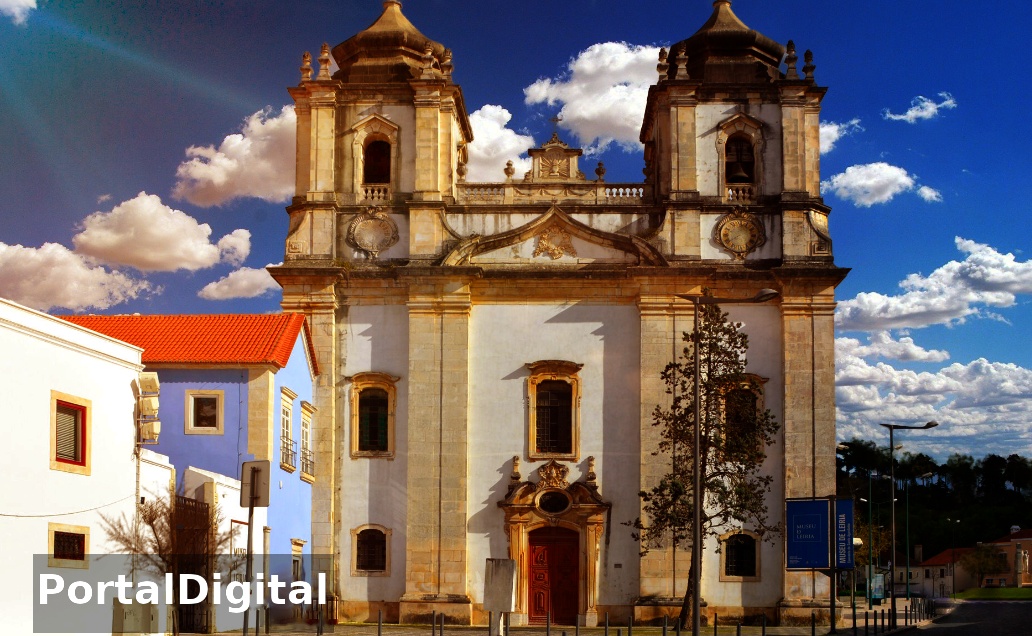
The church consists of a central nave and is essentially Baroque in style, as can be seen in the central façade flanked by the two towers.
The Church has the typical shape of a cross with 3 bodies divided by 3 pillars and visitors can find the shield of the founding bishop over the main door of the church.
The convent church with a Latin cross plan has a single nave, lit from the side by eight windows and covered by a lunette vault, a high choir based on a lowered arch, and three interconnecting side chapels, covered by a coffered vault.
The main chapel is covered by a coffered vault, with an altarpiece in limestone, built at the beginning of the 20th century by Ernesto Korrodi.
The main facade of the temple is divided into three bodies, defined by pilasters topped with fires.
The side bodies, with windows in the first and second registers, are extended by two bell towers topped with towers.
The cloister, with a quadrangular plan, communicates with the convent facilities through the upper register terrace.
In the first register, the wings, covered by a groin vault, are divided into five sections that open onto the courtyard through round arches.
The rectangular seminary building has an undecorated main façade topped at the corners by pinnacles whose only prominent element is the main portal with a pediment surmounted by the coat of arms of the founder, Bishop D. Pedro Vieira da Silva and above this was the bay window with an iron guard.
The original structure of the Convent of São Agostinho, from which the interior of the temple and the cloister survived, demonstrates a taste linked to Mannerist architecture with classical roots that refers to Serlian treatises combined with the plain austerity that was explored in works of a religious nature.
In the convent there are still some tiles from the 17th and 18th centuries in the convent cloisters (baroque style).
The church underwent restoration work, with emphasis on the main altar remodeled by Ernesto Korrodi (1950-1960).
The Church has the typical shape of a cross with 3 bodies divided by 3 pillars and visitors can find the shield of the founding bishop over the main door of the church.
The convent church with a Latin cross plan has a single nave, lit from the side by eight windows and covered by a lunette vault, a high choir based on a lowered arch, and three interconnecting side chapels, covered by a coffered vault.
The main chapel is covered by a coffered vault, with an altarpiece in limestone, built at the beginning of the 20th century by Ernesto Korrodi.
The main facade of the temple is divided into three bodies, defined by pilasters topped with fires.
The side bodies, with windows in the first and second registers, are extended by two bell towers topped with towers.
The cloister, with a quadrangular plan, communicates with the convent facilities through the upper register terrace.
In the first register, the wings, covered by a groin vault, are divided into five sections that open onto the courtyard through round arches.
The rectangular seminary building has an undecorated main façade topped at the corners by pinnacles whose only prominent element is the main portal with a pediment surmounted by the coat of arms of the founder, Bishop D. Pedro Vieira da Silva and above this was the bay window with an iron guard.
The original structure of the Convent of São Agostinho, from which the interior of the temple and the cloister survived, demonstrates a taste linked to Mannerist architecture with classical roots that refers to Serlian treatises combined with the plain austerity that was explored in works of a religious nature.
In the convent there are still some tiles from the 17th and 18th centuries in the convent cloisters (baroque style).
The church underwent restoration work, with emphasis on the main altar remodeled by Ernesto Korrodi (1950-1960).
Classification of the ancient Church and Convent of Saint Augustine
The former Church and convent of Santo Agostinho in Leiria is classified as a Property of Public Interest.