
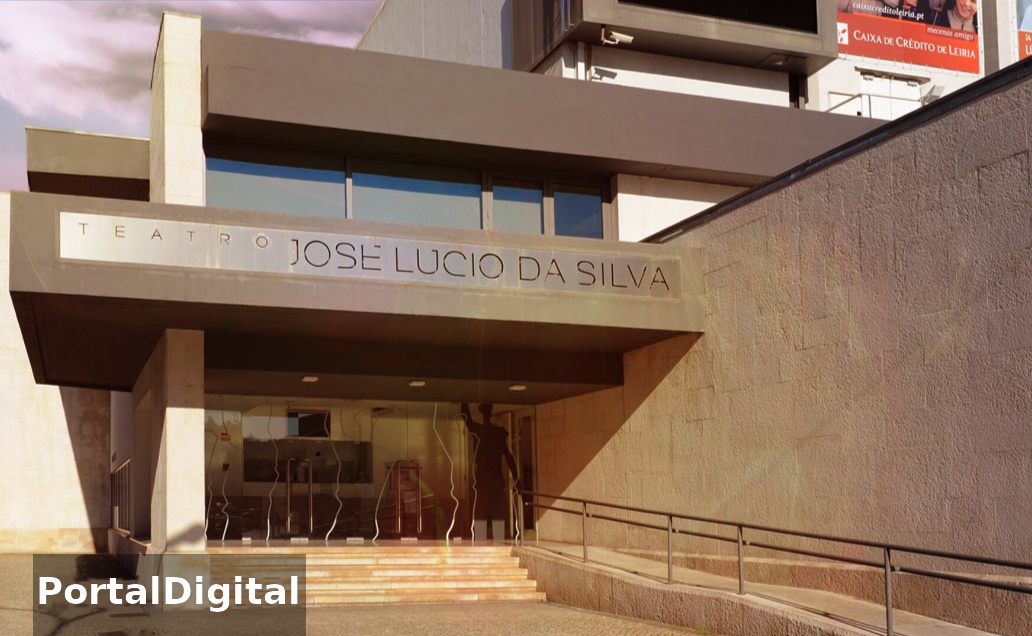
It is located on Avenida Heróis de Angola, city of Leiria, in central Portugal
The laying of the first stone for the construction of a true Theater in Leiria took place in 1878, in Campo D. Luís I (currently Largo de Goa, Damão and Diu) located between the old Convent of Sant`Ana and the Luís de Camões public garden.
The first was a closed space worthy of the name Theater, Teatro Dª. Maria Pia but only in name, because the public wanted cinema.
The difficult financial situation of the theater and the physical deficiencies of the building itself began to call into question its cultural continuity, but the emergence of a new administration saved the situation.
During the Second World War, the idea of building a new theater began to germinate, as the Spectacles Inspectorate closed the D. Maria Pia several times, citing a lack of security, and in January 1958 the last show took place.
Film projections began to take place in a shed acquired in Montijo and were installed at the end of the garden. It opened on January 12, 1958 with the screening of the film ‘East of Paradise’ with James Dean as the protagonist.
In 1963, José Lúcio da Silva entered the scene and expressed his desire to build a theater for the city.
The work begins on an old vineyard property owned by the Marques da Cruz family according to a project by Architects Carlos M. Ramos and José Bruschy, becoming an unequivocal mark of modernist times in Portugal.
The laying of the first stone took place on July 29, 1964 and the work was completed in around 18 months, with the theater inaugurated on the night of January 15, 1966, a Saturday in the presence of Admiral Américo Thomaz.
On the opening day, two plays took to the stage at Teatro José Lúcio da Silva and in the first part they were able to watch the play 'Monólogo do Vaqueiro' (or 'Auto da Visitação'), by Gil Vicente played by João Motta and in the second part spectators were able to enjoy the play 'Os Velhos', an original 3-act comedy by D. João da Câmara.
The first cinema show in this city theater took place on the 16th, a Sunday, with the film ‘Lord Jim’ which had recently premiered in Lisbon, criticized as ‘the most extraordinary and grand adventure filmed to date’.
The film survived times of censorship and many thousands of people have watched great shows.
The ranking of the most watched films at the José Lúcio da Silva Theater is led by Titanic, which in 1998 was shown for four weeks and had 28,659 spectators.
In 2nd place is the 1993 film Jurassic Park, showing for 3 weeks with 17,839 spectators.
Third place on the podium is occupied by Home Alone 2: Lost in New York in 1992, which was also shown for 3 weeks and was seen by 12,171 spectators.
The room has undergone several renovations over the years, such as the implementation of the digital sound system, new chairs, new carpet, remodeling of the stage and finally the acquisition of a new projection machine, allowing for better image cropping.
Teatro José Lúcio da Silva is also a founding member of m|i|mo – museum of the moving image, a museum that in 2004 joined the Portuguese Museum Network and which has in its assets a fund dedicated to Teatro.JLS.
The José Lúcio da Silva Theater has become, over the years, a monumental theater with a capacity for 763 seats, presenting excellent scenic features that provide visual comfort that is currently rare in projection rooms, thus justifying its prominent position in the city's culture.
In September 2005, the José Lúcio da Silva Theater closed its doors to make way for major works to modernize the space and equipment.
The José Lúcio da Silva Theater now has a space consisting of a concert hall, an atrium where the moving image museum is on display and two other atriums that will be museum spaces.
The first was a closed space worthy of the name Theater, Teatro Dª. Maria Pia but only in name, because the public wanted cinema.
The difficult financial situation of the theater and the physical deficiencies of the building itself began to call into question its cultural continuity, but the emergence of a new administration saved the situation.
During the Second World War, the idea of building a new theater began to germinate, as the Spectacles Inspectorate closed the D. Maria Pia several times, citing a lack of security, and in January 1958 the last show took place.
Film projections began to take place in a shed acquired in Montijo and were installed at the end of the garden. It opened on January 12, 1958 with the screening of the film ‘East of Paradise’ with James Dean as the protagonist.
In 1963, José Lúcio da Silva entered the scene and expressed his desire to build a theater for the city.
The work begins on an old vineyard property owned by the Marques da Cruz family according to a project by Architects Carlos M. Ramos and José Bruschy, becoming an unequivocal mark of modernist times in Portugal.
The laying of the first stone took place on July 29, 1964 and the work was completed in around 18 months, with the theater inaugurated on the night of January 15, 1966, a Saturday in the presence of Admiral Américo Thomaz.
On the opening day, two plays took to the stage at Teatro José Lúcio da Silva and in the first part they were able to watch the play 'Monólogo do Vaqueiro' (or 'Auto da Visitação'), by Gil Vicente played by João Motta and in the second part spectators were able to enjoy the play 'Os Velhos', an original 3-act comedy by D. João da Câmara.
The first cinema show in this city theater took place on the 16th, a Sunday, with the film ‘Lord Jim’ which had recently premiered in Lisbon, criticized as ‘the most extraordinary and grand adventure filmed to date’.
The film survived times of censorship and many thousands of people have watched great shows.
The ranking of the most watched films at the José Lúcio da Silva Theater is led by Titanic, which in 1998 was shown for four weeks and had 28,659 spectators.
In 2nd place is the 1993 film Jurassic Park, showing for 3 weeks with 17,839 spectators.
Third place on the podium is occupied by Home Alone 2: Lost in New York in 1992, which was also shown for 3 weeks and was seen by 12,171 spectators.
The room has undergone several renovations over the years, such as the implementation of the digital sound system, new chairs, new carpet, remodeling of the stage and finally the acquisition of a new projection machine, allowing for better image cropping.
Teatro José Lúcio da Silva is also a founding member of m|i|mo – museum of the moving image, a museum that in 2004 joined the Portuguese Museum Network and which has in its assets a fund dedicated to Teatro.JLS.
The José Lúcio da Silva Theater has become, over the years, a monumental theater with a capacity for 763 seats, presenting excellent scenic features that provide visual comfort that is currently rare in projection rooms, thus justifying its prominent position in the city's culture.
In September 2005, the José Lúcio da Silva Theater closed its doors to make way for major works to modernize the space and equipment.
The José Lúcio da Silva Theater now has a space consisting of a concert hall, an atrium where the moving image museum is on display and two other atriums that will be museum spaces.