
It is located on Rua do Aljube, city of Funchal, Madeira Island, Portugal
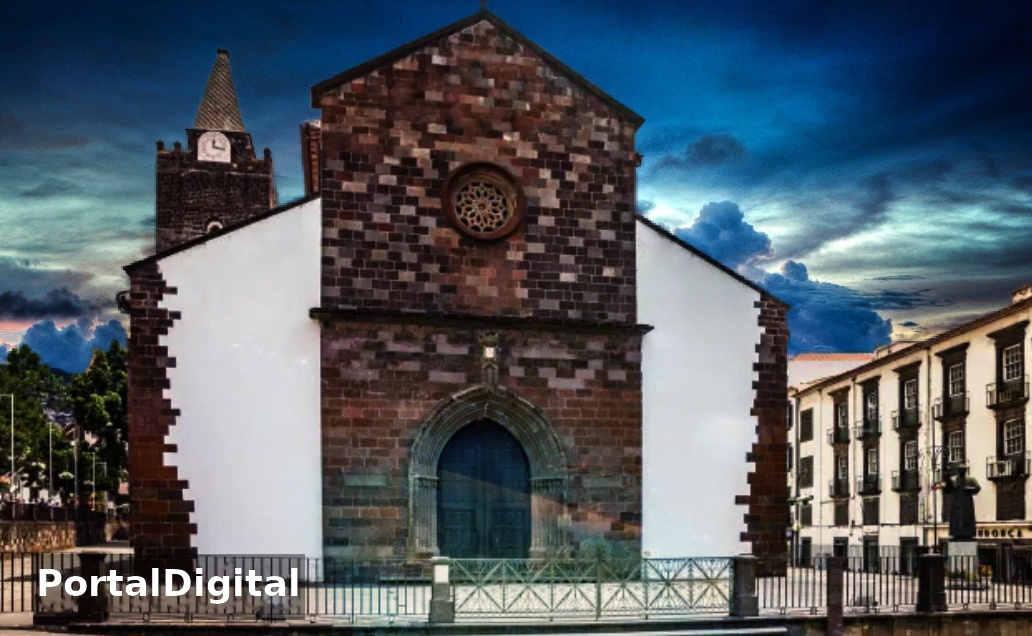
The Funchal Cathedral is a beautiful monument located right in the historic center of the capital of the Madeira Archipelago, constituting the most emblematic work of the Manueline period on the Island of Madeira.
The Church was built by D. Manuel I and is one of the few buildings that have survived intact since colonization times.
The design and construction work began in 1493, being completed in 1514 under the design of Pero Annes and Gil Eanes, in a characteristic late Gothic work combining local materials with ancient and modern knowledge.
In the 90s of the 15th century, D. Manuel sent the architect Gil Eanes to work on the design of the Funchal cathedral, which was completed in 1514.
In 1508, when Funchal was elevated to the category of city, masses were already being celebrated in the temple, but the bell tower's dome and a few other details were only completed in the years 1517-1518.
The highlights are the chancel chair linked to the sculptor Olivier de Ghent but whose main responsible was Master Machim, which displays saints, prophets and apostles in 16th century costumes.
In the decorative details of the seats and armrests, aspects of Madeiran life can be seen, such as a cherub carrying a bunch of bananas and another carrying a skin full of wine.
Inside the Cathedral, the altarpiece in the main chapel was created by King D. Manuel I in 1510-1515.
The altarpiece topped by a Gothic sky appears in the form of a large polyptych made of gilded woodwork completed by small sculptures and oil paintings on wood.
The high value of this altarpiece comes from the high technical quality of its execution and the fact that it constitutes the only altarpiece from the Manueline period that remains, in its entirety, in its place of origin.
The Funchal Cathedral also has one of the most beautiful ceilings in Portugal, made with wood from the island and the main chapel's chair is in the Flemish style.
The Funchal Cathedral is made up of several chapels from different eras: that of Nossa Senhora dos Varadouros from the 19th century, that of Nossa Senhora de Lourdes from the 18th and 20th centuries, the Laterals from the 17th to 19th centuries, as well as the Main Altar from the 16th century, the Altar of the Santíssimo from the 18th century, the Altar of Santo António from the 17th century, the Baptismal Font from the 16th century, the Sacristy from the 18th century and the Confraria do Santíssimo of the 18th century.
The plan is a Latin cross with three stepped naves, a projecting transept and a wooden ceiling, in some areas in a highly elaborated Mudejar style, considered one of the most important in Portuguese territory.
Its beautiful Bell Tower stands out from the outside, due to its grandeur and beauty, having been completed between 1517 and 1518.
The Cathedral has a rich interior with various works of statuary and painting, highlighting the various decorative details of the temple, such as the seats and armrests depicting scenes from Madeiran life.
Equally interesting is the Processional Cross offered by King D. Manuel I, considered one of the masterpieces of Manueline goldsmithing, and the Chair that is preserved in its place of origin.
The Romantic organ from the 19th century, the altarpieces of São Francisco de Xavier and the Cathedral of Funchal from the 16th century and the rich decorative tiles are other elements that enrich this beautiful National Monument, classified in 1910.
The main door displays Gothic lines, and the 17th century gilded pieces highlight some characteristics of the Manueline period.
The church also has an exceptional processional cross, offered by D. Manuel I, considered one of the masterpieces of Portuguese Manueline goldsmithing.
The main facade faces W. and has three stepped panels, the central stone and projecting one ending in a gable with a cornice crowned by a cross, and with two registers separated by a cornice, in the first register there is a pointed arch portal with six archivolts,
The exterior has plant decoration based on columns with phytomorphic capitals surmounted by a royal coat of arms and an open crown, and in the second register there is a rose window with shackles centered by a cross.
The blind side panels delimited by stone corners with engraved tombstones alluding to the “Blessed Sacrament” (left) and “Our Lady of the Conception” (right).
On the side facades, the naves are torn by a transom door in a round arch, based on Tuscan pilasters topped by a frieze and straight cornice, and by four openings in a round arch with a deep capialço (capialiço - oblique cut in the upper part of the doors and windows to give more light to the interior of the houses)
Inside the church, the stepped naves are separated by pointed arches with a wide span, with those flanking the crossing being even larger, on cruciform pillars painted in mock marble, with star-shaped bases and low capitals with half-spheres, except those at the top E., with foliage, and those at the W., with artichokes, gourds, leaves, flowers, pomegranates and ivy.
The central nave with clerestory, with the high choir in the first section, over three pointed arches equipped with a wooden windshield and a glazed flag, laterally communicates through two grilled openings and a conopial arch topped with an armillary sphere with the Baptistery, on the Gospel side, and with the "house of stairs", on the Epistle side, and over which the high choir extends with a wooden balustrade guard on the side. center, and adapted to the profile of the rose window, it has a pipe organ, and on the floor there are five grave covers with epigraphs.
In the side nave of the Gospel, the baptistery has a cross vault with ogives with a vegetal arch supported on columns with vegetal capitals and torso rings and houses a baptismal font with a faceted cup, concave panels and a starry foot.
In the side naves, there are six shallow facing chapels in a pointed arch, with three archivolts resting on pilasters and columns, painted with fake marble, with gilded and polychrome altarpieces dedicated to the “Souls”, “Our Lady of Exile” and the “Miracles”, on the Gospel side to “Our Lady of Fátima”, “São José” and “São Miguel” on the Epistle side, and protected by a wooden web in a U-shaped balustrade containing fragments of tomb covers with inscriptions on the floor.
In the chapels, four windows open irregularly, and in the second section, a recessed arched door with a holy water font with a faceted bowl.
The ceilings are covered in alfalfa with geometric interlacing and pendants supported by friezes profiled by cords completely painted with grotesques and flowers.
The naves end in arches, topped by oculi, and pointed on the sides, over corbels of leaves, flowers, gourds and bunches of grapes.
The Transept with chapels at the top, the Gospel chapel dedicated to “Senhor Bom Jesus” and the Epistle chapel to “Saint Anthony” with gilded altarpieces integrating screens and a central rose window.
The Funchal Cathedral, classified as a National Monument since 1910, is the main religious temple in the Archipelago and is widely visited by inhabitants and visitors to the city of Funchal.
The Church was built by D. Manuel I and is one of the few buildings that have survived intact since colonization times.
The design and construction work began in 1493, being completed in 1514 under the design of Pero Annes and Gil Eanes, in a characteristic late Gothic work combining local materials with ancient and modern knowledge.
In the 90s of the 15th century, D. Manuel sent the architect Gil Eanes to work on the design of the Funchal cathedral, which was completed in 1514.
In 1508, when Funchal was elevated to the category of city, masses were already being celebrated in the temple, but the bell tower's dome and a few other details were only completed in the years 1517-1518.
The highlights are the chancel chair linked to the sculptor Olivier de Ghent but whose main responsible was Master Machim, which displays saints, prophets and apostles in 16th century costumes.
In the decorative details of the seats and armrests, aspects of Madeiran life can be seen, such as a cherub carrying a bunch of bananas and another carrying a skin full of wine.
Inside the Cathedral, the altarpiece in the main chapel was created by King D. Manuel I in 1510-1515.
The altarpiece topped by a Gothic sky appears in the form of a large polyptych made of gilded woodwork completed by small sculptures and oil paintings on wood.
The high value of this altarpiece comes from the high technical quality of its execution and the fact that it constitutes the only altarpiece from the Manueline period that remains, in its entirety, in its place of origin.
The Funchal Cathedral also has one of the most beautiful ceilings in Portugal, made with wood from the island and the main chapel's chair is in the Flemish style.
The Funchal Cathedral is made up of several chapels from different eras: that of Nossa Senhora dos Varadouros from the 19th century, that of Nossa Senhora de Lourdes from the 18th and 20th centuries, the Laterals from the 17th to 19th centuries, as well as the Main Altar from the 16th century, the Altar of the Santíssimo from the 18th century, the Altar of Santo António from the 17th century, the Baptismal Font from the 16th century, the Sacristy from the 18th century and the Confraria do Santíssimo of the 18th century.
The plan is a Latin cross with three stepped naves, a projecting transept and a wooden ceiling, in some areas in a highly elaborated Mudejar style, considered one of the most important in Portuguese territory.
Its beautiful Bell Tower stands out from the outside, due to its grandeur and beauty, having been completed between 1517 and 1518.
The Cathedral has a rich interior with various works of statuary and painting, highlighting the various decorative details of the temple, such as the seats and armrests depicting scenes from Madeiran life.
Equally interesting is the Processional Cross offered by King D. Manuel I, considered one of the masterpieces of Manueline goldsmithing, and the Chair that is preserved in its place of origin.
The Romantic organ from the 19th century, the altarpieces of São Francisco de Xavier and the Cathedral of Funchal from the 16th century and the rich decorative tiles are other elements that enrich this beautiful National Monument, classified in 1910.
The main door displays Gothic lines, and the 17th century gilded pieces highlight some characteristics of the Manueline period.
The church also has an exceptional processional cross, offered by D. Manuel I, considered one of the masterpieces of Portuguese Manueline goldsmithing.
The main facade faces W. and has three stepped panels, the central stone and projecting one ending in a gable with a cornice crowned by a cross, and with two registers separated by a cornice, in the first register there is a pointed arch portal with six archivolts,
The exterior has plant decoration based on columns with phytomorphic capitals surmounted by a royal coat of arms and an open crown, and in the second register there is a rose window with shackles centered by a cross.
The blind side panels delimited by stone corners with engraved tombstones alluding to the “Blessed Sacrament” (left) and “Our Lady of the Conception” (right).
On the side facades, the naves are torn by a transom door in a round arch, based on Tuscan pilasters topped by a frieze and straight cornice, and by four openings in a round arch with a deep capialço (capialiço - oblique cut in the upper part of the doors and windows to give more light to the interior of the houses)
Inside the church, the stepped naves are separated by pointed arches with a wide span, with those flanking the crossing being even larger, on cruciform pillars painted in mock marble, with star-shaped bases and low capitals with half-spheres, except those at the top E., with foliage, and those at the W., with artichokes, gourds, leaves, flowers, pomegranates and ivy.
The central nave with clerestory, with the high choir in the first section, over three pointed arches equipped with a wooden windshield and a glazed flag, laterally communicates through two grilled openings and a conopial arch topped with an armillary sphere with the Baptistery, on the Gospel side, and with the "house of stairs", on the Epistle side, and over which the high choir extends with a wooden balustrade guard on the side. center, and adapted to the profile of the rose window, it has a pipe organ, and on the floor there are five grave covers with epigraphs.
In the side nave of the Gospel, the baptistery has a cross vault with ogives with a vegetal arch supported on columns with vegetal capitals and torso rings and houses a baptismal font with a faceted cup, concave panels and a starry foot.
In the side naves, there are six shallow facing chapels in a pointed arch, with three archivolts resting on pilasters and columns, painted with fake marble, with gilded and polychrome altarpieces dedicated to the “Souls”, “Our Lady of Exile” and the “Miracles”, on the Gospel side to “Our Lady of Fátima”, “São José” and “São Miguel” on the Epistle side, and protected by a wooden web in a U-shaped balustrade containing fragments of tomb covers with inscriptions on the floor.
In the chapels, four windows open irregularly, and in the second section, a recessed arched door with a holy water font with a faceted bowl.
The ceilings are covered in alfalfa with geometric interlacing and pendants supported by friezes profiled by cords completely painted with grotesques and flowers.
The naves end in arches, topped by oculi, and pointed on the sides, over corbels of leaves, flowers, gourds and bunches of grapes.
The Transept with chapels at the top, the Gospel chapel dedicated to “Senhor Bom Jesus” and the Epistle chapel to “Saint Anthony” with gilded altarpieces integrating screens and a central rose window.
The Funchal Cathedral, classified as a National Monument since 1910, is the main religious temple in the Archipelago and is widely visited by inhabitants and visitors to the city of Funchal.