

Road Trip in Gerês, extreme northwest of Portugal, in the border area between Minho, Trás-os-Montes and Galicia, northern Portugal
It's worth spending at least 3 to 6 days to see the Peneda-Gerês Park, it's one of the most beautiful places in Portugal and a true paradise for nature lovers.
Gerês is known for being the area with the highest rainfall in Portugal. Therefore, it is not surprising that most people want to visit Gerês in the summer. However, if you choose to visit in the summer, be prepared for crowds and higher prices in hotels and restaurants. Visiting Gerês is, without a doubt, one of the best natural attractions you can do in Portugal.
The Peneda-Gerês National Park has a territorial perimeter that covers the entire vast forest territory that extends from Serra da Peneda to Serra do Gerês, Serra do Soajo and Serra Amarela.
The Peneda-Gerês National Park, due to its rare and impressive landscape beauty, ecological and ethnographic value and variety of fauna (Iberian ibex, roe deer, garrons, wolves, birds of prey) and flora (pines, yews, chestnut trees, oaks and various medicinal plants) is one of the greatest natural attractions in Portugal.
The Park extends from Serra do Gerês to the south, passing through Serra da Peneda to the Spanish border.
In the park there are two important pilgrimage centers, the “Santuário de Nossa Senhora da Peneda”, a replica of the sanctuary of Bom Jesus de Braga, and “São Bento da Porta Aberta”, a place of great popular devotion.
In the locations inside the park, daily life maintains firm roots in Portuguese rural tradition.
Some places of greater tourist value such as Castro Laboreiro stands out for its medieval castle (Castelo de Castro Laboreiro) and is known for the Castro Laboreiro dog breed.
Lindoso stands out for having the largest cluster of ancient granaries in the Iberian Peninsula, and for its 13th century castle (Castelo de Lindoso).
Pitões das Júnias are formed by ruins of the Monastery of Santa Maria das Júnias, built in 1147.
Soajo is a village with a large cluster of ancient granaries set on a rocky outcrop overlooking the Lima River valley.
Vilarinho das Furnas is a village submerged by the construction of the Vilarinho das Furnas Dam on the Homem River.
Fafião is a picturesque village that stands out for its ancient popular architecture and ancient traditions that are still preserved.
In Fafião, among the cliffs and stark precipices of the magnificent Serra do Gerês, we find the Fojo do Lobo, which is made up of a series of stone walls built in the Middle Ages that served as a wolf trap.
Pincães is a place that stands out for the beauty of its surroundings with its green meadows, its fields of olive trees and its tranquility.
Xertelo is a village nestled against the mountains made up of an agro-pastoral community, crop fields, a cube and levada mill, puddles and community livestock.
Currently, the Peneda-Gerês National Park has around 240 species of vertebrate fauna identified in the territory and 1100 species of flora, and 500 sites of historical and archaeological interest.
There are 5 entry points into Gerês, each dedicated to a theme:
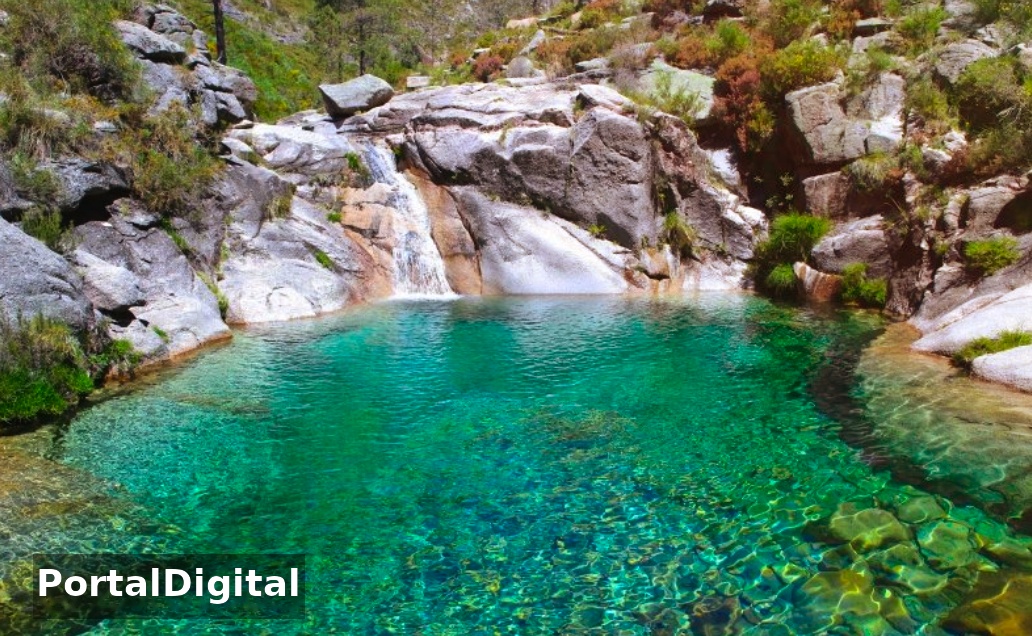
At all these doors you can get a lot of information to enjoy the best of Gerês. The moment we enter the park, we find a magical world made up of mountains, trails, valleys, waterfalls, lagoons, forests, medieval bridges, sanctuaries, sidewalks and villages lost in time. You will love this road trip, as it is a must-see on every itinerary in Portugal.
Gerês is known for being the area with the highest rainfall in Portugal. Therefore, it is not surprising that most people want to visit Gerês in the summer. However, if you choose to visit in the summer, be prepared for crowds and higher prices in hotels and restaurants. Visiting Gerês is, without a doubt, one of the best natural attractions you can do in Portugal.
The Peneda-Gerês National Park has a territorial perimeter that covers the entire vast forest territory that extends from Serra da Peneda to Serra do Gerês, Serra do Soajo and Serra Amarela.
The Peneda-Gerês National Park, due to its rare and impressive landscape beauty, ecological and ethnographic value and variety of fauna (Iberian ibex, roe deer, garrons, wolves, birds of prey) and flora (pines, yews, chestnut trees, oaks and various medicinal plants) is one of the greatest natural attractions in Portugal.
The Park extends from Serra do Gerês to the south, passing through Serra da Peneda to the Spanish border.
In the park there are two important pilgrimage centers, the “Santuário de Nossa Senhora da Peneda”, a replica of the sanctuary of Bom Jesus de Braga, and “São Bento da Porta Aberta”, a place of great popular devotion.
In the locations inside the park, daily life maintains firm roots in Portuguese rural tradition.
Some places of greater tourist value such as Castro Laboreiro stands out for its medieval castle (Castelo de Castro Laboreiro) and is known for the Castro Laboreiro dog breed.
Lindoso stands out for having the largest cluster of ancient granaries in the Iberian Peninsula, and for its 13th century castle (Castelo de Lindoso).
Pitões das Júnias are formed by ruins of the Monastery of Santa Maria das Júnias, built in 1147.
Soajo is a village with a large cluster of ancient granaries set on a rocky outcrop overlooking the Lima River valley.
Vilarinho das Furnas is a village submerged by the construction of the Vilarinho das Furnas Dam on the Homem River.
Fafião is a picturesque village that stands out for its ancient popular architecture and ancient traditions that are still preserved.
In Fafião, among the cliffs and stark precipices of the magnificent Serra do Gerês, we find the Fojo do Lobo, which is made up of a series of stone walls built in the Middle Ages that served as a wolf trap.
Pincães is a place that stands out for the beauty of its surroundings with its green meadows, its fields of olive trees and its tranquility.
Xertelo is a village nestled against the mountains made up of an agro-pastoral community, crop fields, a cube and levada mill, puddles and community livestock.
Currently, the Peneda-Gerês National Park has around 240 species of vertebrate fauna identified in the territory and 1100 species of flora, and 500 sites of historical and archaeological interest.
There are 5 entry points into Gerês, each dedicated to a theme:
- - Porta de Mezio in Arcos de Valdevez, is dedicated to the Conservation of Nature and Biodiversity;
- - Porta de Lamas de Mouro in Melgaço, is dedicated to the History and Occupation of the Territory;
- - Porta de Montalegre is dedicated to Landscape;
- - Porta do Lindoso in Ponte da Barca, dedicated to geology and water;
- - São João do Campo Gate in Erras de Bouro, is dedicated to History and Civilizations.
At all these doors you can get a lot of information to enjoy the best of Gerês. The moment we enter the park, we find a magical world made up of mountains, trails, valleys, waterfalls, lagoons, forests, medieval bridges, sanctuaries, sidewalks and villages lost in time. You will love this road trip, as it is a must-see on every itinerary in Portugal.