
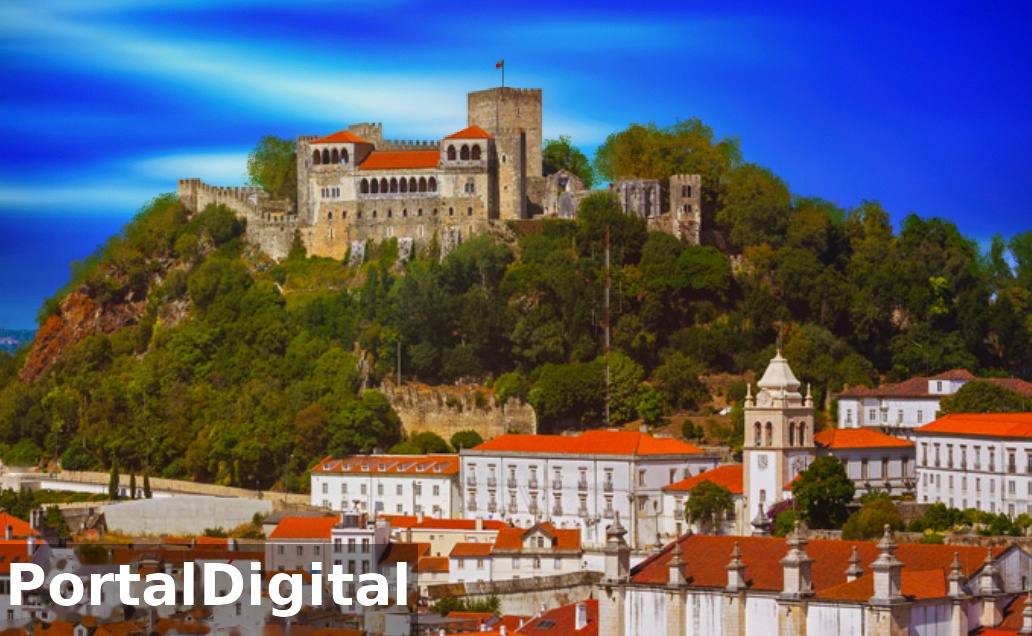
Leiria is a Portuguese city, capital of the district of Leiria, in the province of Beira Litoral, headquarters of the Intermunicipal Community of the Region of Leiria, in Central Portugal
Leiria is a city with 50,533 inhabitants in its urban perimeter and the inhabitants of this city are called Leirienses.
The city of Leiria is the seat of the municipality of Leiria with an area of 565.09 km 2 and 126,897 inhabitants (2011) subdivided into 18 parishes, which makes it one of the most populous municipalities in Beiras, with Coimbra being the most populous.
The city of Leiria is limited to the north/northeast by the municipality of Pombal, to the east by Ourém, to the south by the municipalities of Batalha and Porto de Mós, to the southwest by Alcobaça, to the west by the municipality of Marinha Grande and to the northwest by the Atlantic Ocean.
The municipality has a coastal strip to the west that connects to the Atlantic Ocean, and the municipal holiday is May 22nd and celebrates the creation of the diocese of Leiria in 1545, its elevation to city occurred on June 13th of the same year.
The city is bathed by the River Lis and its tributary the Lena, but Leiria Castle is its most notable monument.
The city built on the hills and plains that cross the River Lis, its historic area with old buildings and monuments, gardens, pedestrian bridges make Leiria a welcoming city and invites you to observe the landscape and the river.
The main attractions of the city of Leiria are: Leiria Castle, Cathedral of Our Lady of the Immaculate Conception, Paper Mill, Leiria Museum (Convent of Saint Augustine), Marrazes School Museum, Praça Rodrigues Lobo (Leiria), Sanctuary of Our Lady of the Incarnation, Jardim Luís de Camões (Leiria), Mercado de Sant''''Ana - Leiria (Cultural Center in Leiria), Agromuseum Municipal Dona Julinha, Historic Center of Leiria, Intercultural Dialogue Center of Leiria, Casa da Cidade Criativa da Música, Banco das Artes Galeria, Municipal Library Afonso Lopes Vieira, Abrigo do Lagar Velho Interpretation Center in Lapedo, Environmental Interpretation Center of Leiria, José Lúcio da Silva Theater ((Av. Heróis de Angola, Leiria), Miguel Franco Theater (Rua Dr. Correia Mateus, Leiria), Monument to Luís de Camões, Pope Paul VI, Monument to the Heroes of Overseas, Statue of the poet from Leiria Francisco Rodrigues Lobo, Statue of D. Afonso III, Statue of the Poet Afonso Lopes Vieira, Statue of Homage to the Rural Worker, Statue of the Pilgrim Shepherd, Rotunda of the old Signal Police and many pedestrian bridges (Arrabalde Bridge, El Rei D.Dinis Bridge, 2. Monument to the Women of Leiria, Plaques of Homage to All the Combatants of the Municipality of Leiria, Monument to the Emigrant, Pattern of the Three Arches Bridge - Leiria, Medieval Azenha Arches, Statue of Afonso Lopes Vieira, Bell Tower and Civic Center of Leiria, O Lis and Lena (Largo 5 de Outubro, Leiria).
The city of Leiria is the seat of the municipality of Leiria with an area of 565.09 km 2 and 126,897 inhabitants (2011) subdivided into 18 parishes, which makes it one of the most populous municipalities in Beiras, with Coimbra being the most populous.
The city of Leiria is limited to the north/northeast by the municipality of Pombal, to the east by Ourém, to the south by the municipalities of Batalha and Porto de Mós, to the southwest by Alcobaça, to the west by the municipality of Marinha Grande and to the northwest by the Atlantic Ocean.
The municipality has a coastal strip to the west that connects to the Atlantic Ocean, and the municipal holiday is May 22nd and celebrates the creation of the diocese of Leiria in 1545, its elevation to city occurred on June 13th of the same year.
The city is bathed by the River Lis and its tributary the Lena, but Leiria Castle is its most notable monument.
The city built on the hills and plains that cross the River Lis, its historic area with old buildings and monuments, gardens, pedestrian bridges make Leiria a welcoming city and invites you to observe the landscape and the river.
The main attractions of the city of Leiria are: Leiria Castle, Cathedral of Our Lady of the Immaculate Conception, Paper Mill, Leiria Museum (Convent of Saint Augustine), Marrazes School Museum, Praça Rodrigues Lobo (Leiria), Sanctuary of Our Lady of the Incarnation, Jardim Luís de Camões (Leiria), Mercado de Sant''''Ana - Leiria (Cultural Center in Leiria), Agromuseum Municipal Dona Julinha, Historic Center of Leiria, Intercultural Dialogue Center of Leiria, Casa da Cidade Criativa da Música, Banco das Artes Galeria, Municipal Library Afonso Lopes Vieira, Abrigo do Lagar Velho Interpretation Center in Lapedo, Environmental Interpretation Center of Leiria, José Lúcio da Silva Theater ((Av. Heróis de Angola, Leiria), Miguel Franco Theater (Rua Dr. Correia Mateus, Leiria), Monument to Luís de Camões, Pope Paul VI, Monument to the Heroes of Overseas, Statue of the poet from Leiria Francisco Rodrigues Lobo, Statue of D. Afonso III, Statue of the Poet Afonso Lopes Vieira, Statue of Homage to the Rural Worker, Statue of the Pilgrim Shepherd, Rotunda of the old Signal Police and many pedestrian bridges (Arrabalde Bridge, El Rei D.Dinis Bridge, 2. Monument to the Women of Leiria, Plaques of Homage to All the Combatants of the Municipality of Leiria, Monument to the Emigrant, Pattern of the Three Arches Bridge - Leiria, Medieval Azenha Arches, Statue of Afonso Lopes Vieira, Bell Tower and Civic Center of Leiria, O Lis and Lena (Largo 5 de Outubro, Leiria).