
They are located in the parish of Arrimal, Municipality of Porto de Mós, District of Leiria, Central Portugal
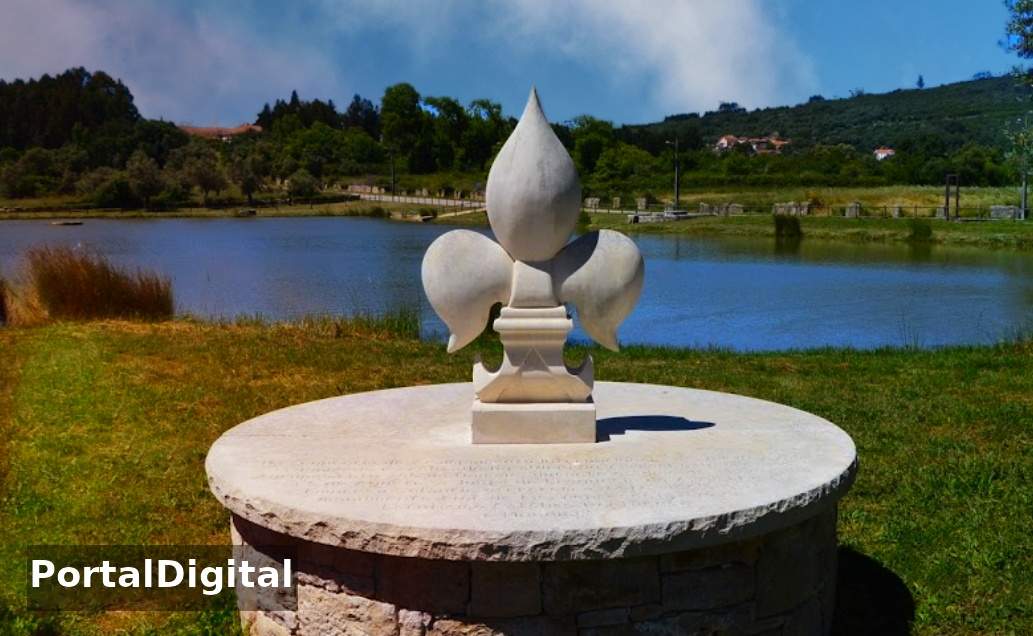
The Arrimal Lagoons surrounded by nature, the waters create an interesting landscape where you can find Three lagoons in the Parish of Arrimal and the lagoons result from the formation of small surface depressions that allow rainwater to accumulate.
Along its length and throughout the main street of the parish there are small limestone wells.
The Grande Lagoa is located next to Arrabal and brings together water flows coming from Vale de Espinho.
The Pequena Lagoa is located near Rossio and brings together waters full of Mendiga and Portela de Vale de Espinho where the third lagoon is located.
The large and small lagoons of Arrimal are natural depressions of the sinkhole type in a landscape of great beauty.
The lagoons bring together a peculiar fauna that includes the moorhen, the small grebe, the common toad, the green frog and the water snake and the local population takes advantage of this combination of surface waters for irrigation and domestic uses.
Its bottoms are naturally waterproofed with clays and other sediments, allowing some accumulation of rainwater.
The Grande lagoon uses runoff water from the Espinho Valley, while the Pequena lagoon, located next to the Rossio in the village of Arrimal, in a corner of the so-called Mendiga depression, collects water from its own basin.
Due to the karst environment, surface water is scarce in the area of the Serras de Aire e Candeeiros Natural Park as circulation occurs at depth.
The lagoons are of great importance, which is why their bottoms were artificially waterproofed to ensure the presence of water throughout the year.
The lagoons are used by the populations of Arrimal, Arrabal, Mendiga and Alqueidão as drinking fountains for livestock, for irrigation and domestic uses, constituting small oases in this kingdom of stone.
During times of the year without precipitation, it is possible to observe a green blanket of duckweed (Lemna minor), covering the lagoon's water mirror, a sign of the excessive presence of organic matter in these waters.
On the banks, the tabúa (Typha latifolia) due to the size and cigar-like appearance of its inflorescences, shows a group of plants characteristic of humid areas.
The green frog (Rana perezi), the yellow-spotted salamander (Salamandra salamandra), the viperine water snake (Natrix maura), the moorhen (Gallinula chloropus) and the little grebe (Tachybaptus ruficollis) are the most common species in the lagoons.
The fact that they store water practically throughout the year makes them important for amphibians that depend on areas with water mainly for their larval development.
The lagoons are enriched by the nearby presence of Black Oak, which is a rare plant species in the region.
The wells around the lagoons and along the Main Street of the town of Arrimal are beautiful architectural examples built in limestone, but the age of the presence of water in groundwater closer to the surface is unknown.
There are two walking trails at Lagoa Pequena, namely PR1 PMS - Serra da Lua and PR2 (PMS) Arco da Memória, so take the opportunity to get to know the region better.
Along its length and throughout the main street of the parish there are small limestone wells.
The Grande Lagoa is located next to Arrabal and brings together water flows coming from Vale de Espinho.
The Pequena Lagoa is located near Rossio and brings together waters full of Mendiga and Portela de Vale de Espinho where the third lagoon is located.
The large and small lagoons of Arrimal are natural depressions of the sinkhole type in a landscape of great beauty.
The lagoons bring together a peculiar fauna that includes the moorhen, the small grebe, the common toad, the green frog and the water snake and the local population takes advantage of this combination of surface waters for irrigation and domestic uses.
Its bottoms are naturally waterproofed with clays and other sediments, allowing some accumulation of rainwater.
The Grande lagoon uses runoff water from the Espinho Valley, while the Pequena lagoon, located next to the Rossio in the village of Arrimal, in a corner of the so-called Mendiga depression, collects water from its own basin.
Due to the karst environment, surface water is scarce in the area of the Serras de Aire e Candeeiros Natural Park as circulation occurs at depth.
The lagoons are of great importance, which is why their bottoms were artificially waterproofed to ensure the presence of water throughout the year.
The lagoons are used by the populations of Arrimal, Arrabal, Mendiga and Alqueidão as drinking fountains for livestock, for irrigation and domestic uses, constituting small oases in this kingdom of stone.
During times of the year without precipitation, it is possible to observe a green blanket of duckweed (Lemna minor), covering the lagoon's water mirror, a sign of the excessive presence of organic matter in these waters.
On the banks, the tabúa (Typha latifolia) due to the size and cigar-like appearance of its inflorescences, shows a group of plants characteristic of humid areas.
The green frog (Rana perezi), the yellow-spotted salamander (Salamandra salamandra), the viperine water snake (Natrix maura), the moorhen (Gallinula chloropus) and the little grebe (Tachybaptus ruficollis) are the most common species in the lagoons.
The fact that they store water practically throughout the year makes them important for amphibians that depend on areas with water mainly for their larval development.
The lagoons are enriched by the nearby presence of Black Oak, which is a rare plant species in the region.
The wells around the lagoons and along the Main Street of the town of Arrimal are beautiful architectural examples built in limestone, but the age of the presence of water in groundwater closer to the surface is unknown.
There are two walking trails at Lagoa Pequena, namely PR1 PMS - Serra da Lua and PR2 (PMS) Arco da Memória, so take the opportunity to get to know the region better.