
It is part of the Union of Parishes of Aldoar, Foz do Douro and Nevogilde, municipality of Porto, Northern Portugal.
Foz do Douro is an old Portuguese parish in the municipality of Porto and on January 28th it was integrated into the Union of Parishes of Aldoar, Foz do Douro and Nevogilde.
Foz do Douro, also known as Foz Velha, was a town and county seat with a single parish between 1833 and 1836 when it was integrated into the municipality of Porto.
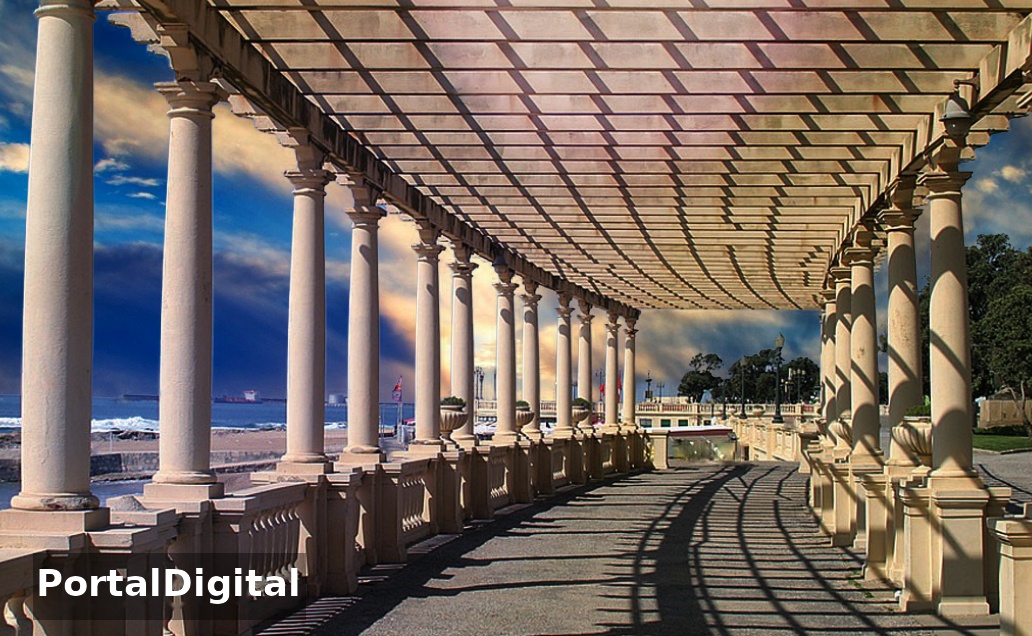
Foz do Douro is best known for having an excellent panoramic view of the river, new floors and villas, bars with several terraces, flower gardens with leafy trees on the riverbank make this area one of the most sought after in Porto.
In its heritage, emphasis is placed on the first manifestations of Renaissance architecture in Portugal, such as the chapel-lighthouse of S. Miguel-o-Anjo in Cantareira, and the palace and church, within the walls of the Fort of São João Baptista da Foz, works ordered to be built by Bishop D. Miguel da Silva in 1527 with the participation of the architect-sculptor Francisco de Cremona.
The Main Church and the fort (both from the 17th century), the slopes of Monte da Luz and Monte going down to Cantareira where there is a rich urban cluster that follows the historic center of the city.
Raul Brandão was born here, and artists ngelo de Sousa, Irene Vilar, writers António Rebordão Navarro, Vasco Graça Moura, Eugénio de Andrade and Antero de Figueiredo, and many other cultural personalities, live here.
Foz was a theme for writers such as Agustina Bessa Luís, Camilo Castelo Branco, Eça de Queirós, and several artists were also inspired by this place to create their works of art: Vieira da Silva, António Carneiro, ngelo de Sousa, Armando Alves and Álvares.
Baron Lencastre and his family were important figures in the outskirts, especially in Vila do Conde.
In Foz do Douro, visitors can find the Cantareira Lighthouse, the Felgueiras Lighthouse, the São Miguel-o-Anjo Lighthouse and the Senhora da Luz Lighthouse.
The Farolim da Cantareira is a Portuguese lighthouse located in Cantareira, Cais do Marégrafo, in the parish of Foz do Douro, city of Porto and is characterized by a column with a balcony and white lantern (probable construction of the 18th century lighthouse).
In 2007, due to the new configuration of the entrance to the Douro bar, after the construction of the new North and South jetties, it was deactivated (2009) as it became unnecessary.
The Farolim de Felgueiras, Farol de Felgueiras, or Farolim do Molhe de Felgueiras is located on the right bank of the Douro River, is a Portuguese lighthouse located in the parish of Foz do Douro, City of Porto.
The Felgueiras Lighthouse consists of a hexagonal tower in exposed granite masonry ten meters high, with a red balcony and lantern, a small annex building with plastered walls painted white.
The name ''Molhe de Felgueiras'' was given to it because it was built towards the Felgueiras rock that forms the border to the west.
Before its deactivation, the lighthouse had a range of 9 nautical miles, emitting a red flash every 5 seconds (Fl R 5s).
The São Miguel-O-Anjo Lighthouse, also known as Ermida de São Miguel-O-Anjo, is a primitive Portuguese lighthouse classified as a Property of Public Interest located in Cantareira, Cais do Marégrafo, in the parish of Foz do Douro, City of Porto.
The São Miguel-o-Anjo Lighthouse has a quadrangular tower in granite stonework topped by a brick dome with eight sections, forming a small vault, plastered and whitewashed, which contains an iron railing replacing the original balustrade, supported by a carved cornice that tops the four walls of the building.
Its interior has an octagonal shape with three shell-shaped niches embedded in the wall on the river side, in each niche there would be an image, the central one, taller than the other two, had a small altar at its base, a spiral staircase embedded in the wall next to the door provides access to the roof.
In the year 1527 it was built according to a Latin inscription on the wall facing the river which translated says: "Miguel da Silva, elected bishop of Viseu, ordered the construction of this tower to direct navigation, he himself gave and consigned fields bought with his money, with the proceeds from which fires were lit perpetually at night in the tower, in the year 1527".
In 1841, a building was built attached to the Chapel-Lighthouse to install a Tax Guard post and in 1852 an attached tower with 3 floors was built where a telegraph station was installed.
The São Miguel-O-Anjo Lighthouse in 1951 was classified as a Property of Public Interest and a purely Renaissance building and one of the oldest in Europe.
The Senhora da Luz Lighthouse is a deactivated Portuguese lighthouse classified as a Property of Municipal Interest located in Monte da Luz, a privileged place whose view extends from Barra do Douro to Espinho, in the parish of Foz do Douro, city of Porto.
The lighthouse consisted of a small hexagonal tower on top of a quadrangular turret on the west side of a two-story building, topped by a green lantern, now removed and replaced by a roof.
The Senhora da Luz Lighthouse was built next to the Senhora da Luz Chapel, which existed at the same time at the same location.
The first lighthouse to exist on the Portuguese coast, and a set of rock engravings were recently discovered on the granite outcrop.
Approximately five meters away from this there is a small octagonal tower with two floors in masonry covered with whitewashed plaster, five meters high, with a small and steep exterior stone staircase with iron guards.
The Senhora da Luz Lighthouse existed since the end of the 17th century, maintained by the good will of the brotherhood of the same name.
According to the Portuguese Navy, it was deactivated in 1926 due to the entry into operation of the Leça Lighthouse, but other entities indicate the year 1945 as the year of its deactivation due to modernization works at the Felgueiras Lighthouse.
Foz do Douro, also known as Foz Velha, was a town and county seat with a single parish between 1833 and 1836 when it was integrated into the municipality of Porto.
Foz do Douro is best known for having an excellent panoramic view of the river, new floors and villas, bars with several terraces, flower gardens with leafy trees on the riverbank make this area one of the most sought after in Porto.
In its heritage, emphasis is placed on the first manifestations of Renaissance architecture in Portugal, such as the chapel-lighthouse of S. Miguel-o-Anjo in Cantareira, and the palace and church, within the walls of the Fort of São João Baptista da Foz, works ordered to be built by Bishop D. Miguel da Silva in 1527 with the participation of the architect-sculptor Francisco de Cremona.
The Main Church and the fort (both from the 17th century), the slopes of Monte da Luz and Monte going down to Cantareira where there is a rich urban cluster that follows the historic center of the city.
Raul Brandão was born here, and artists ngelo de Sousa, Irene Vilar, writers António Rebordão Navarro, Vasco Graça Moura, Eugénio de Andrade and Antero de Figueiredo, and many other cultural personalities, live here.
Foz was a theme for writers such as Agustina Bessa Luís, Camilo Castelo Branco, Eça de Queirós, and several artists were also inspired by this place to create their works of art: Vieira da Silva, António Carneiro, ngelo de Sousa, Armando Alves and Álvares.
Baron Lencastre and his family were important figures in the outskirts, especially in Vila do Conde.
In Foz do Douro, visitors can find the Cantareira Lighthouse, the Felgueiras Lighthouse, the São Miguel-o-Anjo Lighthouse and the Senhora da Luz Lighthouse.
The Farolim da Cantareira is a Portuguese lighthouse located in Cantareira, Cais do Marégrafo, in the parish of Foz do Douro, city of Porto and is characterized by a column with a balcony and white lantern (probable construction of the 18th century lighthouse).
In 2007, due to the new configuration of the entrance to the Douro bar, after the construction of the new North and South jetties, it was deactivated (2009) as it became unnecessary.
The Farolim de Felgueiras, Farol de Felgueiras, or Farolim do Molhe de Felgueiras is located on the right bank of the Douro River, is a Portuguese lighthouse located in the parish of Foz do Douro, City of Porto.
The Felgueiras Lighthouse consists of a hexagonal tower in exposed granite masonry ten meters high, with a red balcony and lantern, a small annex building with plastered walls painted white.
The name ''Molhe de Felgueiras'' was given to it because it was built towards the Felgueiras rock that forms the border to the west.
Before its deactivation, the lighthouse had a range of 9 nautical miles, emitting a red flash every 5 seconds (Fl R 5s).
The São Miguel-O-Anjo Lighthouse, also known as Ermida de São Miguel-O-Anjo, is a primitive Portuguese lighthouse classified as a Property of Public Interest located in Cantareira, Cais do Marégrafo, in the parish of Foz do Douro, City of Porto.
The São Miguel-o-Anjo Lighthouse has a quadrangular tower in granite stonework topped by a brick dome with eight sections, forming a small vault, plastered and whitewashed, which contains an iron railing replacing the original balustrade, supported by a carved cornice that tops the four walls of the building.
Its interior has an octagonal shape with three shell-shaped niches embedded in the wall on the river side, in each niche there would be an image, the central one, taller than the other two, had a small altar at its base, a spiral staircase embedded in the wall next to the door provides access to the roof.
In the year 1527 it was built according to a Latin inscription on the wall facing the river which translated says: "Miguel da Silva, elected bishop of Viseu, ordered the construction of this tower to direct navigation, he himself gave and consigned fields bought with his money, with the proceeds from which fires were lit perpetually at night in the tower, in the year 1527".
In 1841, a building was built attached to the Chapel-Lighthouse to install a Tax Guard post and in 1852 an attached tower with 3 floors was built where a telegraph station was installed.
The São Miguel-O-Anjo Lighthouse in 1951 was classified as a Property of Public Interest and a purely Renaissance building and one of the oldest in Europe.
The Senhora da Luz Lighthouse is a deactivated Portuguese lighthouse classified as a Property of Municipal Interest located in Monte da Luz, a privileged place whose view extends from Barra do Douro to Espinho, in the parish of Foz do Douro, city of Porto.
The lighthouse consisted of a small hexagonal tower on top of a quadrangular turret on the west side of a two-story building, topped by a green lantern, now removed and replaced by a roof.
The Senhora da Luz Lighthouse was built next to the Senhora da Luz Chapel, which existed at the same time at the same location.
The first lighthouse to exist on the Portuguese coast, and a set of rock engravings were recently discovered on the granite outcrop.
Approximately five meters away from this there is a small octagonal tower with two floors in masonry covered with whitewashed plaster, five meters high, with a small and steep exterior stone staircase with iron guards.
The Senhora da Luz Lighthouse existed since the end of the 17th century, maintained by the good will of the brotherhood of the same name.
According to the Portuguese Navy, it was deactivated in 1926 due to the entry into operation of the Leça Lighthouse, but other entities indicate the year 1945 as the year of its deactivation due to modernization works at the Felgueiras Lighthouse.