
It is located in Adro Sé, city of Viseu, in central Portugal
History of the Cathedral of Viseu
The Sé or Cathedral of Viseu began to take shape in the 12th century, during the reign of D. Afonso Henriques, driven by Bishop D. Odório.
The construction of a cathedral in the Romanesque style began, despite very little remaining of this building, some authors classified a vegetal capital dating from the end of the 12th century, a side portal (to the south) from the following century that today gives access to the cloister as being likely elements of the original building.
The place where the Cathedral of Viseu was located in the Low Middle Ages was the subject of excavations conducted by Inês Vaz next to the Episcopal Palace, which revealed a primitive temple with a triple apse, dating back to the Suevo-Visigothic period.
During the Reconquista there were two episcopal buildings in this place, highlighting the one from the 10th century, when Viseu was considered the capital of the territory between Mondego-e-Douro.
During the reign of D. Dinis, with the city having reached a golden period, the building was extensively renovated in the 13th century under the supervision of Bishop D. Egas.
The crisis of 1383-1385 stopped the works and under the supervision of the new bishop D. João Vicente, the works would continue for many years.
In the Manueline period, the Viseense Cathedral would absorb interventions of great aesthetic quality such as the typical vaults of the naves and were the work of Bishop D. Diogo Ortiz de Vilhegas and lasted a decade under the supervision of the architect João de Castilho.
In the Modern Age, new works in the Cathedral were completed quickly and in 1635 one of the medieval towers collapsed, dragging the Manueline portal with it and the reconstruction of the facade was quite limited, influenced by considerable cost restraint.
The Baroque brought to this building rich works of carving, tiles and painting, the main altarpiece (designed by Santos Pacheco), the tile panels in the cloister and the chapter house are perfect examples that reveal how the Cathedral of Viseu managed to stay up to date during the dominant aesthetic currents of the 18th century.
The construction of a cathedral in the Romanesque style began, despite very little remaining of this building, some authors classified a vegetal capital dating from the end of the 12th century, a side portal (to the south) from the following century that today gives access to the cloister as being likely elements of the original building.
The place where the Cathedral of Viseu was located in the Low Middle Ages was the subject of excavations conducted by Inês Vaz next to the Episcopal Palace, which revealed a primitive temple with a triple apse, dating back to the Suevo-Visigothic period.
During the Reconquista there were two episcopal buildings in this place, highlighting the one from the 10th century, when Viseu was considered the capital of the territory between Mondego-e-Douro.
During the reign of D. Dinis, with the city having reached a golden period, the building was extensively renovated in the 13th century under the supervision of Bishop D. Egas.
The crisis of 1383-1385 stopped the works and under the supervision of the new bishop D. João Vicente, the works would continue for many years.
In the Manueline period, the Viseense Cathedral would absorb interventions of great aesthetic quality such as the typical vaults of the naves and were the work of Bishop D. Diogo Ortiz de Vilhegas and lasted a decade under the supervision of the architect João de Castilho.
In the Modern Age, new works in the Cathedral were completed quickly and in 1635 one of the medieval towers collapsed, dragging the Manueline portal with it and the reconstruction of the facade was quite limited, influenced by considerable cost restraint.
The Baroque brought to this building rich works of carving, tiles and painting, the main altarpiece (designed by Santos Pacheco), the tile panels in the cloister and the chapter house are perfect examples that reveal how the Cathedral of Viseu managed to stay up to date during the dominant aesthetic currents of the 18th century.
Characteristics of the Cathedral of Viseu
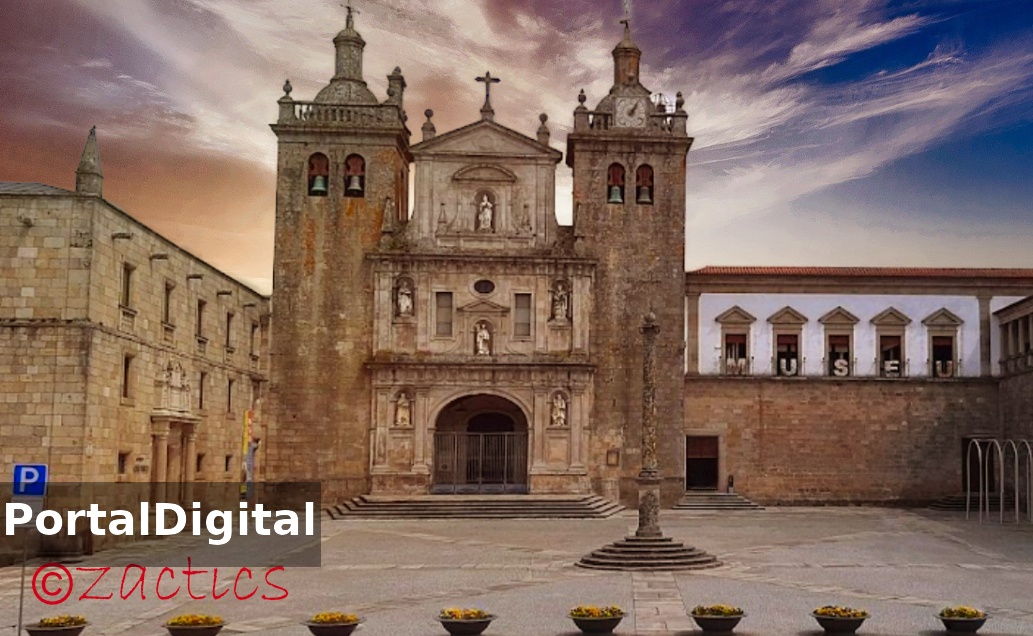
The large towers that give it the appearance of a fortified church located on a promontory are a landmark in the city even when seen from a distance and are one of the oldest buildings.
The Viseu Cathedral was located on the site of a primitive temple from the Suevo-Visigothic era, the structure of which was recently revealed by archaeological excavations.
The Cathedral of Viseu began to take shape in the 12th century with the first king of Portugal, D. Afonso Henriques, and underwent a profound renovation in the 13th century during the reign of D. Dinis and the works lasted for many years and the complex integrated elements from different eras.
The present Mannerist façade was erected in the mid-19th century. XVII replacing another Renaissance one that collapsed in 1635 and destroyed the Manueline portal built in the meantime.
The facade has six niches with stone sculptures and at the top there is a representation of Saint Mary of the Assunção who is the patron saint of the Cathedral and in the lower part in the center the image of Saint Teotónio stands out, a man of many virtues who was Prior of the Cathedral between 1112 and 1119 and is the patron saint of the city of Viseu.
In the side niches the four evangelists are represented with their symbols: Saint Mark, Saint Luke, Saint John and Saint Matthew.
Inside, the vault stands out, where cross-shaped ribs were carved into the stone as if they were a thick rope with a knot in the middle, nautical attributes of the Manueline style that give the whole a fine elegance.
The vaults' closures are topped with Ançã stone finials that bear the mottos of kings and bishops' coats of arms.
The chancel modified in the 19th century. XVIII formerly decorated with the beautiful altarpiece by Vasco Fernandes (Grao Vasco) that represented scenes from the life of Christ and is now kept in the Grão Vasco Museum.
The current altarpiece is a Baroque work that reveals the taste in vogue at the time of D. João V and was designed by Francisco Machado and the elegant chair from the 17th century. XVIII is in rosewood wood from Brazil, carved and gilded.
On the side there is a corridor covered in tiles from the 19th century. XVIII gives access to the sacristy built in 1574 and enriched with paintings on the wooden ceiling with in the center the shield of Bishop D. Jorge de Ataíde who was the mentor of this construction.
The walls of the sacristy are completely covered with polychrome tiles from the 17th century, the cloister with access from the church was built by Bishop D. Miguel da Silva (one of the introducers of the Renaissance in Portugal and protector of the painter Grão Vasco).
The Cathedral's Treasury-Museum houses two reliquary safes from the 13th century from the Limoges School and a monstrance that belonged to D. Miguel da Silva.
The Viseu Cathedral was located on the site of a primitive temple from the Suevo-Visigothic era, the structure of which was recently revealed by archaeological excavations.
The Cathedral of Viseu began to take shape in the 12th century with the first king of Portugal, D. Afonso Henriques, and underwent a profound renovation in the 13th century during the reign of D. Dinis and the works lasted for many years and the complex integrated elements from different eras.
The present Mannerist façade was erected in the mid-19th century. XVII replacing another Renaissance one that collapsed in 1635 and destroyed the Manueline portal built in the meantime.
The facade has six niches with stone sculptures and at the top there is a representation of Saint Mary of the Assunção who is the patron saint of the Cathedral and in the lower part in the center the image of Saint Teotónio stands out, a man of many virtues who was Prior of the Cathedral between 1112 and 1119 and is the patron saint of the city of Viseu.
In the side niches the four evangelists are represented with their symbols: Saint Mark, Saint Luke, Saint John and Saint Matthew.
Inside, the vault stands out, where cross-shaped ribs were carved into the stone as if they were a thick rope with a knot in the middle, nautical attributes of the Manueline style that give the whole a fine elegance.
The vaults' closures are topped with Ançã stone finials that bear the mottos of kings and bishops' coats of arms.
The chancel modified in the 19th century. XVIII formerly decorated with the beautiful altarpiece by Vasco Fernandes (Grao Vasco) that represented scenes from the life of Christ and is now kept in the Grão Vasco Museum.
The current altarpiece is a Baroque work that reveals the taste in vogue at the time of D. João V and was designed by Francisco Machado and the elegant chair from the 17th century. XVIII is in rosewood wood from Brazil, carved and gilded.
On the side there is a corridor covered in tiles from the 19th century. XVIII gives access to the sacristy built in 1574 and enriched with paintings on the wooden ceiling with in the center the shield of Bishop D. Jorge de Ataíde who was the mentor of this construction.
The walls of the sacristy are completely covered with polychrome tiles from the 17th century, the cloister with access from the church was built by Bishop D. Miguel da Silva (one of the introducers of the Renaissance in Portugal and protector of the painter Grão Vasco).
The Cathedral's Treasury-Museum houses two reliquary safes from the 13th century from the Limoges School and a monstrance that belonged to D. Miguel da Silva.