
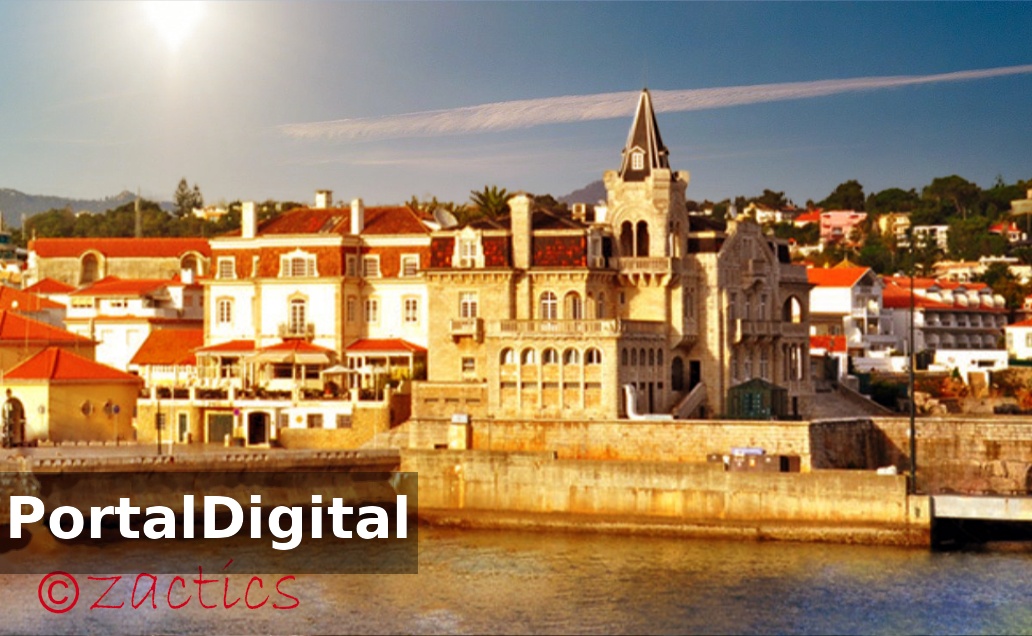
Located on the Portuguese Riviera, district of Lisbon, Portugal
Cascais is a municipality in the District of Lisbon, Portugal, located on the Portuguese Riviera, whose population in 2011 was 206,479 in an area of 97.40 km.
The history of Cascais as a popular seaside resort dates back to the 1870s, when King Luís I of Portugal and the Portuguese royal family made the coastal town their residence every September, also attracting members of the Portuguese nobility who established a summer community there.
The settlement of the territory now known as Cascais dates back to the late Paleolithic as indicated by the remains found in the north of Talaíde, in Alto do Cabecinho (Tires) and south of Moinhos do Cabreiro.
In the Neolithic period, permanent settlements were established in the region, its inhabitants used natural caves (such as Poço Velho in Cascais) and artificial shelters (such as those in Alapraia or São Pedro) to deposit their dead and the bodies were buried together with the offerings, a practice that continued until the Chalcolithic.
Roman interventions in the area occurred with the settlement of the villas of Freiria (today São Domingos de Rana) and Casais Velhos (Charneca), which includes a set of ten tanks discovered along Rua Marques Leal Pancada in Cascais, which was the location of a fish salting factory.
On June 7, 1364, the people of Cascais obtained from D. Pedro I the elevation of the town to the category of town, requiring the appointment of judges and local administrators. In 1896, King Carlos I installed Portugal's first oceanographic laboratory in the citadel, and the king himself led a total of 12 scientific expeditions to the coast that ended in 1908 with his assassination in Lisbon.
Currently Cascais and its surroundings are a popular holiday destination for Portuguese and foreign tourists attracted by its beautiful beaches and hosts international events: sailing and surfing.
The major tourist attractions in Cascais are: Sintra-Cascais Natural Park, Boca do Inferno, Casino Estoril, Casa das Histórias Paula Rego, Museu Condes de Castro Guimarães, Marégrafo de Cascais, Museu do Mar Rei Dom Carlos I, Casa de Santa Maria, Palácio da Cidadela de Cascais, Casa Duarte Pinto Coelho (Cascais), Centro Cultural de Cascais, Casa de Santa Maria (Cascais), Farol Museu de Santa Marta (Cascais), Nossa Senhora da Luz de Cascais Fortress, Cascais Bay, Alberto Romano Ocean Pool, Parish Church of Nossa Senhora da Assunção, Church of Nossa Senhora dos Navegantes and Church of Nossa Senhora da Misericórdia (Rua da Misericórdia, Cascais).
The main beaches in Cascais are: Praia do Abano, Praia das Avencas, Praia Azarujinha, Praia de Bafureira, Praia de Carcavelos, Praia da Conceição, Praia da Cresmina, Praia da Duquesa, Praia Grande do Guincho, Praia das Moitas, Praia da Parede, Praia da Poça, Rainha Beach, Ribeira de Cascais Beach, Tamariz Beach, Santa Marta Beach and São Pedro do Estoril Beach.
The history of Cascais as a popular seaside resort dates back to the 1870s, when King Luís I of Portugal and the Portuguese royal family made the coastal town their residence every September, also attracting members of the Portuguese nobility who established a summer community there.
The settlement of the territory now known as Cascais dates back to the late Paleolithic as indicated by the remains found in the north of Talaíde, in Alto do Cabecinho (Tires) and south of Moinhos do Cabreiro.
In the Neolithic period, permanent settlements were established in the region, its inhabitants used natural caves (such as Poço Velho in Cascais) and artificial shelters (such as those in Alapraia or São Pedro) to deposit their dead and the bodies were buried together with the offerings, a practice that continued until the Chalcolithic.
Roman interventions in the area occurred with the settlement of the villas of Freiria (today São Domingos de Rana) and Casais Velhos (Charneca), which includes a set of ten tanks discovered along Rua Marques Leal Pancada in Cascais, which was the location of a fish salting factory.
On June 7, 1364, the people of Cascais obtained from D. Pedro I the elevation of the town to the category of town, requiring the appointment of judges and local administrators. In 1896, King Carlos I installed Portugal's first oceanographic laboratory in the citadel, and the king himself led a total of 12 scientific expeditions to the coast that ended in 1908 with his assassination in Lisbon.
Currently Cascais and its surroundings are a popular holiday destination for Portuguese and foreign tourists attracted by its beautiful beaches and hosts international events: sailing and surfing.
The major tourist attractions in Cascais are: Sintra-Cascais Natural Park, Boca do Inferno, Casino Estoril, Casa das Histórias Paula Rego, Museu Condes de Castro Guimarães, Marégrafo de Cascais, Museu do Mar Rei Dom Carlos I, Casa de Santa Maria, Palácio da Cidadela de Cascais, Casa Duarte Pinto Coelho (Cascais), Centro Cultural de Cascais, Casa de Santa Maria (Cascais), Farol Museu de Santa Marta (Cascais), Nossa Senhora da Luz de Cascais Fortress, Cascais Bay, Alberto Romano Ocean Pool, Parish Church of Nossa Senhora da Assunção, Church of Nossa Senhora dos Navegantes and Church of Nossa Senhora da Misericórdia (Rua da Misericórdia, Cascais).
The main beaches in Cascais are: Praia do Abano, Praia das Avencas, Praia Azarujinha, Praia de Bafureira, Praia de Carcavelos, Praia da Conceição, Praia da Cresmina, Praia da Duquesa, Praia Grande do Guincho, Praia das Moitas, Praia da Parede, Praia da Poça, Rainha Beach, Ribeira de Cascais Beach, Tamariz Beach, Santa Marta Beach and São Pedro do Estoril Beach.