
It is located in Praça Faria da Gama, city and municipality of Pombal, District of Leiria, in the province of Beira Litoral, in the region of Central Portugal
The Old Clock Tower was built by D. Pedro I in the second quarter of the 14th century with the aim of collecting taxes owed by the Jews and Moors on Saint Martin's Day.
At the end of the 15th century, the tower marked the separation between the old town of Pombal located between the castle and the new streets that extended to the Arunca river.
The tower building has a quadrangular plan with two registers, the lower one having a larger base and two windows and a door were cut into the walls.
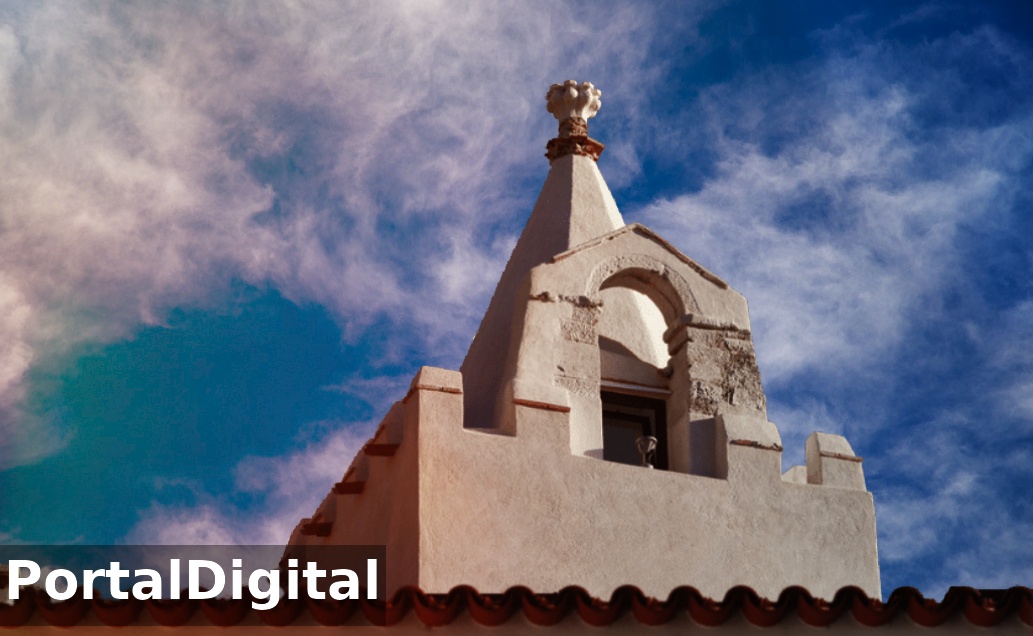
The whole is topped with merlons, a prismatic coruché and inside the two floors of the tower are divided by wooden two-story buildings.
In 1509, improvement work was carried out on the tower, with the installation of a mechanical clock and a bell so that the rings for daily prayers could be given at the correct times.
The building with Manueline characteristics separated the old town of Pombal, to the east, towards the Castle, from the new town to the west towards the Arunca river, serving as a border to what was inside and outside the town's walls.
In 1509, during the reign of D. Manuel I, it underwent structural improvements and ordered the installation of a mechanical clock and a bell so that the ringing of the Trindades always sounded at the right time.
The bell marked the morning ring and the sunset, indicating the time for the Jews who were prevented from attending the village's Christian High School at night to retire, marking the period in which they could leave the Jewish quarter or receive visits from Christians there.
In 1776, the Marquis of Pombal ordered this bell to be transferred to the Prison building and in 2014 it underwent improvement works making its history known.
The Old Clock Tower is a square stone building topped by chamfered battlements and topped by a conical tower with fifteenth century ornaments.
The walls are covered with chamfered merlons interspersed with a chapel for bells.
At the end of the 15th century, the tower marked the separation between the old town of Pombal located between the castle and the new streets that extended to the Arunca river.
The tower building has a quadrangular plan with two registers, the lower one having a larger base and two windows and a door were cut into the walls.
The whole is topped with merlons, a prismatic coruché and inside the two floors of the tower are divided by wooden two-story buildings.
In 1509, improvement work was carried out on the tower, with the installation of a mechanical clock and a bell so that the rings for daily prayers could be given at the correct times.
The building with Manueline characteristics separated the old town of Pombal, to the east, towards the Castle, from the new town to the west towards the Arunca river, serving as a border to what was inside and outside the town's walls.
In 1509, during the reign of D. Manuel I, it underwent structural improvements and ordered the installation of a mechanical clock and a bell so that the ringing of the Trindades always sounded at the right time.
The bell marked the morning ring and the sunset, indicating the time for the Jews who were prevented from attending the village's Christian High School at night to retire, marking the period in which they could leave the Jewish quarter or receive visits from Christians there.
In 1776, the Marquis of Pombal ordered this bell to be transferred to the Prison building and in 2014 it underwent improvement works making its history known.
The Old Clock Tower is a square stone building topped by chamfered battlements and topped by a conical tower with fifteenth century ornaments.
The walls are covered with chamfered merlons interspersed with a chapel for bells.