
It is located very close to the Tagus River and the Santa Apolónia station on Rua da Madre de Deus, Lisbon, central Portugal.
One of the main missions of the Azulejo Museum is to promote tiles as a national artistic expression over more than five centuries, but also to collect, conserve, analyze and disseminate examples that represent the evolution of this piece of art in Portugal.
Currently, the tile is considered one of the most original productions of Portuguese culture, which showcases the history, mentality and taste of each era.
Currently, the tile is considered one of the most original productions of Portuguese culture, which showcases the history, mentality and taste of each era.
History of the National Tile Museum in Lisbon
The Tile Museum is currently housed in the former “Convento da Madre de Deus” founded in 1509 by Queen D. Leonor and presents the entire history of tiles in Portugal from the second half of the 15th century to the present day.
At the beginning of the 20th century, several monuments were placed under the supervision of the National Museum of Ancient Art, and it was established that the Church and dependencies of Madre de Deus in Xabregas should be considered as annexes of that national museum.
The Museum, under the guidance of Engineer João Miguel dos Santos Simões, grew and took over the space occupied by the workshops of the D. Maria Pia asylum.
In 1973 Rafael Salinas Calado was invited by Maria José Mendonça to occupy the Ceramics Section of the National Museum of Ancient Art located since 1959 in the former “Convento da Madre de Deus''''''''.
Finally, on September 26, 1980, the Azulejo Museum emancipated itself, becoming National and becoming autonomous in relation to the National Museum of Ancient Art, of which it had been an annex since December 18, 1965.
The former “Madre de Deus Convent” dates back to 1509 and has housed the National Tile Museum since 1965.
At the beginning of the 20th century, several monuments were placed under the supervision of the National Museum of Ancient Art, and it was established that the Church and dependencies of Madre de Deus in Xabregas should be considered as annexes of that national museum.
The Museum, under the guidance of Engineer João Miguel dos Santos Simões, grew and took over the space occupied by the workshops of the D. Maria Pia asylum.
In 1973 Rafael Salinas Calado was invited by Maria José Mendonça to occupy the Ceramics Section of the National Museum of Ancient Art located since 1959 in the former “Convento da Madre de Deus''''''''.
Finally, on September 26, 1980, the Azulejo Museum emancipated itself, becoming National and becoming autonomous in relation to the National Museum of Ancient Art, of which it had been an annex since December 18, 1965.
The former “Madre de Deus Convent” dates back to 1509 and has housed the National Tile Museum since 1965.
The National Tile Museum Building in Lisbon (16th century)
The Museum was created in 1965 and became the Tile Museum in 1980, housed in the Old “Convento da Madre de Deus” founded in 1509 by Queen D. Leonor.
It was founded in 1509 by Queen D. Leonor, in 1509 and until today the “Convento da Madre de Deus” has been the object of transformation, enlargement and modification according to the needs of each time.
In 1509, the Convent of the Clarissas of Madre de Deus was founded, and the chapel and primitive church are still part of the museum, which are great examples of the Portuguese Baroque style of architecture.
The architectural complex left by D. Leonor at the time of her death was truly meager and the nuns' complaints led to a major remodeling campaign undertaken by D. João III.
A building with classical roots with a chancel with a square plan covered by a dome, whose drum would be torn by windows, the chancel with the body of the church with a single nave refers to the Serlian models, the cloister reflects the classical models not only in terms of the new scale but also in the architectural language.
From 1896 onwards, extensive restoration works began aimed at converting the available spaces and adapting them to a new civil use, the installation of the Asilo D. Maria Pia according to a historicist attitude understandable in a late-romantic culture that prevailed at the time.
On September 26, 1980, the Azulejo Museum emancipated itself, becoming National and becoming autonomous in relation to the National Museum of Ancient Art, of which it had been an annex since December 18, 1965.
The building underwent transformations due to several works campaigns, highlighting the 16th century Mannerist cloister, the church decorated with important sets of paintings and tile coverings, the sacristy with a wooden chest from Brazil and carved frames integrating paintings, the high choir with rich gilded ornamentation, the chapel of Santo Antônio with 18th century baroque decoration and a large number of canvases by the painter André Gonçalves (1685-1762).
It was founded in 1509 by Queen D. Leonor, in 1509 and until today the “Convento da Madre de Deus” has been the object of transformation, enlargement and modification according to the needs of each time.
In 1509, the Convent of the Clarissas of Madre de Deus was founded, and the chapel and primitive church are still part of the museum, which are great examples of the Portuguese Baroque style of architecture.
The architectural complex left by D. Leonor at the time of her death was truly meager and the nuns' complaints led to a major remodeling campaign undertaken by D. João III.
A building with classical roots with a chancel with a square plan covered by a dome, whose drum would be torn by windows, the chancel with the body of the church with a single nave refers to the Serlian models, the cloister reflects the classical models not only in terms of the new scale but also in the architectural language.
From 1896 onwards, extensive restoration works began aimed at converting the available spaces and adapting them to a new civil use, the installation of the Asilo D. Maria Pia according to a historicist attitude understandable in a late-romantic culture that prevailed at the time.
On September 26, 1980, the Azulejo Museum emancipated itself, becoming National and becoming autonomous in relation to the National Museum of Ancient Art, of which it had been an annex since December 18, 1965.
The building underwent transformations due to several works campaigns, highlighting the 16th century Mannerist cloister, the church decorated with important sets of paintings and tile coverings, the sacristy with a wooden chest from Brazil and carved frames integrating paintings, the high choir with rich gilded ornamentation, the chapel of Santo Antônio with 18th century baroque decoration and a large number of canvases by the painter André Gonçalves (1685-1762).
What can we see at the Azulejos Museum in Lisbon
The incredible Museum is located in the former Convent of Madre de Deus (founded in 1509), so the building consists of a cloister, sacristy, high choir and Chapel of Saint Anthony and its original tiles are spectacular examples of art and architecture from the 1500s.
In Portugal, tiles displayed plain colors and geometric shapes, but in the 16th century more decorative patterns based on Spanish, Moorish and Islamic knotwork and geometric patterns were gradually replaced by European motifs with plant and animal patterns, Gothic and Romanesque motifs.
The National Tile Museum's collection covers tile production from the second half of the 15th century to the present day, gigantic religious representations on walls and altarpieces, staircases covered in tiles, scenes of hunting and flowers, legends told on tiles, colorful maps of Lisbon on tiles, pieces of ceramics, porcelain and earthenware from the 19th to 20th centuries.
At the beginning of the permanent exhibition there is a small section that illustrates the materials and manufacturing techniques of tiles, temporary and permanent exhibitions renewed over the years, rooms dedicated to tiles from the 16th, 17th and 18th centuries and the D. Manuel Room.
This Museum is made up of a collection of more than 300 thousand tiles, panels of tiles of great value in which the “Great Panorama of Lisbon” (1700), the “Lição da Dança” (1707) and the “Lady at the Toilet” (1700-1730) stand out, tiles with images of the overseas colonies (time of the crusades in the Holy Land and the Near East).
The Altarpiece of Our Lady of Life (1580), the Chapel of Saint Anthony is made up of 27 paintings attributed to André Gonçalves (1692- 1762), and works from the 20th century and permanent and temporary exhibitions with current works.
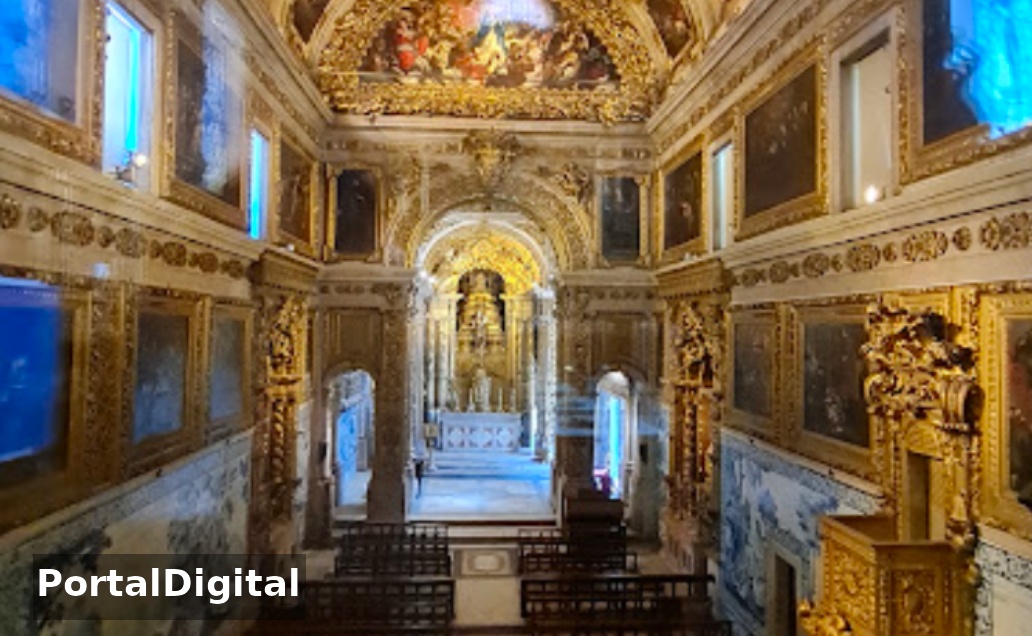
The Saint Anthony Chapel features a vaulted ceiling with a huge dome, blue and white tile scenes along the side and back walls, and baroque gilding throughout.
On the 2nd floor you can see an extensive and exquisite tiled landscape of Lisbon, the “Grande Panorama de Lisboa" (1700) formed by a large tile panel showing the most complete view of the city of Lisbon from the Tagus River before the earthquake (1755).
In Portugal, tiles displayed plain colors and geometric shapes, but in the 16th century more decorative patterns based on Spanish, Moorish and Islamic knotwork and geometric patterns were gradually replaced by European motifs with plant and animal patterns, Gothic and Romanesque motifs.
The National Tile Museum's collection covers tile production from the second half of the 15th century to the present day, gigantic religious representations on walls and altarpieces, staircases covered in tiles, scenes of hunting and flowers, legends told on tiles, colorful maps of Lisbon on tiles, pieces of ceramics, porcelain and earthenware from the 19th to 20th centuries.
At the beginning of the permanent exhibition there is a small section that illustrates the materials and manufacturing techniques of tiles, temporary and permanent exhibitions renewed over the years, rooms dedicated to tiles from the 16th, 17th and 18th centuries and the D. Manuel Room.
This Museum is made up of a collection of more than 300 thousand tiles, panels of tiles of great value in which the “Great Panorama of Lisbon” (1700), the “Lição da Dança” (1707) and the “Lady at the Toilet” (1700-1730) stand out, tiles with images of the overseas colonies (time of the crusades in the Holy Land and the Near East).
The Altarpiece of Our Lady of Life (1580), the Chapel of Saint Anthony is made up of 27 paintings attributed to André Gonçalves (1692- 1762), and works from the 20th century and permanent and temporary exhibitions with current works.
The Saint Anthony Chapel features a vaulted ceiling with a huge dome, blue and white tile scenes along the side and back walls, and baroque gilding throughout.
On the 2nd floor you can see an extensive and exquisite tiled landscape of Lisbon, the “Grande Panorama de Lisboa" (1700) formed by a large tile panel showing the most complete view of the city of Lisbon from the Tagus River before the earthquake (1755).