

It is located in Pico dos Frias, in the parish of São Pedro, municipality of Funchal, Madeira Island, Portugal
The Pico or São João Batista Fort was built at the beginning of the 17th century as part of the city's defensive system against frequent attacks by privateers.
The fortress was built in the context of the Philippine Dynasty, in a dominant position over the Picos dos Frias as an integral part of the defensive system of the city of Funchal against attacks by privateers and pirates frequent in this region of the Atlantic Ocean at this time.
Visitors through the high walls of the fortress can enjoy one of the best views of the city and port of Funchal, which is one of the island's "ex-libris".
In the middle of the 20th century, the old fort came under the control of the Portuguese Navy so that the Funchal Telegraph Radio Station was installed there, which later became known as Funchal Naval Telegraph Radio Station, and with the numerous antennas then erected, the population began to call it "Pico Rádio".
The citadel-like fortress enclosure at an altitude of 111 meters above sea level occupies an area of 2,750 square meters.
Inside it stands out the large cistern excavated in the rock in a vault over the main battery measuring 18 meters long, 6 meters wide and 10 meters high until the closure.
Essentially, the Fortaleza de S. João Baptista do Pico maintains its original Mannerist structure, with four pentagonal bastions that develop internally on two levels, with the lowest being the parade ground where this exhibition is located.
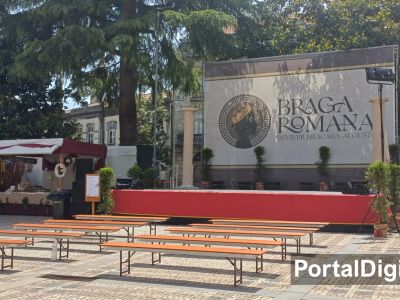
This space was recently the subject of some requalification and recovery works, an infrastructure that includes a multi-purpose area aimed at concerts and conferences, in addition to a cafeteria with a privileged view over the city.
The fortress was built in the context of the Philippine Dynasty, in a dominant position over the Picos dos Frias as an integral part of the defensive system of the city of Funchal against attacks by privateers and pirates frequent in this region of the Atlantic Ocean at this time.
Visitors through the high walls of the fortress can enjoy one of the best views of the city and port of Funchal, which is one of the island's "ex-libris".
In the middle of the 20th century, the old fort came under the control of the Portuguese Navy so that the Funchal Telegraph Radio Station was installed there, which later became known as Funchal Naval Telegraph Radio Station, and with the numerous antennas then erected, the population began to call it "Pico Rádio".
The citadel-like fortress enclosure at an altitude of 111 meters above sea level occupies an area of 2,750 square meters.
Inside it stands out the large cistern excavated in the rock in a vault over the main battery measuring 18 meters long, 6 meters wide and 10 meters high until the closure.
Essentially, the Fortaleza de S. João Baptista do Pico maintains its original Mannerist structure, with four pentagonal bastions that develop internally on two levels, with the lowest being the parade ground where this exhibition is located.
This space was recently the subject of some requalification and recovery works, an infrastructure that includes a multi-purpose area aimed at concerts and conferences, in addition to a cafeteria with a privileged view over the city.
The Classification of the Fortress of São João Baptista do Pico
The São João Baptista do Pico Fortress was declared a Property of Public Interest in 1943, and is currently garrisoned by soldiers from the Portuguese Navy, featuring a museum room that can be visited daily.