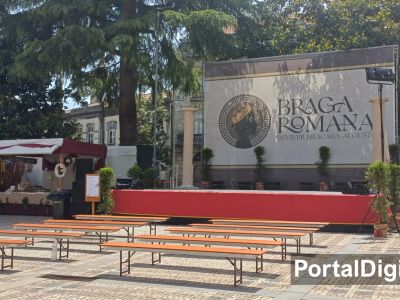


It is located in Largo da Oliveira, in the City Center, City and municipality of Guimarães, District of Braga, North of Portugal
The city of Guimarães is the story of the founding of Portugal or the emergence of national identity: the stage for a founding imagination fueled by stories of struggles and conquests and the cradle of a new Kingdom that in 1143 became the capital.
The history of the city's founding dates back to the 10th century, when Mumadona Dias ordered the construction of a Monastery on the site of Vimaranes with the intention of retiring there after his widowhood, built in the approximate location where the current Collegiate Church of Nossa Senhora da Oliveira is located.
In defense of the Monastery and the community then integrated there, the target of constant attacks by Moors and Normans, a defensive fortress was built, the origin of the primitive Castle of Guimarães.
In 1095, Henry of Burgundy, Count D. Henrique (1066-1112), established himself in the town of Guimarães together with his wife Teresa de Leão (1080 – 1130), illegitimate daughter of King Afonso VI de Leão, and granted the place what would become the first Charter of Guimarães (1095/1096).
The entourage that accompanies them settles in the vicinity of the Castle, forming small population clusters whose growth thus originates the history of the city.
The original Castle was also restored with the arrival of D. Henrique and D. Teresa, with the aim of expanding it and making it more resistant, so that the counts could take up residence there.
According to tradition, it was within it that D. Afonso Henriques (1109-1185) was born on an uncertain date that alternates between the end of 1108 and the first months of 1109.
On June 24, 1128, the battle of “São Mamede” took place, a decisive confrontation between the Galician Count Fernão Peres de Trava and his mother D. Teresa, defenders of a union with Galicia, and the Portucalense Barons commanded by D. Afonso Henriques, whose victory proved decisive for the independence of the Portucalense County and the consequent foundation of nationality.
In this period with national independence, Guimarães became the first capital of the then kingdom of Portugal, and its strategic location contributed to this, the point of intersection of routes in the north of the country that ensured connection to the coastal coast and the interior towns, several waterways: the Ave river and its tributaries (Selho river and Vizela river, and the Santa Luzia and Costa rivers that later formed the Couros river).
The development of the Historic Center witnesses the evolution of urbanity from a medieval location to a modern city, whose building typology shows the development of Portuguese architecture between the 15th and 19th centuries through the continued use of traditional construction techniques and materials, namely rammed earth and rammed earth.
Largo da Oliveira is surrounded by buildings of heritage value: the Nossa Senhora da Oliveira Church, the "porched houses" from the 17th century, the residential building built using traditional construction systems, a Gothic porch called “Padrão do Salado”.
Praça de Santiago, surrounded by the residential complex of the highest artistic and environmental quality from the 17th and 18th centuries, is marked by the presence of the building of the old “Casa da Câmara” whose ground floor is made up of a porch supported by Gothic arcades allowing the connection between Praça de Santiago and Largo da Oliveira.
Rua de Santa Maria is one of the oldest medieval arteries, the main link between the Castle core located at the upper level and the monastery core in the lower part of the town.
Rua Nova or Rua Egas Moniz shows buildings from very different eras: buildings with medieval architecture from the 17th to 19th centuries, with emphasis on the “Casa da Rua Nova” with medieval roots, which constitutes one of the most characteristic typological examples of the so-called protruding houses.
The Historic Center of the city of Guimarães contains in its eclectic buildings a significant part of the history of the Portuguese territory, from "story" houses (simple single-story houses), one- and two-story houses, the noble “tower houses” and the imposing “Paço Ducal”.
The city has an architectural complex of unique heritage value dating from the 13th, 14th and 15th centuries.
The buildings that densely fill the urban fabric constitute a cultural heritage whose authenticity and integrity of the construction systems contain an exceptional singular value, and which led the Historic Center to become a World Heritage Site in 2001.
The area of Couros de Guimarães, outside the old walls and next to the river that crosses the city, in an area formerly known as the town of Couros, still contains traces of the long tradition of fur manufacturing, an activity carried out there since the Middle Ages.
Over several centuries, the raw materials for this industry were the hides of cattle slaughtered in the region, which were later joined by skins from Brazil and other overseas provinces, such as Angola and Mozambique.
In the 19th century and the first half of the 20th century, the tanneries of Guimarães reached their peak and the profitability of the business aroused interest and diverse investment, becoming an activity that greatly contributed to the economic projection of Guimarães and to the development of other activities such as the footwear industry.
From the 1960s onwards, the leather industry began to decline, due to technological delays and the transfer of investments to the textile industry, but despite this context, it was only in 2005 that the last factory in this industrial complex closed.
The history of the city's founding dates back to the 10th century, when Mumadona Dias ordered the construction of a Monastery on the site of Vimaranes with the intention of retiring there after his widowhood, built in the approximate location where the current Collegiate Church of Nossa Senhora da Oliveira is located.
In defense of the Monastery and the community then integrated there, the target of constant attacks by Moors and Normans, a defensive fortress was built, the origin of the primitive Castle of Guimarães.
In 1095, Henry of Burgundy, Count D. Henrique (1066-1112), established himself in the town of Guimarães together with his wife Teresa de Leão (1080 – 1130), illegitimate daughter of King Afonso VI de Leão, and granted the place what would become the first Charter of Guimarães (1095/1096).
The entourage that accompanies them settles in the vicinity of the Castle, forming small population clusters whose growth thus originates the history of the city.
The original Castle was also restored with the arrival of D. Henrique and D. Teresa, with the aim of expanding it and making it more resistant, so that the counts could take up residence there.
According to tradition, it was within it that D. Afonso Henriques (1109-1185) was born on an uncertain date that alternates between the end of 1108 and the first months of 1109.
On June 24, 1128, the battle of “São Mamede” took place, a decisive confrontation between the Galician Count Fernão Peres de Trava and his mother D. Teresa, defenders of a union with Galicia, and the Portucalense Barons commanded by D. Afonso Henriques, whose victory proved decisive for the independence of the Portucalense County and the consequent foundation of nationality.
In this period with national independence, Guimarães became the first capital of the then kingdom of Portugal, and its strategic location contributed to this, the point of intersection of routes in the north of the country that ensured connection to the coastal coast and the interior towns, several waterways: the Ave river and its tributaries (Selho river and Vizela river, and the Santa Luzia and Costa rivers that later formed the Couros river).
The development of the Historic Center witnesses the evolution of urbanity from a medieval location to a modern city, whose building typology shows the development of Portuguese architecture between the 15th and 19th centuries through the continued use of traditional construction techniques and materials, namely rammed earth and rammed earth.
Largo da Oliveira is surrounded by buildings of heritage value: the Nossa Senhora da Oliveira Church, the "porched houses" from the 17th century, the residential building built using traditional construction systems, a Gothic porch called “Padrão do Salado”.
Praça de Santiago, surrounded by the residential complex of the highest artistic and environmental quality from the 17th and 18th centuries, is marked by the presence of the building of the old “Casa da Câmara” whose ground floor is made up of a porch supported by Gothic arcades allowing the connection between Praça de Santiago and Largo da Oliveira.
Rua de Santa Maria is one of the oldest medieval arteries, the main link between the Castle core located at the upper level and the monastery core in the lower part of the town.
Rua Nova or Rua Egas Moniz shows buildings from very different eras: buildings with medieval architecture from the 17th to 19th centuries, with emphasis on the “Casa da Rua Nova” with medieval roots, which constitutes one of the most characteristic typological examples of the so-called protruding houses.
The Historic Center of the city of Guimarães contains in its eclectic buildings a significant part of the history of the Portuguese territory, from "story" houses (simple single-story houses), one- and two-story houses, the noble “tower houses” and the imposing “Paço Ducal”.
The city has an architectural complex of unique heritage value dating from the 13th, 14th and 15th centuries.
The buildings that densely fill the urban fabric constitute a cultural heritage whose authenticity and integrity of the construction systems contain an exceptional singular value, and which led the Historic Center to become a World Heritage Site in 2001.
The area of Couros de Guimarães, outside the old walls and next to the river that crosses the city, in an area formerly known as the town of Couros, still contains traces of the long tradition of fur manufacturing, an activity carried out there since the Middle Ages.
Over several centuries, the raw materials for this industry were the hides of cattle slaughtered in the region, which were later joined by skins from Brazil and other overseas provinces, such as Angola and Mozambique.
In the 19th century and the first half of the 20th century, the tanneries of Guimarães reached their peak and the profitability of the business aroused interest and diverse investment, becoming an activity that greatly contributed to the economic projection of Guimarães and to the development of other activities such as the footwear industry.
From the 1960s onwards, the leather industry began to decline, due to technological delays and the transfer of investments to the textile industry, but despite this context, it was only in 2005 that the last factory in this industrial complex closed.